Key Takeaways
- The Lhasa Apso originated in Tibet over 2,000 years ago, primarily serving as a sentinel in Buddhist monasteries.
- This breed is known for its independent and protective nature, often forming strong bonds with its family.
- Lhasa Apsos require regular grooming due to their long, dense coats that can reach the ground.
- Early socialization and consistent training are crucial to managing their sometimes stubborn and aloof temperament.
- While they make excellent watchdogs, Lhasa Apsos can be wary of strangers and may not be ideal for households with very young children.
Lhasa Apso: A Deep Dive into the Breed
When we think of ancient dog breeds, the Lhasa Apso stands out as a remarkable example of a breed with deep historical roots and a unique personality. These small yet sturdy dogs have a rich history intertwined with the spiritual and cultural fabric of Tibet. As we explore their origins, characteristics, and the nuances of owning one, it becomes clear why they have captured the hearts of many dog enthusiasts.

“Lhasa Apso dog breed info, images, FAQs …” from www.k9rl.com and used with no modifications.
Introduction to Lhasa Apso
The Lhasa Apso is not just any small dog. It carries a legacy that dates back over two millennia, originally bred to guard Tibetan monasteries. Despite their petite size, these dogs possess a watchful and confident demeanor, earning them a reputation as excellent companions and guardians. Their long, flowing coats and expressive eyes add to their charm, making them a popular choice among dog lovers worldwide.
Historical Background and Origins
The story of the Lhasa Apso begins in the isolated and rugged terrain of Tibet. For centuries, these dogs were treasured by Tibetan monks and nobility for their keen senses and loyalty. They were more than just pets; they were spiritual companions believed to bring good luck and protection to their owners.
Ancient Roots and Cultural Significance
The Lhasa Apso’s role in Tibetan culture cannot be overstated. These dogs were often gifted as tokens of goodwill and friendship, especially to esteemed visitors or dignitaries. Their presence in monasteries was not merely ornamental; they served as sentinels, alerting monks to any intruders with their sharp bark.
“The Lhasa Apso is a true survivalist dog and they have adapted well to these harsh conditions. They have a sturdy, narrower body with great lung capacity, a longer, less square muzzle to warm up the cold air when breathing, well-featured, short legs, and a long, thick coat to protect them from the cold.”
Because of their revered status, breeding these dogs was a privilege reserved for monks and nobility. It was believed that Lhasa Apsos carried the souls of deceased lamas, further enhancing their spiritual significance in Tibetan society.
:strip_icc()/monkwithaTibetanLhasaApsodog-GettyImages-3097070-bbb5baed2fee475eab7dcd085edef029.jpg)
“Lhasa Apso: Dog Breed Characteristics …” from www.thesprucepets.com and used with no modifications.
Tibetan Origins and Early Roles
The Lhasa Apso’s journey began in the remote and mountainous regions of Tibet, where they were specifically bred to withstand the harsh climate. Their dense double coats provided insulation against the cold, while their alert nature made them ideal watchdogs. In monasteries, they worked alongside larger Tibetan Mastiffs, forming a formidable security team that protected the sacred grounds.
These dogs were more than just guardians; they were companions to the monks, providing emotional support and companionship in the isolated monastic life. The bond between the Lhasa Apso and its owner was deeply personal and spiritual, reflecting the breed’s importance in Tibetan culture.

“Lhasa Apso Dog Breed Information …” from www.dailypaws.com and used with no modifications.
Spread to the Western World
The Lhasa Apso’s introduction to the Western world is a fascinating chapter in its history. It wasn’t until the early 20th century that these dogs began to make their way to Europe and America. They were often given as gifts by the Dalai Lama to foreign dignitaries, symbolizing peace and goodwill.
As their popularity grew, so did interest in breeding and preserving the breed’s unique characteristics. Today, the Lhasa Apso is recognized and celebrated worldwide, with dedicated enthusiasts and breeders ensuring its legacy continues.
Understanding Lhasa Apso Characteristics
To truly appreciate the Lhasa Apso, one must understand the breed’s distinct physical and personality traits. These characteristics have been shaped by centuries of adaptation to the Tibetan environment and the roles they played in their native land.
Physical Traits
The Lhasa Apso is a small, sturdy dog with a long, flowing coat that can reach the ground if left untrimmed. Their coats come in a variety of colors, including gold, cream, and slate. Despite their small stature, they are well-muscled and agile, with a balanced and compact build. For those interested in exploring other breeds, the Catahoula Leopard Dog also offers unique physical traits worth considering.
Their expressive eyes are one of their most endearing features, often conveying a sense of wisdom and curiosity. The Lhasa Apso’s tail is set high and carried over the back, adding to their regal appearance. For those interested in comparing the Lhasa Apso with other breeds, the Brussels Griffon offers an interesting contrast in terms of personality and appearance.
:strip_icc()/lhasa-apso-dog-breed-profile-1117978-49eed0733ec749e0bc55a74706238b39.jpg)
“Lhasa Apso: Dog Breed Characteristics …” from www.thesprucepets.com and used with no modifications.
Personality and Temperament
When it comes to personality, the Lhasa Apso is both independent and affectionate. They are known for their loyalty and devotion to their families, often forming strong bonds with their owners. However, they can be wary of strangers, a trait that stems from their history as watchdogs.
These dogs are confident and assertive, sometimes displaying a stubborn streak. It’s important for owners to establish themselves as the pack leader to ensure a harmonious relationship. Despite their aloofness with strangers, Lhasa Apsos are loving and playful with those they trust.
Intelligence and Behavior
Lhasa Apsos are intelligent dogs with a keen sense of awareness. They are quick learners but can be independent thinkers, which means training may require patience and consistency. Positive reinforcement techniques work best, as these dogs respond well to praise and rewards.
It’s important to provide mental stimulation and physical activity to keep them engaged and prevent boredom. Interactive toys, puzzle games, and regular walks are great ways to satisfy their curious nature. If you’re interested in learning about specific breeds that have unique exercise needs, check out the Ibizan Hound’s exercise needs.
Benefits and Challenges of Owning a Lhasa Apso
Owning a Lhasa Apso comes with its own set of advantages and challenges. Understanding these can help potential owners make informed decisions about whether this breed is the right fit for their lifestyle.
Advantages
Owning a Lhasa Apso can be a rewarding experience for those who appreciate a dog with character and history. These dogs are fiercely loyal and make excellent companions, particularly for individuals or families who value a protective and attentive pet. Their compact size makes them suitable for apartment living, and their moderate exercise needs mean they adapt well to various lifestyles.
Lhasa Apsos are known for their longevity, often living well into their teens with proper care. Their playful and affectionate nature with family members makes them delightful companions, especially for older children and adults.
- Compact size suitable for apartment living.
- Loyal and protective nature makes them excellent watchdogs.
- Long lifespan with proper care and attention.
- Affectionate and playful with family members.
- Adaptable to various living environments.
These dogs also have a unique charm and elegance, thanks to their long, flowing coats and expressive faces. Their presence in the home can be both comforting and entertaining, as they often display a comical and mischievous side.

“Lhasa Apso Dog Breed Complete Guide – A …” from a-z-animals.com and used with no modifications.
Disadvantages
While the Lhasa Apso offers many benefits, there are also challenges that potential owners should consider. Their independent nature can sometimes translate into stubbornness, making training a bit more demanding. It’s essential to establish yourself as the pack leader early on to ensure a well-behaved pet.
Grooming is another important consideration. Their long coats require regular maintenance to prevent tangles and matting. Without proper grooming, their coats can become a source of discomfort for the dog. For more insights on grooming needs, you can explore the differences between Lhasa Apso and Shih Tzu.
Training and Socialization Tips
Training a Lhasa Apso requires patience and consistency. These intelligent dogs can learn quickly, but their independent streak means they may not always be eager to please. It’s crucial to start training early and use positive reinforcement techniques to encourage good behavior.
Socialization is equally important for a well-rounded Lhasa Apso. Introducing them to a variety of people, pets, and environments from a young age can help them become more adaptable and less wary of strangers.
Effective Training Techniques
To train a Lhasa Apso effectively, focus on using positive reinforcement methods. Reward them with treats, praise, and affection when they perform desired behaviors. Consistency is key, so establish a routine and stick to it. Short, engaging training sessions work best, as these dogs can become bored with repetitive tasks.

“Coco – Lhasa Apso Puppy – 4 Week …” from www.youtube.com and used with no modifications.
Importance of Early Socialization
Socialization is vital for the Lhasa Apso to develop into a well-adjusted adult. Expose them to different sights, sounds, and experiences during their formative months. This exposure helps reduce anxiety and fearfulness in new situations, making them more confident and secure.
Organize playdates with other dogs and introduce them to friendly strangers. This interaction will teach them how to behave appropriately in various social settings, reducing the likelihood of aggression or fear-based behaviors.
Behavioral Traits and Management
Lhasa Apsos are known for their unique behavioral traits, which can be both endearing and challenging. Understanding these traits can help owners manage them effectively, ensuring a harmonious relationship with their pet.
Understanding Barking Tendencies
Barking is a natural behavior for Lhasa Apsos, rooted in their history as watchdogs. They are quick to alert their owners to any perceived threats, making them excellent sentinels. However, excessive barking can become a nuisance if not managed properly. For more insights, you can read about Lhasa Apso vs Shih Tzu and their differences.
To curb unnecessary barking, identify the triggers and work on desensitizing your dog to them. Training them to respond to commands like “quiet” or “enough” can help manage their barking behavior effectively.

“How Much Does a Lhasa Apso Bark?” from iheartdogs.com and used with no modifications.
Managing Separation Anxiety
Lhasa Apsos can develop separation anxiety if left alone for extended periods. This anxiety can manifest in destructive behaviors or excessive barking. To prevent this, gradually accustom your dog to being alone by leaving them for short periods and gradually increasing the duration.
Providing them with engaging toys and a comfortable environment can help alleviate anxiety. Additionally, maintaining a consistent routine and offering plenty of exercise can help reduce stress and promote a sense of security.
“To help a Lhasa Apso with separation anxiety, consider using interactive toys that keep them occupied and mentally stimulated. Puzzle toys and treat dispensers can be particularly effective in providing entertainment during your absence.”
Besides that, ensure that departures and arrivals are low-key to prevent your dog from becoming overly excited or anxious. This approach can help reduce the stress associated with your comings and goings. For more insights into this breed, check out this article on Lhasa Apso vs Shih Tzu.
Lhasa Apsos with Other Pets
Integrating a Lhasa Apso into a household with other pets requires careful consideration and management. While they can get along well with other animals, it’s important to understand their temperament and socialization needs.
Proper introductions and ongoing supervision are key to ensuring harmonious relationships between your Lhasa Apso and other pets. With patience and positive reinforcement, these dogs can coexist peacefully with a variety of animals. For more insights on how to manage these interactions, check out this guide on Lhasa Apso vs Shih Tzu differences.
Interaction with Other Dogs
Lhasa Apsos can be sociable with other dogs if properly socialized from a young age. However, their independent nature means they may not always seek out interaction with other dogs. Supervised playdates and positive experiences with other dogs can help foster positive relationships.
Be mindful of their body language and intervene if play becomes too rough or if they seem uncomfortable. Encouraging calm and positive interactions will help your Lhasa Apso develop healthy relationships with other dogs.

“Lhasa Apso cross puppy Stock Photo …” from www.alamy.com and used with no modifications.
Compatibility with Cats and Other Animals
When it comes to cats and other animals, Lhasa Apsos can coexist peacefully if introduced properly. Their natural curiosity and intelligence mean they can learn to respect the boundaries of other pets in the household.
Introduce your Lhasa Apso to cats gradually, allowing them to become familiar with each other’s scents before face-to-face meetings. Supervise their interactions and provide positive reinforcement for calm behavior. With time and patience, they can become comfortable and even form bonds with other animals.
Comparison: Lhasa Apso vs. Shih Tzu
While Lhasa Apsos and Shih Tzus share some similarities, they also have distinct differences that potential owners should consider. Both breeds are known for their long coats and affectionate nature, but their personalities and care needs can vary. For a broader understanding of breed comparisons, you might find this breed comparison useful.
The Lhasa Apso is generally more independent and reserved with strangers, whereas the Shih Tzu is often more outgoing and sociable. When it comes to grooming, both breeds require regular maintenance, but the Lhasa Apso’s coat may need more frequent attention due to its length and density.
In terms of temperament, Lhasa Apsos tend to be more protective and can be more challenging to train due to their stubborn streak. On the other hand, Shih Tzus are often more eager to please and may be easier to train for novice owners.
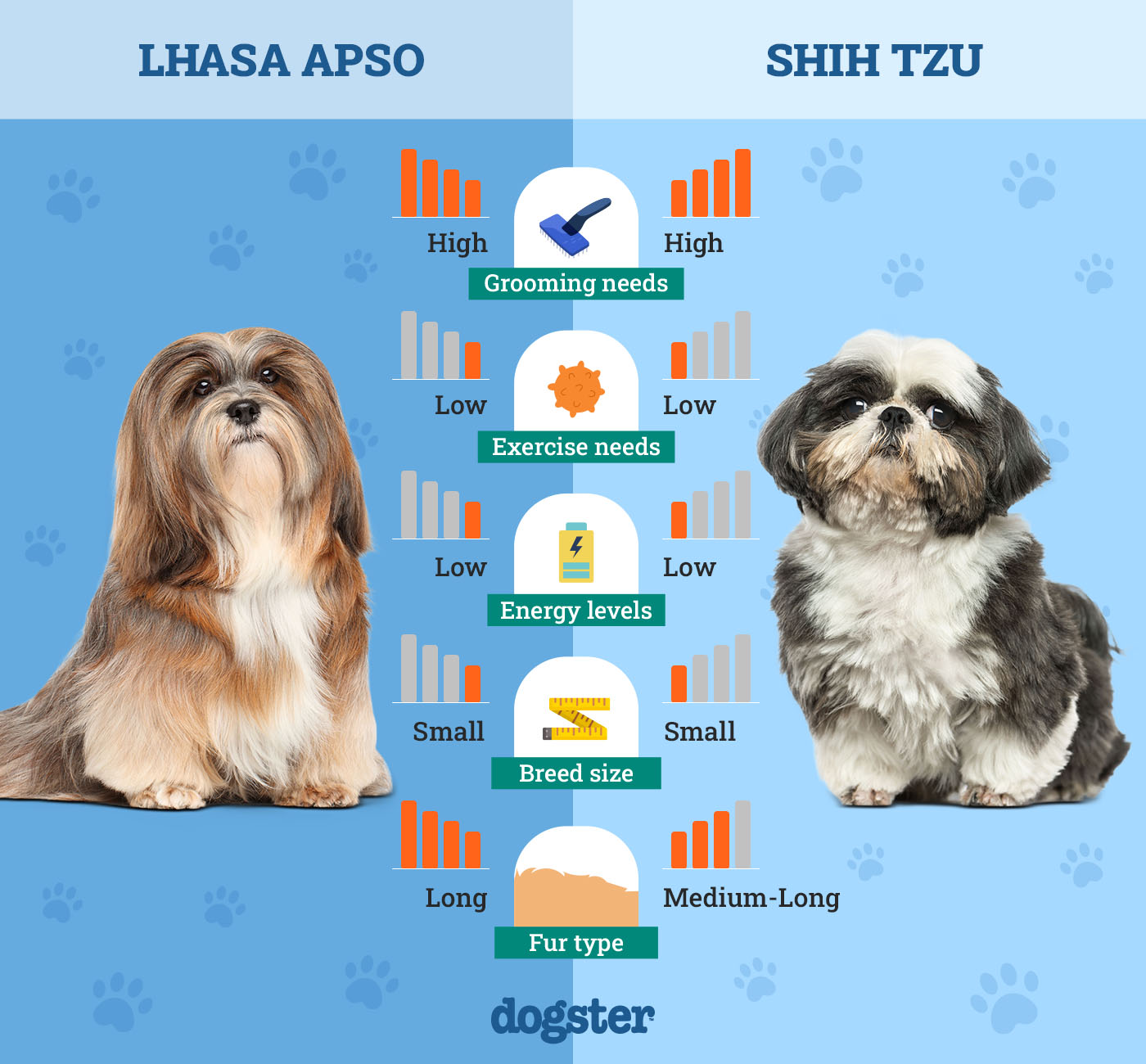
“Lhasa Apso vs Shih Tzu: The Differences …” from www.dogster.com and used with no modifications.
Physical Differences
When comparing the Lhasa Apso and Shih Tzu, their physical differences are subtle yet distinct. The Lhasa Apso typically has a slightly longer body and a more pronounced muzzle, giving it a regal and alert appearance. Their coats are long and dense, often requiring regular grooming to maintain their sleek look. For more details on how to distinguish between these two breeds, check out this guide on telling the difference.
Personality Comparisons
The personality of a Lhasa Apso can be described as independent and somewhat reserved, especially around strangers. They are known for their loyalty and protective nature, making them excellent watchdogs. In contrast, Shih Tzus are generally more sociable and friendly, eager to meet new people and animals.
While both breeds are affectionate with their families, the Lhasa Apso may take longer to warm up to new faces, often preferring the company of familiar individuals. Shih Tzus, on the other hand, tend to be more open and welcoming, making them a great choice for households with frequent visitors.
Care and Grooming Needs
Both Lhasa Apsos and Shih Tzus require regular grooming due to their long, flowing coats. However, the Lhasa Apso’s coat is typically denser and may need more frequent brushing to prevent tangles and mats. Regular grooming sessions also help maintain the health and shine of their coats.
- Brush their coat daily to prevent tangles.
- Regularly check and clean their ears to avoid infections.
- Trim their nails every few weeks to maintain foot health.
- Schedule regular dental check-ups to prevent dental issues.
Both breeds benefit from professional grooming every few months to keep their coats in top condition. Bathing should be done as needed, depending on their activity level and environment. It’s essential to use dog-specific shampoos and conditioners to maintain the coat’s natural oils.
Despite their grooming needs, both breeds are relatively low-shedding, making them suitable for people with mild allergies. Regular grooming not only keeps them looking their best but also provides an opportunity to check for any skin issues or parasites.
Wrapping Up: Is the Lhasa Apso Right for You?
Choosing a Lhasa Apso as a pet is a decision that should be made with careful consideration of their unique traits and needs. These dogs are best suited for individuals or families who appreciate a loyal, independent companion with a strong protective instinct. They thrive in environments where they can form close bonds with their owners and are given the attention and care they deserve. For those interested in exploring other breeds, consider learning about the Catahoula Leopard Dog as an alternative.

“Facts About the Lhasa Apso That You May …” from www.akc.org and used with no modifications.
Final Thoughts on Ownership
Owning a Lhasa Apso can be a rewarding experience for those who understand and appreciate their distinctive personality and needs. With the right training, socialization, and care, these dogs can become loving and devoted members of the family. It’s important to be prepared for their grooming requirements and to invest time in building a strong relationship with them.
Frequently Asked Questions (FAQ)
As you consider bringing a Lhasa Apso into your home, you may have some common questions about their behavior, care, and compatibility with your lifestyle. Here are some frequently asked questions to help you make an informed decision.
How do Lhasa Apsos behave with children?
Lhasa Apsos can be great companions for older children who understand how to interact respectfully with dogs. They may not be as tolerant of rough play as some other breeds, so supervision is recommended, especially with younger children.
- Teach children to approach and handle the dog gently.
- Encourage positive interactions through supervised play.
- Respect the dog’s space and avoid disturbing them when resting.
With proper socialization and guidance, Lhasa Apsos can form strong bonds with children, becoming protective and affectionate companions.
What are the common health issues in Lhasa Apsos?
Like all breeds, Lhasa Apsos can be prone to certain health issues. Some common concerns include:
Patellar Luxation: A condition where the kneecap dislocates, causing discomfort and mobility issues.
Progressive Retinal Atrophy (PRA): A genetic condition that can lead to vision loss over time.
Hip Dysplasia: A hereditary condition affecting the hip joint, potentially causing arthritis or lameness.
How often should a Lhasa Apso be groomed?
Regular grooming is essential for maintaining a Lhasa Apso’s coat. Daily brushing helps prevent tangles and mats, while professional grooming every few months keeps their coat healthy and neat. Bathing should be done as needed, typically every 4-6 weeks.
Can a Lhasa Apso live in an apartment?
Yes, Lhasa Apsos can adapt well to apartment living due to their small size and moderate exercise needs. However, they do require regular walks and mental stimulation to keep them happy and healthy.
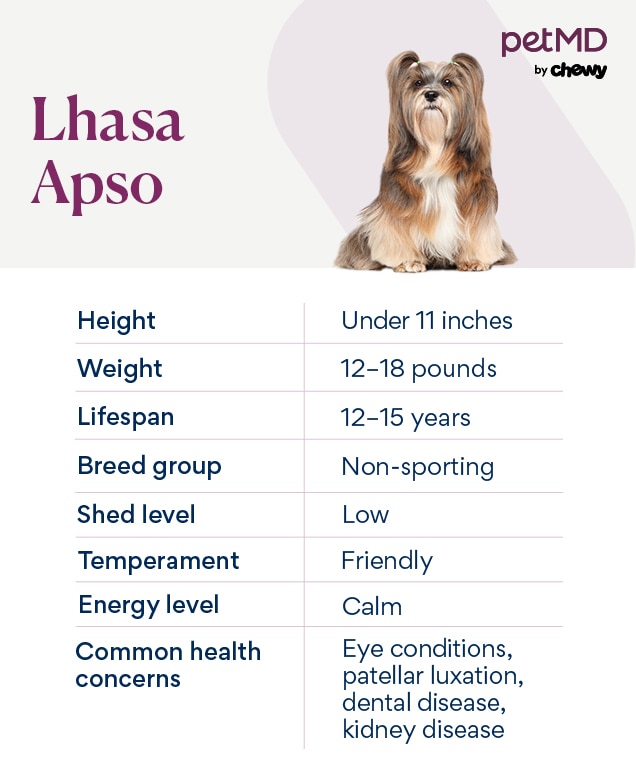
“Lhasa Apso Dog Breed Health and Care …” from www.petmd.com and used with no modifications.
What is the average lifespan of a Lhasa Apso?
Lhasa Apsos are known for their longevity, often living between 12 to 15 years with proper care. Providing a balanced diet, regular veterinary check-ups, and a loving environment can contribute to a long and healthy life.
As you consider adding a Lhasa Apso to your family, it’s important to weigh the pros and cons and ensure that you can meet their needs. With the right care and attention, these dogs can bring joy and companionship to your life for many years to come.