Key Takeaways
- The Plott Hound’s history dates back to 1750 when Johannes Plott brought five Hanover Hounds from Germany to North Carolina, creating the foundation for this unique American breed.
- Unlike other American hounds, the Plott Hound has no Foxhound ancestry, instead combining German hunting dog lineage with local mountain cur breeds.
- Plott Hounds became North Carolina’s state dog in 1989 due to their deep historical significance in the region’s hunting culture.
- This rare breed features distinctive brindle coats and exceptional tracking abilities, making them prized companions for big game hunters.
- Despite their hunting prowess, properly socialized Plott Hounds can make loyal and affectionate family companions with the right training and exercise.
The Plott Hound stands as a living testament to American frontier history, yet remains one of our country’s best-kept canine secrets. This remarkable breed embodies the perfect blend of European heritage and American wilderness adaptation. As one of the least known of the seven coonhound breeds recognized by the American Kennel Club, the Plott’s story is as distinctive as its striking brindle coat.
These tenacious hunters were developed specifically for tracking and treeing aggressive game like bear and wild boar in the rugged Appalachian Mountains. What makes them truly special is their unique lineage – unlike other American hounds, Plotts have no foxhound ancestry. Instead, they descend directly from German hunting stock, giving them a distinctive appearance and working style that sets them apart from other American scent hounds. Despite their relatively small numbers compared to more popular breeds, Plott Hounds maintain a dedicated following among hunting enthusiasts and those who appreciate their loyalty, intelligence, and athleticism.
“The Plott is a hound with a distinguished history that has remained largely unchanged for more than 200 years. He has been and still is used as a multi-purpose hunting dog for both large and small game.” – American Kennel Club Breed Standard
The Plott Hound’s rich history spans nearly three centuries, yet this remarkable breed remains relatively unknown outside hunting circles and its native North Carolina. For those seeking a dog with historical significance, exceptional working abilities, and unwavering loyalty, the Plott Hound offers a fascinating alternative to more common breeds. These dogs represent a living piece of American heritage, carefully preserved by generations of dedicated breeders who valued their unique abilities and temperament.
Uncovering the Plott Hound’s Unique History and Origins
The Plott Hound’s story begins in 1750 when Johannes “George” Plott emigrated from Germany to the American colonies. With him came five prized Hanover Hounds – scent-tracking dogs bred for hunting wild boar in the German forests. These dogs would become the foundation of what we now know as the Plott Hound. After initially settling in Pennsylvania, Johannes eventually made his way to the mountains of western North Carolina, where the breed would truly develop and flourish over the next two centuries.
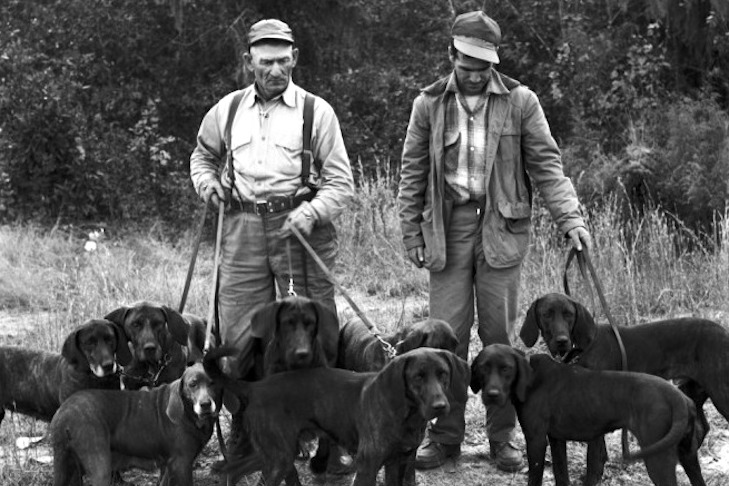
“Plott Hound History: Behind The Breed …” from www.akc.org and used with no modifications.
Early Development in North Carolina
Upon settling in the Appalachian Mountains, the Plott family found themselves in territory teeming with black bears, wild boars, and other large game. The challenging terrain and formidable quarry demanded dogs with exceptional stamina, courage, and tracking ability. Through careful selective breeding, the Plotts refined their hunting dogs to excel in this harsh environment. Generation after generation of the Plott family continued this breeding program, with Henry Plott (Johannes’ son) taking particular interest in maintaining and improving the line of hounds.
What makes the Plott Hound’s development remarkable is how isolated it remained from other breeding programs. While many American hound breeds were being created through various mixtures of English Foxhounds and other European scent hounds, the Plott family maintained their dogs’ distinct German ancestry. This isolation resulted in a uniquely American breed that retained its European working characteristics. The breed became so synonymous with the family that by the early 1800s, these dogs were commonly called “Plott’s hounds” by locals, eventually becoming simply “Plott Hounds.”
The breed’s reputation spread throughout the Smoky Mountains region as exceptional big game hunters, particularly for bear hunting. In 1989, North Carolina officially recognized the Plott Hound’s historical significance by designating it the state dog – a fitting tribute to a breed that had been shaped by and had helped shape the state’s mountain culture for more than two centuries. Despite this regional recognition, the Plott Hound remained relatively unknown nationally until much later.
Influence of the Hanover Hounds
The Hanover Hounds that Johannes Plott brought to America were themselves a specialized type of German hunting dog, specifically bred for tracking and hunting wild boar. These dogs were likely related to the Hanoverian Schweisshund (bloodhound), prized for their exceptional scenting ability and determination. The original five Hounds that made the journey across the Atlantic carried genes that would define many of the Plott Hound’s most valued traits – from their remarkable nose to their fearless temperament.
These German hunting dogs were significantly different from the English hunting dogs that influenced most American hound breeds. Rather than focusing on speed and pack hunting behavior, Hanover Hounds emphasized strength, individual tracking ability, and courage when confronting dangerous game. Their coat color – predominantly brindle – also passed down through generations of Plott Hounds, becoming one of the breed’s most distinctive features. This German heritage explains why Plott Hounds look and work somewhat differently than other American hounds, despite developing in the same region.
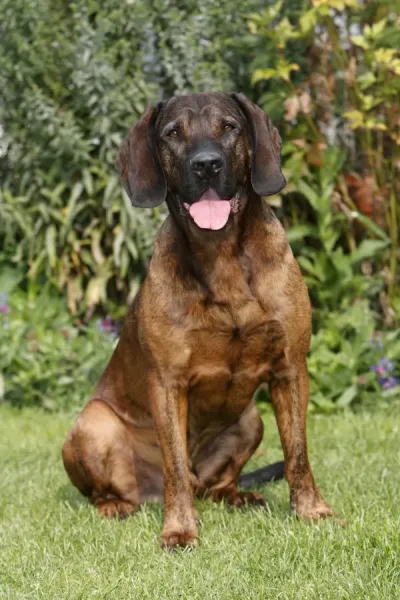
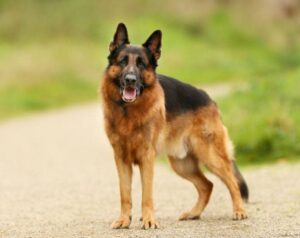
“Hanover Hound Sitting in German Garden …” from www.ardeaprints.com and used with no modifications.
Breeds Mixed to Create the Plott Hound
While the Hanover Hounds formed the foundation of the breed, historical records suggest that the Plott family did introduce some other bloodlines over the generations. Most notably, there appears to have been some crossing with local “mountain curs” – tough, all-purpose hunting dogs used by settlers throughout Appalachia. These infusions likely helped adapt the original German dogs to the specific challenges of the American wilderness, enhancing their ability to work in the mountainous terrain of western North Carolina.
Unlike many other American hound breeds, the Plott Hound developed with minimal influence from English Foxhound bloodlines. This distinction is critical to understanding what makes the breed unique among American hounds. While Redbones, Black and Tans, Blueticks and other coonhound varieties share significant English Foxhound ancestry, the Plott stands apart with its predominantly German heritage. This difference manifests in the Plott’s appearance, working style, and temperament – creating a truly distinctive American hunting dog.
Key Characteristics and Identification of the Plott Hound
Identifying a Plott Hound is relatively straightforward once you know the distinctive characteristics that set this breed apart from other American hounds. Standing between 20-25 inches at the shoulder and weighing 50-60 pounds, Plott Hounds possess a muscular, athletic build that reflects their working heritage. Their streamlined yet powerful physique allows them to navigate rugged mountain terrain with ease while maintaining the stamina needed for daylong hunts. What immediately catches the eye, however, is their unique coat pattern that reflects their specialized breeding history.
Physical Traits and Appearance
The Plott Hound’s physical structure clearly indicates its purpose as a working dog built for endurance and strength rather than speed alone. These dogs have a deep chest, strong shoulders, and well-muscled hindquarters that provide the power needed for navigating steep terrain. Their ears are moderately long and hang naturally, though not as dramatically pendulous as some other hound breeds. The head is moderately wide with a slightly domed skull, displaying intelligence and alertness through bright, expressive eyes that range from hazel to brown.
Unlike some scent hounds that can appear heavy or lumbering, Plott Hounds maintain an athletic silhouette with a moderately tucked waist and clean lines. Their feet are compact and well-padded, providing excellent traction on various terrains. The tail is set moderately high and carried upright when alert, typically with a slight curve. When examining a Plott Hound, one should notice a balanced, functional structure without exaggerated features – a dog clearly built to work long hours in challenging conditions.
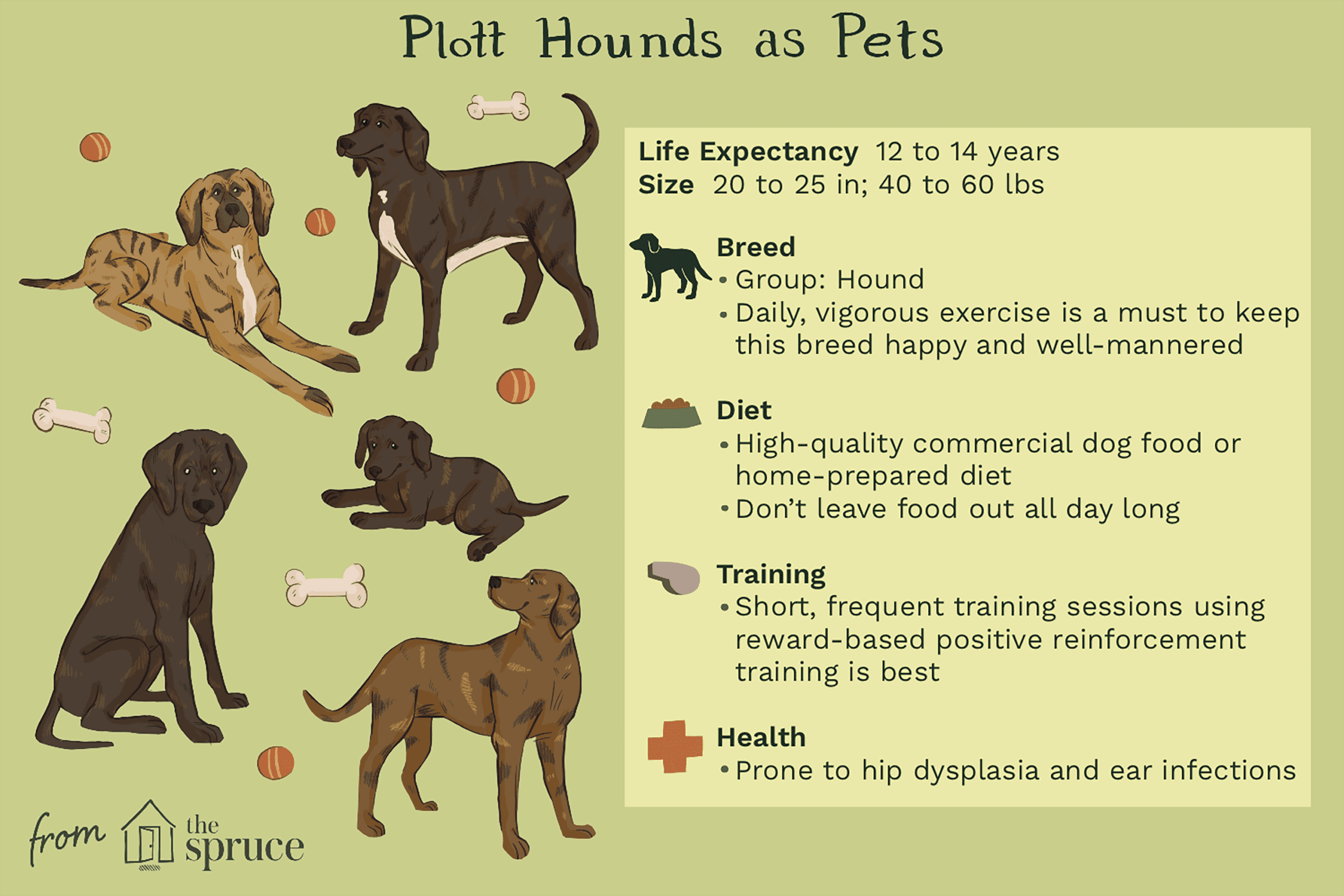
“Plott Hound: Dog Breed Characteristics …” from www.thesprucepets.com and used with no modifications.
Distinctive Coloring and Patterns
The most recognizable feature of the Plott Hound is undoubtedly its coat color and pattern. The breed is predominantly known for its striking brindle coat – a tiger-striped pattern of dark stripes over a lighter base. This brindle coloration can range from light to dark, with some dogs displaying nearly black markings over a lighter buckskin or tan background. Others show red or orange brindle patterns. Solid black dogs also appear in the breed, as do dogs with brindle trim or markings on an otherwise solid background.
Many Plott Hounds have a “saddle” pattern where the brindle is more pronounced on the back and sides, sometimes with lighter coloration on the legs and face. Small white markings on the chest and feet are permissible according to breed standards, though extensive white markings are discouraged. The coat itself is short to medium in length, lying close to the body with a sleek, glossy appearance that sheds dirt and water easily – another practical adaptation for a working dog that spends time in dense underbrush, similar to the Ibizan Hound.
Breed Standards
The American Kennel Club officially recognized the Plott Hound in 2006, though the United Kennel Club had acknowledged the breed much earlier in 1946. According to the AKC standard, Plott Hounds should display a balanced, muscular build with no exaggerated features. They should move with an effortless, ground-covering stride that suggests both agility and endurance. The standard emphasizes the working qualities of the breed, noting that while appearance matters, function should never be sacrificed for form.
- Height: Males 20-25 inches at shoulder; females slightly smaller
- Weight: 50-60 pounds, with males typically heavier than females
- Coat: Short to medium length, smooth and fine
- Color: Any shade of brindle (preferred); solid black; black with brindle trim
- Voice: Clear, loud bay with distinctive chop barking when on trail
When judging a Plott Hound, particularly important are signs of stamina, strength, and agility – qualities essential for a dog bred to track and tree dangerous game in mountainous terrain. Structural soundness is prioritized over cosmetic considerations, reflecting the breed’s working heritage. The standard also notes the importance of the Plott’s distinctive voice, as these dogs were bred to be heard from great distances when baying at treed game in the mountains.
Challenges and Reasons for Rarity
Despite their impressive hunting abilities and distinctive appearance, Plott Hounds remain relatively rare compared to many other breeds. This rarity stems from several factors, including their specialized working heritage, limited promotion outside hunting circles, and the changing nature of dog ownership in America. While dedicated enthusiasts maintain the breed’s traditional working abilities, Plott Hounds have never been widely marketed as companion animals, keeping their numbers relatively low and concentrated primarily in the southeastern United States.
Health Issues and Common Problems
Plott Hounds are generally robust and healthy dogs, benefiting from a genetic heritage focused on working ability rather than appearance. As a breed that developed through practical selection rather than show ring preferences, they’ve avoided many of the health issues that plague more popular breeds. However, like all dogs, they can be susceptible to certain conditions. Hip dysplasia can occur, though less frequently than in many larger breeds. Ear infections may develop due to their pendant ears, especially in dogs that swim frequently or hunt in wet conditions.
Gastric dilatation-volvulus (bloat) represents another potential concern in this deep-chested breed, particularly for active working dogs. Some lines may show predisposition to epilepsy, though this remains relatively uncommon. One significant advantage of the Plott Hound’s genetic diversity and working heritage is their typically long lifespan of 12-14 years – notably longer than many dogs of similar size. Responsible breeders screen for hip issues and other hereditary concerns, maintaining the breed’s reputation for hardiness and longevity. For insights into another hound breed, explore this Ibizan Hound dog breed interview.
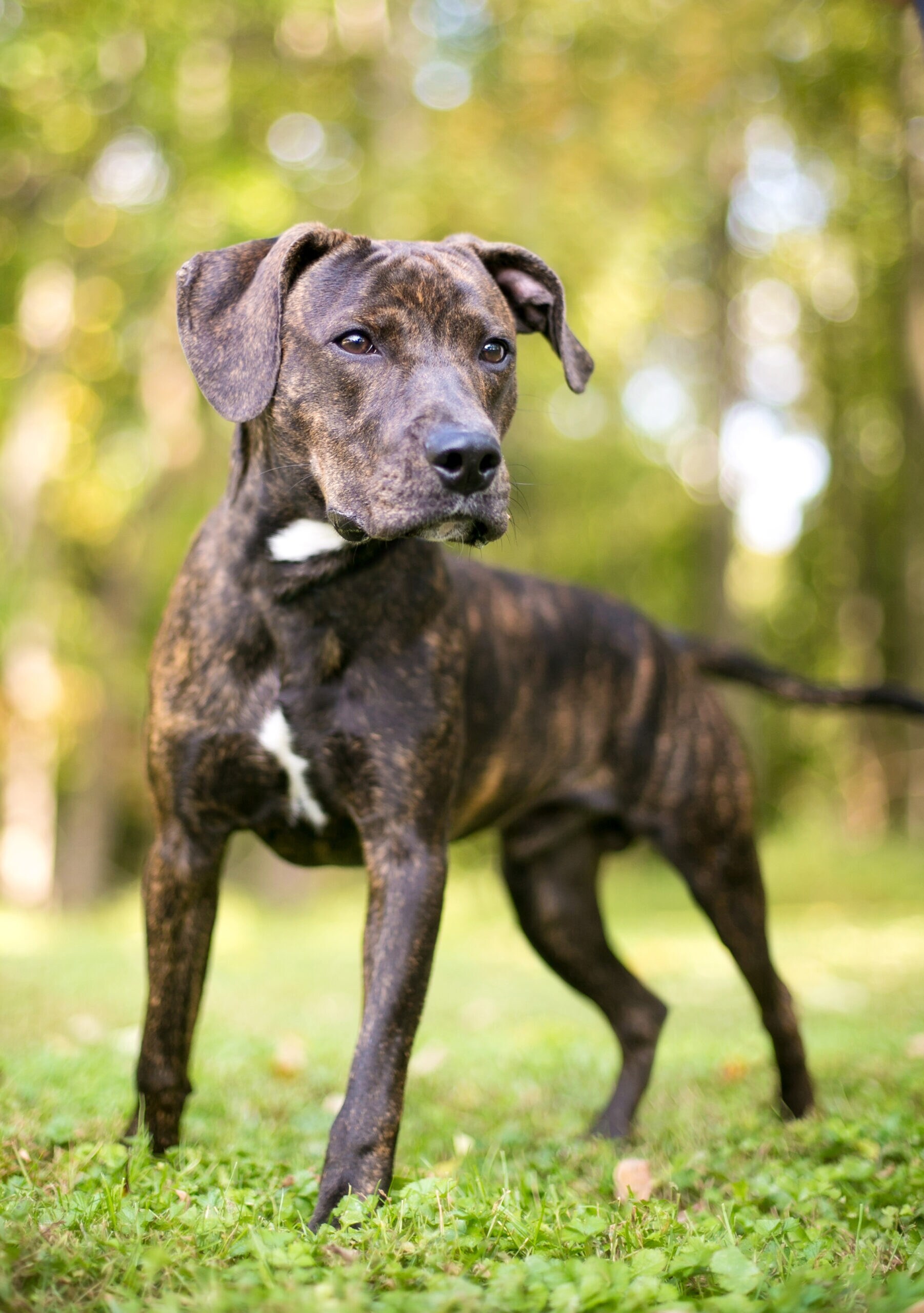
“Plott Hound Breed: Characteristics …” from www.chewy.com and used with no modifications.
Why the Plott Hound Remains Uncommon
The Plott Hound’s rarity stems largely from its specialized purpose and the dedicated but small community that has maintained the breed. Unlike breeds developed specifically for companionship or show purposes, Plotts were created and preserved for hunting large, dangerous game – a specialized activity with a limited following. Additionally, the breed’s development remained largely concentrated in the Appalachian region, particularly North Carolina, limiting its geographic spread. Only in recent decades has the breed gained recognition beyond its traditional hunting circles, with AKC recognition coming only in 2006.
Understanding Plott Hound Temperament and Behavior
The Plott Hound’s temperament reflects its heritage as both a serious working dog and a family companion. These dogs typically display a fascinating dual personality – tenacious and fearless when hunting, yet gentle and affectionate at home. This balanced temperament served an important purpose historically, as these dogs needed to be reliable both in the field and around the family farm. Modern Plott owners often describe their dogs as having an “off switch” – capable of intense focus and drive when working, but relaxed and companionable when the hunt is over.
Loyalty and Affectionate Nature
Despite their reputation as dedicated hunting dogs, Plott Hounds form exceptionally strong bonds with their human families. Unlike some scent hounds that maintain a certain independence, Plotts typically display pronounced loyalty and devotion to their owners. This attachment likely stems from their history of working closely with individual hunters rather than primarily in large packs. Plott Hounds generally show warm affection toward family members, often seeking physical contact and companionship when not working. Learn more about other dog breeds that are known for their affectionate nature.
- Strong one-person or one-family bonds
- Moderate to high need for human interaction
- Tendency to follow owners from room to room
- Affectionate without being overly needy
- Protective instincts toward family members
This loyalty extends to a natural protective instinct, with most Plott Hounds serving as excellent watchdogs. They typically greet strangers with reserved caution rather than aggression or excessive friendliness. Once introduced properly, they generally accept visitors without issue. This balanced approach to strangers – neither overly suspicious nor naively trusting – makes them reliable family guardians without the extreme territorial behavior seen in some protective breeds.
It’s worth noting that the Plott Hound’s affectionate nature requires proper outlet. These dogs thrive on inclusion in family activities and can become destructive or develop separation anxiety if regularly isolated. Their strong attachment to their people means they do poorly when relegated to backyard-only living, despite their physical toughness. The most successful Plott Hound owners treat these dogs as true companions, not merely as hunting tools or outdoor guardians.
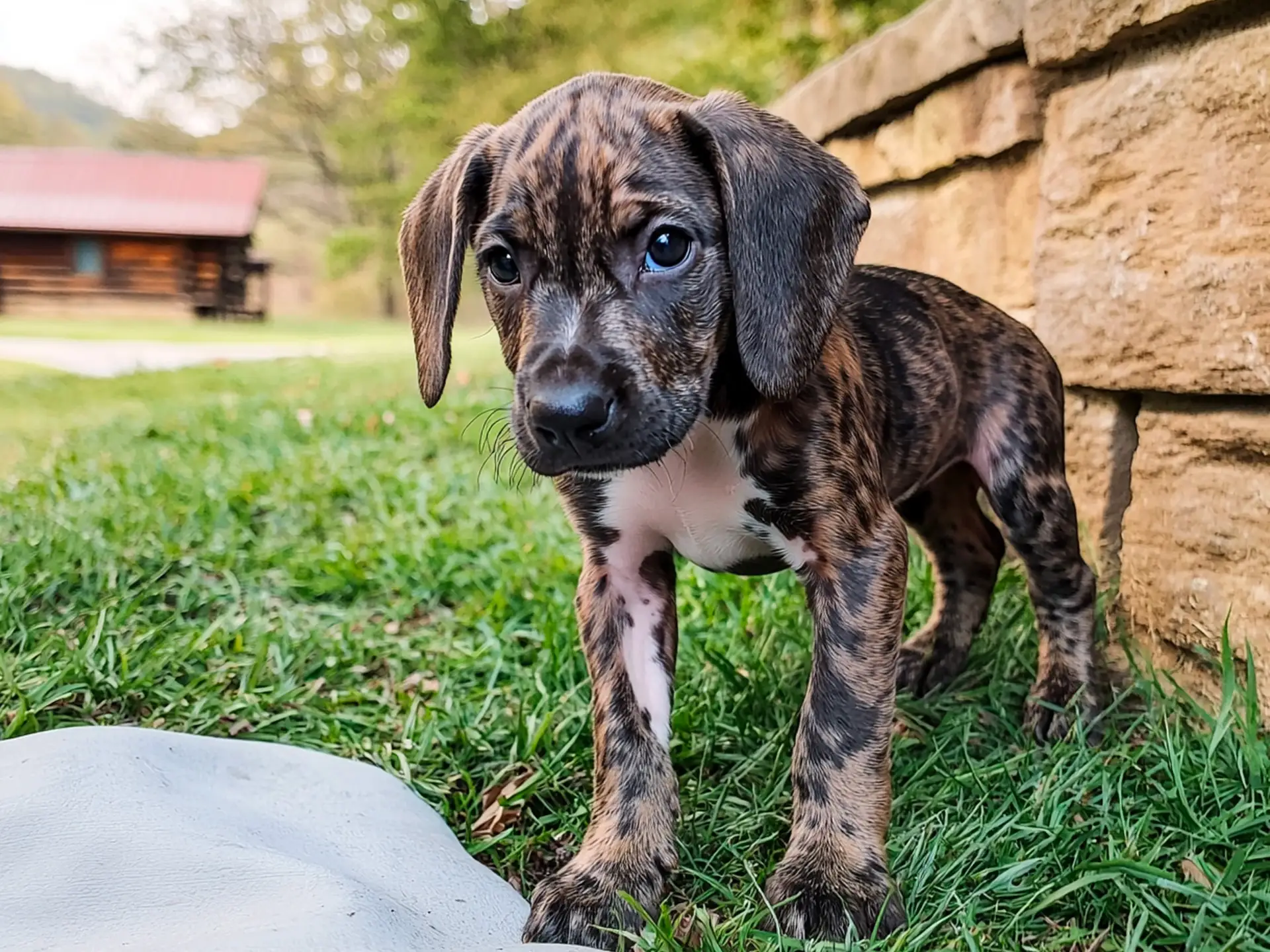
“Plott Hound: The Tenacious and Skilled …” from www.dogpackapp.com and used with no modifications.
Socialization with Kids and Other Pets
Well-socialized Plott Hounds typically interact wonderfully with children, displaying patience and gentleness despite their hunting heritage. Their energetic nature makes them excellent playmates for older children who can match their activity level. As with any breed, interactions between young children and dogs should always be supervised, less for concerns about aggression than to prevent the rough-and-tumble play that energetic hounds might initiate. Early exposure to children helps Plott puppies develop appropriate play behaviors and recognition of human youngsters’ relative fragility.
Compatibility with Multiple Pets
Plott Hounds have complex relationships with other animals due to their strong prey drive and hunting background. While they generally get along well with other dogs when properly socialized, their history as pack hunters makes them naturally inclined toward canine companionship. Many Plott owners find that having two hounds helps satisfy their social needs and provides an outlet for play energy. However, proper introduction techniques and supervision remain important, as these confident dogs may challenge other dogs for status in the household hierarchy.
With non-canine pets, caution is warranted as Plott Hounds were bred specifically to track and tree game. Their prey drive can trigger chase behaviors with cats, rabbits, or other small animals. Early socialization is crucial if they will be living with smaller pets. Some Plotts can learn to accept household cats as part of their “pack,” particularly when raised together from puppyhood. However, even well-socialized Plotts may still chase unfamiliar neighborhood cats or wildlife, requiring secure fencing and reliable recall training for safety.
Exercise Needs and Ideal Lifestyle
The Plott Hound’s heritage as an endurance hunter in rugged mountain terrain has created a breed with substantial exercise requirements. These athletic dogs possess remarkable stamina and energy levels that must find appropriate outlets to prevent behavioral problems. Understanding and accommodating these needs is perhaps the most critical factor in successfully integrating a Plott Hound into modern family life.
Daily Exercise Requirements
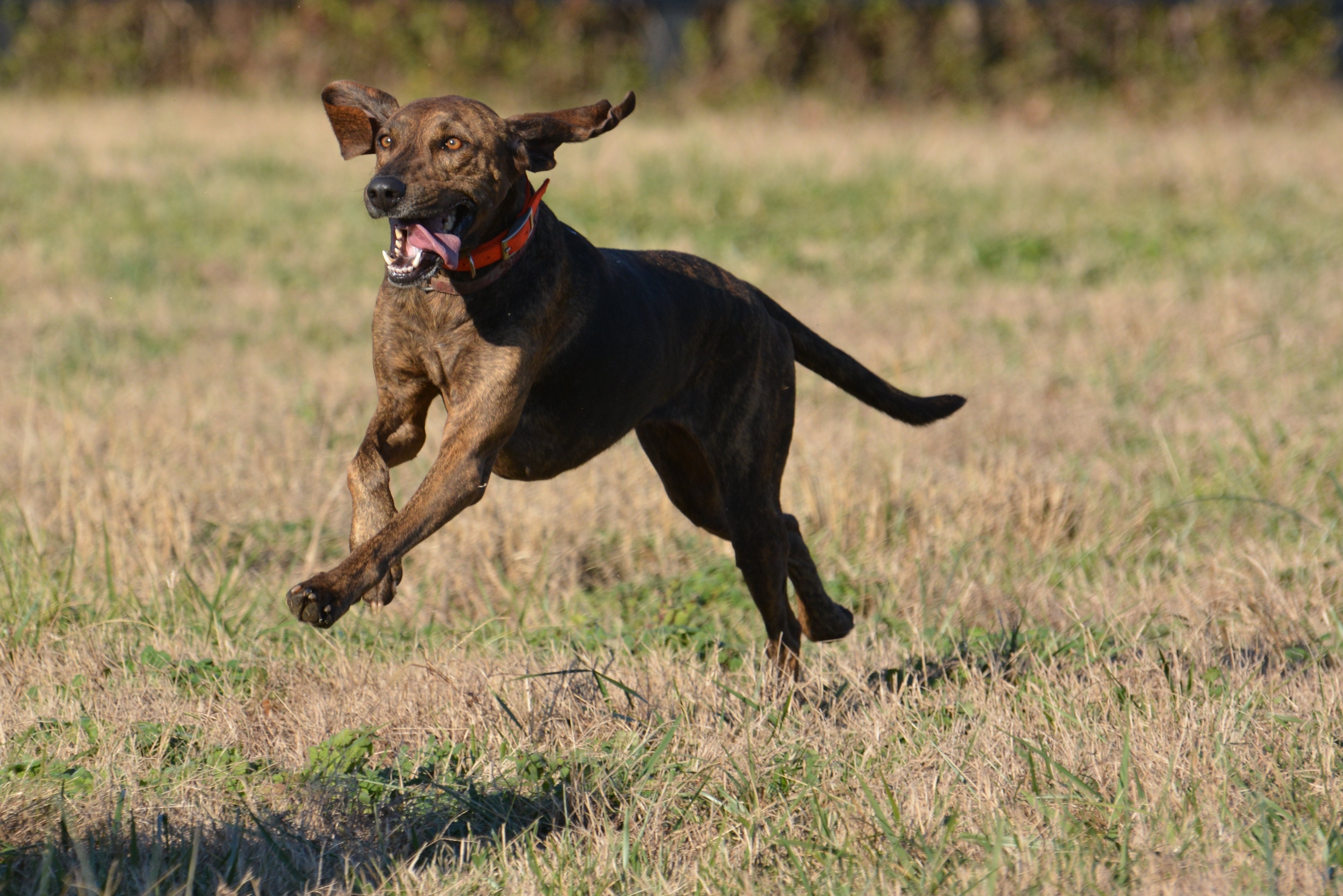
Plott Hounds require significant daily physical activity to maintain both physical and mental health. At minimum, these dogs need at least an hour of vigorous exercise daily, with many individuals requiring considerably more. Unlike some breeds that are satisfied with a casual stroll, Plotts benefit most from activities that engage both body and mind. Hiking, jogging, swimming, and fetch games over large areas allow them to use their bodies as nature intended. For working Plotts, regular hunting or tracking activities provide ideal exercise while satisfying their innate desires to use their exceptional scenting abilities.
Mental stimulation proves equally important for this intelligent breed. Scent-based games, puzzle toys, and training activities that challenge their problem-solving abilities help prevent boredom. A bored Plott is likely to become destructive, developing problematic behaviors like excessive barking, digging, or chewing. Many owners find that nose work, tracking games, or scent training classes provide perfect outlets for their Plott’s natural abilities, even when actual hunting isn’t possible. The combination of physical exercise and mental challenges creates a balanced approach that satisfies both body and mind.
“Plott Hound Dog Breed & Adoption …” from www.petfinder.com and used with no modifications.
Ideal Living Spaces and Environments
Plott Hounds thrive in environments that provide ample space for exercise and exploration. Rural or suburban homes with securely fenced yards offer ideal settings, allowing these active dogs room to move while containing their wandering tendencies. The fence must be both tall and secure, as Plotts can be determined escape artists when motivated by interesting scents or perceived prey. Electronic containment systems often prove ineffective with this breed, as their hunting drive may override the deterrent of a momentary shock when pursuing compelling scents. For more insights into similar breeds, check out this Setter dog breeds expert interview.
- Securely fenced yard with minimum 6-foot fencing
- Access to safe trails or open spaces for off-leash exercise (where legal)
- Enrichment opportunities through toys, puzzles, and training
- Weather-appropriate shelter if spending time outdoors
- Indoor living space with family integration
While traditionally kept as outdoor working dogs, modern Plott Hounds generally do best as indoor/outdoor pets with significant family interaction. Their short coats offer limited protection from extreme weather, requiring appropriate shelter in very hot or cold conditions. Despite their rugged appearance, Plotts form strong bonds with their people and typically prefer being where the family is rather than isolated outdoors. Their moderate shedding and naturally clean habits make them reasonable indoor companions, though their size and energy level necessitate adequate space.
Urban living presents challenges for Plott Hound ownership but isn’t impossible with committed owners. Apartment dwellers must commit to multiple daily exercise outings and should live near parks or natural areas for proper exercise. The breed’s tendency toward “bay” vocalizations can create noise issues in close quarters, requiring sound training and consideration for neighbors. For city-dwelling Plotts, doggy daycare, regular hiking excursions, or participation in dog sports becomes especially important to channel their considerable energy constructively.
The ideal Plott Hound owner maintains an active lifestyle that incorporates their dog as a regular companion. Hikers, runners, outdoor enthusiasts, and those with access to appropriate hunting opportunities make natural matches for this energetic breed. Families with older children who can participate in exercising and training the dog also create positive environments. Regardless of specific living situation, the key factors remain consistent engagement, exercise, and integration into family activities rather than isolation.
Frequently Asked Questions
As one of America’s lesser-known breeds, Plott Hounds often generate questions from those encountering them for the first time. These frequently asked questions address common inquiries about this unique American hunting breed, providing concise information for potential owners and breed enthusiasts alike.
“Plott Hound Dog Breed: 10 Amazing Facts …” from www.youtube.com and used with no modifications.
What is the history behind the Plott Hound’s name?
The Plott Hound derives its name directly from the family that created and maintained the breed for generations. Johannes “George” Plott immigrated to America from Germany in 1750, bringing with him five Hanover Hounds that would become the foundation stock for the breed. Rather than being named for its appearance or function like many breeds, the Plott Hound carries the surname of the family that developed it over more than two centuries.
This naming tradition reflects the breed’s development by a single family line rather than a broader regional breeding program. Throughout the 18th and 19th centuries, the Plott family maintained careful breeding practices, creating dogs specialized for hunting in the Appalachian Mountains. Local hunters came to know these distinctive dogs as “Plott’s hounds,” a name that eventually standardized to the current “Plott Hound.”
The Plott family’s dedication to maintaining their hunting line extended through multiple generations. Henry Plott, Johannes’ son, took particular interest in the breeding program, further refining the dogs’ hunting abilities. The family name became so synonymous with quality hunting dogs that by the early 20th century, the breed was widely recognized throughout the Southeast by the Plott name alone.
- Named after the Plott family who developed the breed
- Reflects single-family breeding program rather than regional development
- Name recognized informally for generations before official registration
- One of few American breeds named after its founding family
“Plott Hound Dog Breed… Everything You …” from indulgeyourpet.com and used with no modifications.
How does the Plott Hound differ from other hounds?
The Plott Hound stands apart from other American hounds primarily through its distinct genetic heritage. While most American hounds developed from English Foxhound stock, the Plott descends from German hunting dogs, specifically Hanover Hounds. This difference manifests in several ways: Plotts typically have more substantial builds, more aggressive hunting styles particularly for large game, and distinctive brindle colorations not commonly seen in foxhound-derived breeds. Their specialized breeding for bear and boar hunting created dogs with exceptional courage and determination, willing to bay and hold dangerous game rather than simply trailing it. For those interested in learning about other unique hound breeds, check out this Ibizan Hound expert interview.
Another key distinction lies in the Plott’s hunting style and voice. Their bark or “chop” tends to be sharper and more distinct than the melodious baying associated with foxhound-derived coonhounds. When working, Plotts often display more independence and problem-solving ability, traits valued in dogs that might need to work alone in challenging mountain terrain. While other coonhounds excel at trailing raccoons and treeing smaller game, Plotts were specifically developed for more dangerous quarry, giving them a boldness and intensity that sets them apart from their American hound cousins.
What are the main health concerns for Plott Hounds?
Plott Hounds generally enjoy robust health due to their working heritage and relative freedom from exaggerated physical features. However, prospective owners should be aware of several potential health concerns. Hip dysplasia can occur in the breed, though less frequently than in many larger dogs. Ear infections may develop due to their pendant ears, particularly in dogs that swim frequently or hunt in wet conditions. Gastric dilatation-volvulus (bloat) represents another potential concern in this deep-chested breed. Some lines may show predispositions to epilepsy or other neurological conditions, though these remain relatively uncommon. Responsible breeders screen for these issues and maintain health records across generations, helping to preserve the breed’s reputation for hardiness and longevity, which typically ranges from 12-14 years.
Can Plott Hounds adapt to apartment living?
While not ideal candidates for apartment living, Plott Hounds can adapt to urban environments with exceptionally committed owners. Success requires multiple daily exercise sessions, access to parks or natural areas, sound training to manage vocalizations, and creative solutions for mental stimulation. Urban Plotts benefit tremendously from weekend hiking excursions, participation in dog sports like nose work or tracking, and consistent training to prevent boredom-related behaviors. Potential urban owners should honestly assess their ability to meet the breed’s substantial exercise needs before bringing a Plott into a confined living situation. Most breed experts recommend at least some yard space for this active, scent-driven breed, making suburban environments with fenced yards a better minimum standard for responsible ownership.
What are some famous Plott Hounds in history?
Unlike some breeds associated with celebrities or historical figures, the Plott Hound’s fame remains primarily within hunting circles rather than mainstream recognition. The most historically significant Plotts were those owned by the breed’s founding family, particularly the original five Hanover Hounds that Johannes Plott brought from Germany in 1750. These foundation dogs, though their individual names are lost to history, established the genetic basis for the entire breed.
In more recent history, “Gar” owned by Taylor Lutterman gained recognition in the 1930s when featured in hunting publications of the era, helping bring national attention to the breed. “Blevins” owned by Von Plott (a descendant of the original Plott family) became noted for exceptional hunting abilities in the mid-20th century. Within competitive hunting circles, numerous Plotts have achieved notable titles in bear hunting competitions, treeing contests, and other working events, though these accomplishments remain primarily celebrated within specialized hunting communities rather than general public awareness.
The breed’s most significant recognition came not through individual dogs but through collective acknowledgment when North Carolina named the Plott Hound its official state dog in 1989. This designation recognized the breed’s historical importance to the state’s culture and hunting traditions, particularly in the western mountain regions where the Plott family settled and developed the breed.