
Key Takeaways
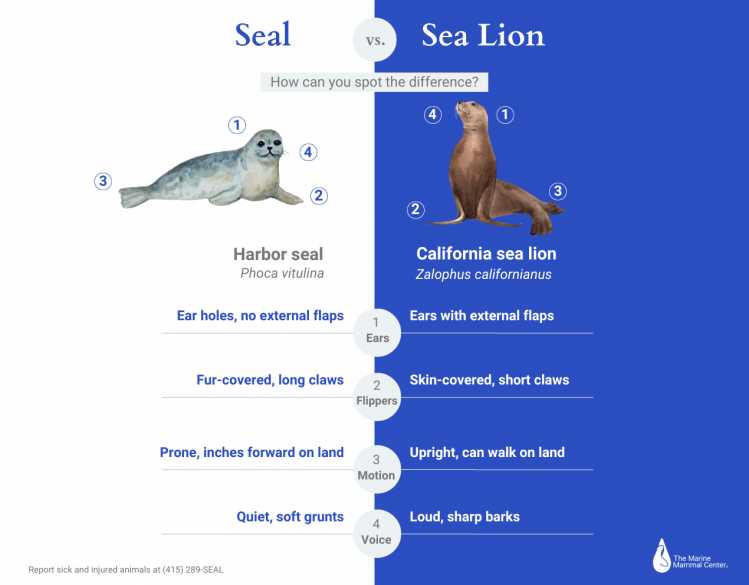
- Sea lions have visible ear flaps while seals have only small ear holes, making ears the quickest way to tell them apart.
- Sea lions are more agile on land, walking on all four flippers, while seals move with a caterpillar-like motion.
- Both animals belong to the pinniped family, but sea lions are more social and vocal, often heard barking loudly in colonies.
- Sea lions swim using their front flippers while seals primarily use their rear flippers and body undulation for propulsion.
- Different species have adapted to various habitats worldwide, from Arctic waters to tropical coastlines, each with unique conservation challenges.
Seals and sea lions may appear similar at first glance, but these fascinating marine mammals have distinct characteristics that set them apart. Understanding these differences not only enriches your wildlife knowledge but also helps you identify these animals correctly during coastal adventures. While both belong to the same taxonomic group, their evolutionary paths have created notable variations in anatomy, behavior, and habitat preferences.
The Marine Mammal Center, a leading organization in marine mammal rescue, rehabilitate and research, regularly documents the key differences between these pinnipeds along California’s coastline. Their expertise has shown that what many people casually call “seals” are often sea lions, and recognizing the distinction between these animals is crucial for conservation efforts and public education.
Spot the Difference: How to Tell Seals and Sea Lions Apart
When observing pinnipeds along shorelines or in marine parks, several telltale features can help you distinguish between seals and sea lions. These differences aren’t merely academic—they reflect important evolutionary adaptations that have helped these mammals thrive in their respective niches. From physical characteristics to behavioral traits, knowing what to look for transforms an ordinary wildlife sighting into an informed observation.
The differences between these animals stem from their evolutionary adaptations to different marine environments and hunting strategies. While both are superbly adapted for aquatic life, the variations in their anatomy and behavior provide fascinating insights into their ecological roles and survival strategies in the world’s oceans. For those interested in pet safety and care tips, understanding these adaptations can also enhance our knowledge of how to better care for marine life in captivity.
“Seal vs. Sea Lion: Your Guide to …” from www.marinemammalcenter.org and used with no modifications.
Ears: The Easiest Way to Identify Them
The most straightforward way to distinguish between seals and sea lions is by looking at their ears. Sea lions have visible external ear flaps (pinnae), while true seals have only small ear holes with no external flap. This seemingly minor difference is actually significant enough that sea lions are sometimes called “eared seals,” while true seals are referred to as “earless seals” despite having functioning ears. This distinction isn’t just visual—it reflects different evolutionary paths these animals have taken.
These ear differences also hint at their different lifestyles. Sea lions, with their external ear flaps, tend to spend more time on land where directional hearing is advantageous for detecting threats and communicating with colony members. True seals, with their streamlined ear openings, are more specialized for deep diving where external ear flaps would create unnecessary drag underwater.
Quick ID Guide: Ears and Head Shape
Sea Lions: Visible ear flaps, dog-like snout, relatively long neck
True Seals: No external ear flaps, cat-like face, shorter neck
Flipper Shape and Movement Style
Flipper structure creates one of the most obvious differences in how these animals move both in water and on land. Sea lions have large, powerful front flippers that they can rotate underneath their bodies, allowing them to “walk” on all fours when on land. This gives them surprising mobility and speed on beaches and rocky shores. In contrast, true seals have smaller front flippers and cannot rotate their hind flippers forward, resulting in a distinctive caterpillar-like belly motion when moving on land, where they scoot by contracting and relaxing their abdominal muscles.
Vocalizations: Barks vs. Grunts
The vocal differences between sea lions and seals provide another clear distinguishing feature. Sea lions are famously noisy, producing loud barks that can be heard from considerable distances. Male California sea lions are particularly vocal during breeding season, using distinctive barking calls to establish territory and attract mates. These vocalizations have earned them the nickname “sea dogs” in some regions and made them favorites in marine animal shows.
True seals, by comparison, are generally quieter and more reserved in their vocalizations. They typically communicate through softer grunts, growls, and snorts rather than the boisterous barking of their sea lion cousins. Harbor seals, for instance, make short, grunting sounds, while elephant seals produce deep, resonant calls during breeding season that sound almost like loud belching or drumming. These vocal differences reflect their different social structures—sea lions being more gregarious and seals often more solitary.
Body Shape and Size Differences
Sea lions typically have a more streamlined, elongated body shape with relatively longer front flippers and a noticeable neck, giving them a more distinct head-body separation. True seals usually display a more rounded, torpedo-shaped body with a shorter neck that makes their head appear to merge with their shoulders. Additionally, sea lions tend to have a more pronounced sexual dimorphism, with males substantially larger than females and often sporting distinctive features like the California sea lion’s sagittal crest—a raised forehead that develops in mature males.
The Pinniped Family: Not Just Marine Mammals
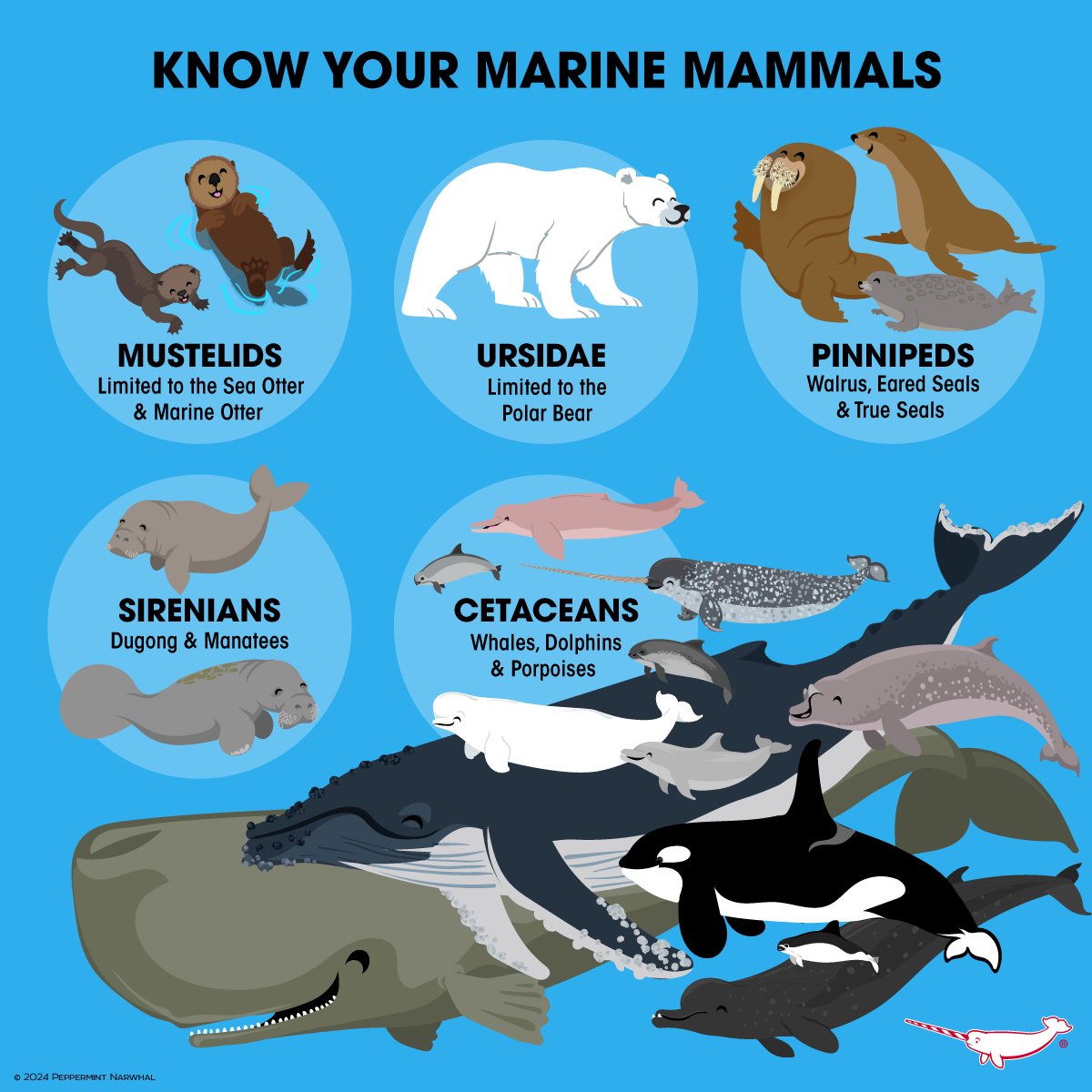
Both seals and sea lions belong to the taxonomic group called pinnipeds, which literally means “fin-footed” in Latin. This classification separates them from other marine mammals like whales, dolphins, and manatees, which have completely different evolutionary origins. Pinnipeds occupy a fascinating middle ground in mammalian evolution—they’re mammals that have readapted to aquatic life while still maintaining important connections to land, particularly for breeding and raising young.
“All About Marine Mammals – National …” from nmmf.org and used with no modifications.
What Makes a Pinniped Different from Other Marine Mammals
Unlike cetaceans (whales and dolphins) that give birth and spend their entire lives in water, pinnipeds must return to land or ice to reproduce and molt. They’ve evolved specialized adaptations that allow them to move between aquatic and terrestrial environments efficiently. These include their distinctive flippers, specialized blubber layers for insulation, and unique respiratory adaptations that allow for extended dives. Pinnipeds also retain external ear structures (though reduced in true seals) and have preserved the ability to move on land, unlike fully aquatic mammals that would be completely helpless if beached.
The Three Main Pinniped Groups
|
Pinniped Family |
Common Name |
Key Characteristics |
Example Species |
|---|---|---|---|
|
Otariidae |
Eared Seals |
External ear flaps, walking on all fours, vocal |
California sea lion, Steller sea lion, fur seals |
|
Phocidae |
True Seals |
No external ears, belly-crawling on land, less vocal |
Harbor seal, elephant seal, monk seal |
|
Odobenidae |
Walrus |
Tusks, no external ears, massive size |
Pacific walrus (only one extant species) |
Evolutionary Journey from Land to Sea
The pinnipeds’ evolutionary story is one of remarkable adaptation, as these mammals returned to the marine environment after their ancestors had established themselves on land. Genetic and fossil evidence indicates that pinnipeds diverged from terrestrial carnivores approximately 50 million years ago, sharing a common ancestor with modern bears and weasels. This evolutionary U-turn required profound anatomical changes, including the transformation of limbs into flippers, development of blubber for insulation, and specialized adaptations for deep diving and underwater hunting.
The evolutionary paths of seals and sea lions diverged approximately 23 million years ago, with true seals (Phocidae) evolving to be more fully aquatic, while sea lions and fur seals (Otariidae) retained more features advantageous for a semi-terrestrial lifestyle. This explains many of the anatomical differences we observe today—sea lions’ ability to rotate their hind flippers forward for walking represents a preservation of terrestrial mobility that true seals have largely sacrificed for enhanced swimming efficiency.
Sea Lions: The Show-offs of the Sea
Sea lions have earned their reputation as the extroverts of the pinniped world. With their boisterous barking, impressive agility both in water and on land, and tendency to form large, noisy colonies, they’re natural performers that have become favorites in marine parks worldwide. Their intelligence and trainability have made them valuable to humans for entertainment, but also for military applications where their diving abilities far exceed what human divers can achieve.
Where Sea Lions Live Around the World
Sea lions have adapted to diverse marine environments, but they’re not found in all the world’s oceans. Unlike some seal species that inhabit polar regions, sea lions generally prefer temperate to sub-polar waters, avoiding the extreme Arctic and Antarctic zones. The majority of sea lion species are found in the Pacific Ocean, with populations along the western coasts of North and South America, around Australia, New Zealand, and parts of Asia.
California sea lions range from southern Alaska to Mexico, with large populations gathering at famous locations like Pier 39 in San Francisco and the Channel Islands off southern California. Steller sea lions inhabit a more northern range, from Japan’s northern islands across the Bering Sea to Alaska and down to central California. In the Southern Hemisphere, species like the South American sea lion populate the coasts of Peru, Chile, Argentina, and Brazil, while Australian sea lions are found exclusively along southern Australian shores.
- California sea lion: Eastern Pacific from Alaska to Mexico
- Steller sea lion: Northern Pacific from Japan to California
- South American sea lion: Western South America and eastern South America
- Australian sea lion: Southern and western Australian coastline
- New Zealand sea lion: Sub-Antarctic islands of New Zealand
5 Sea Lion Species You Should Know
The California sea lion (Zalophus californianus) is perhaps the most recognizable species, featured in countless marine shows and frequently spotted basking on docks and buoys along the western coast of North America. Males develop a distinctive bump on their forehead called a sagittal crest and can weigh up to 800 pounds, while females typically reach about 240 pounds. Their remarkable intelligence and adaptability have made them successful despite human encroachment on their habitat.
The Steller sea lion (Eumetopias jubatus) is the largest sea lion species, with males reaching up to 2,500 pounds—more than three times the size of a California sea lion. Named after German naturalist Georg Wilhelm Steller, these massive pinnipeds have a golden-brown coat and a notably thick neck that gives males a lion-like appearance. Though they once faced severe population declines, conservation efforts have helped western populations begin to recover, while eastern populations have been removed from the endangered species list.
The South American sea lion (Otaria flavescens) inhabits both Pacific and Atlantic coastlines of South America. Males sport a distinctive mane, reminiscent of their terrestrial namesakes, which darkens with age. These sea lions demonstrate fascinating behavioral adaptations, including the ability to hunt cooperatively when targeting large prey or schools of fish—a rare example of coordinated hunting in pinnipeds.
Why They’re Called “Sea Lions”
The name “sea lion” stems from several lion-like characteristics these marine mammals display. The most obvious similarity is the impressive mane-like neck fur that adult male sea lions develop, particularly noticeable in species like the South American and Steller sea lions. This feature, combined with their loud vocalizations and tendency for males to aggressively defend territories containing multiple females, created a parallel to the social structure and appearance of terrestrial lion prides that early naturalists found striking.
Beyond physical appearance, sea lions also share behavioral traits with big cats. Their predatory prowess in water, agility when moving, and complex social hierarchies all contributed to the “lion” association. The Spanish name for sea lions, “lobos marinos” (sea wolves), highlights another perspective on their predatory nature, showing how different cultures drew various comparisons to familiar land predators when encountering these impressive marine mammals.
Social Structure and Rookery Life
Sea lion social dynamics revolve around rookeries—breeding colonies where hundreds or even thousands of individuals gather during mating season. These sites become hubs of intense activity, with dominant males (bulls) establishing and defending territories containing multiple females (cows). The hierarchical nature of these breeding grounds leads to spectacular displays of strength and endurance, as males may fast for weeks while continuously defending their territory from rival bulls.
Outside of breeding season, sea lions often maintain social connections, traveling and hunting in groups. These loose aggregations provide benefits including protection from predators and improved hunting efficiency. Female sea lions typically give birth to a single pup each year, which they nurse for 6-12 months while teaching crucial survival skills. This extended maternal care period creates strong bonds between mothers and offspring and contributes to the sea lions’ complex social structure. For those interested in safe pet environments, consider exploring safe garden ideas for pets.
True Seals: Masters of Ocean Adaptation
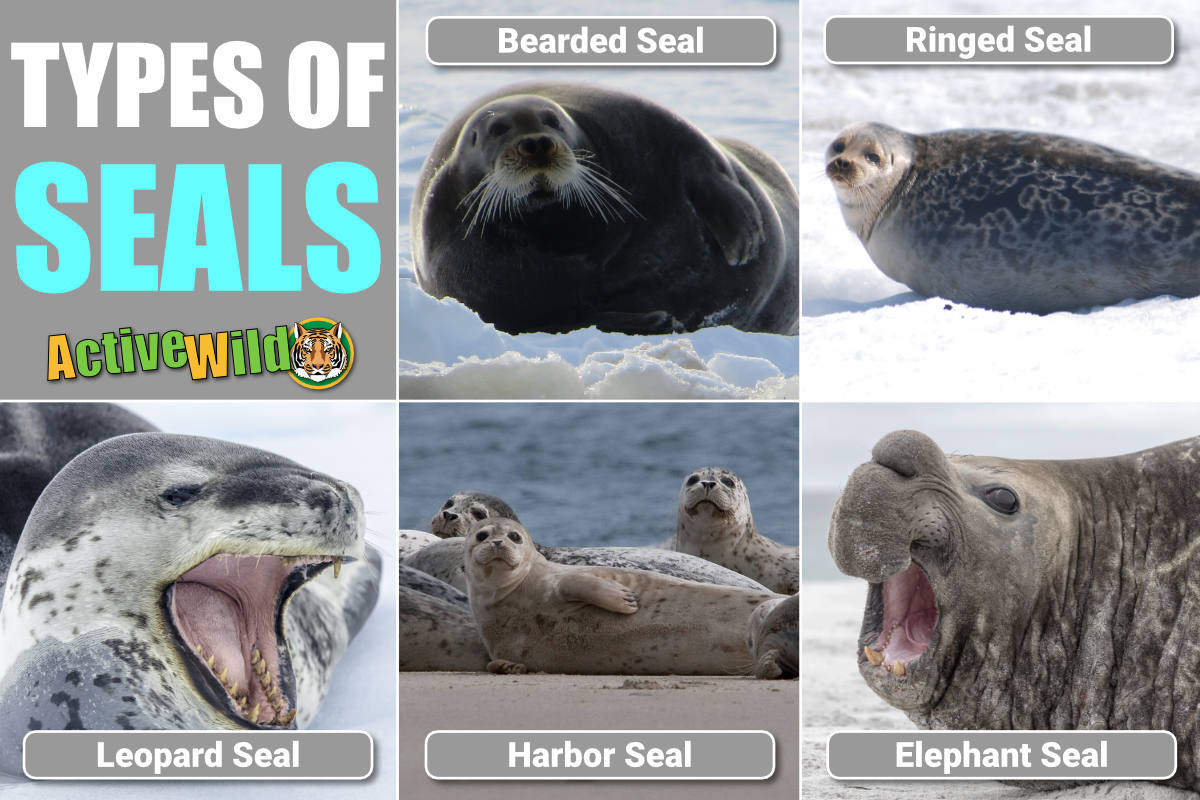
True seals represent the pinniped family’s deepest adaptation to marine life. Their streamlined bodies, inability to rotate their hind flippers forward, and reduced external ear structures all point to evolutionary optimizations for aquatic efficiency over terrestrial mobility. While they may appear awkward on land, their swimming and diving capabilities surpass those of sea lions in many respects, allowing some species to exploit food resources at remarkable depths.
“Seal Species …” from www.activewild.com and used with no modifications.
Global Distribution and Habitat Preferences
True seals have achieved a truly global distribution, with species adapted to environments ranging from tropical waters to polar ice. This impressive range demonstrates their evolutionary success and adaptability to diverse marine conditions. Unlike sea lions that are primarily found in the Pacific, true seals inhabit all the world’s oceans, with particular diversity in the North Atlantic, Arctic, and Antarctic regions.
Harbor seals occupy an enormous range spanning the North Atlantic and North Pacific coastlines, while monk seals represent the only tropical seal species, with critically endangered populations in the Mediterranean and Hawaiian Islands. Polar specialists like the ringed seal have evolved remarkable adaptations for life among Arctic ice, including the ability to maintain breathing holes in thick ice and build snow lairs for birthing pups. The extreme adaptation of elephant seals allows them to spend up to 90% of their lives at sea, coming ashore only to breed and molt.
- Arctic and sub-Arctic: Ringed seal, bearded seal, harp seal
- Temperate waters: Harbor seal, gray seal
- Sub-Antarctic and Antarctic: Weddell seal, leopard seal, Ross seal, crabeater seal
- Tropical and subtropical: Mediterranean monk seal, Hawaiian monk seal
- Wide-ranging: Elephant seals (both northern and southern species)
The geographic isolation of different seal populations has led to fascinating specializations. For instance, the crabeater seal of Antarctica has evolved unique multi-lobed teeth perfectly designed for filtering krill from seawater, while the fearsome leopard seal has developed serrated teeth for capturing and dismembering penguin prey. These adaptations demonstrate how true seals have evolved to exploit specific ecological niches within their diverse habitats.
Harbor Seals: The Most Common Species
Harbor seals (Phoca vitulina) represent one of the most widely distributed and frequently encountered seal species in coastal areas across the Northern Hemisphere. With their distinctive spotted coats ranging from silver-gray to dark brown or black, harbor seals blend perfectly with rocky shorelines where they often haul out to rest. These medium-sized seals typically weigh between 180-285 pounds and measure 5-6 feet in length, with males slightly larger than females.
Unlike the more gregarious sea lions, harbor seals tend to be more solitary or gather in smaller groups. They’re known for their distinctive V-shaped nostrils and their characteristic head-up, tail-down posture when they’re alert on land or floating in water—sometimes called “bottling.” While generally shy around humans, harbor seals display remarkable curiosity underwater and may approach divers at a respectful distance.
Harbor seals are incredibly versatile hunters, feeding on a diverse diet of fish, squid, crustaceans, and mollusks depending on local availability. Their incredible diving abilities allow them to hunt at depths of up to 1,500 feet, though most dives target prey in shallower waters. These adaptable seals can be found in diverse habitats from protected harbors and estuaries to exposed rocky reefs, demonstrating their ecological flexibility.
Elephant Seals: Giants of the Pinniped World
Northern and southern elephant seals stand as the colossal titans of the pinniped family, with adult males reaching astonishing sizes. Male northern elephant seals (Mirounga angustirostris) can weigh up to 8,800 pounds and measure 13-16 feet in length, making them the largest pinnipeds after walruses. Their name derives from the enormous inflatable proboscis (nose) that adult males develop, which resembles an elephant’s trunk and serves as a resonating chamber for their distinctive vocalizations during breeding season.
These marine giants showcase extreme sexual dimorphism, with males typically weighing three to four times more than females. Their incredible diving abilities set records among marine mammals, with northern elephant seals routinely diving to depths of 1,000-2,500 feet for 20-30 minutes at a time. Even more impressive, scientists have recorded dives exceeding 5,000 feet and lasting over two hours—capabilities that surpass those of most military submarines.
Elephant seals spend approximately 90% of their lives at sea, coming ashore only to breed, give birth, and molt. Their annual migrations span thousands of miles across the Pacific and Southern Oceans, with individuals traveling independently rather than in groups. These incredible journeys, combined with their ability to fast for months during breeding season (males can go without food for up to three months), highlight the extraordinary physiological adaptations that make elephant seals such successful ocean predators.
How Seals Got Their Names
The term “seal” derives from Old English “seolh” and has ancient Germanic roots related to words describing slippery or smooth animals. Many seal species received their common names based on physical characteristics or behaviors that early mariners and naturalists observed. The harbor seal earned its name from its preference for protected coastal waters and frequent presence in ports and harbors, while the gray seal’s name simply reflects its predominant coloration.
Elephant seals received their descriptive name from the prominent proboscis on adult males that resembles an elephant’s trunk. The leopard seal was named for its spotted coat pattern similar to the big cat, while the crabeater seal’s name reflects its specialized diet—though ironically, it primarily eats krill rather than crabs. Some species bear the names of their discoverers or prominent scientists, such as the Weddell seal, named after British navigator James Weddell who explored Antarctic waters in the 1820s.
Athletic Abilities: Marine Olympic Champions
If the animal kingdom held Olympic games, seals and sea lions would undoubtedly dominate the aquatic events. These marine mammals have evolved extraordinary athletic capabilities that allow them to thrive in challenging ocean environments. From breath-holding endurance to swimming speed and agility, pinnipeds demonstrate physical feats that would be impossible for humans without technological assistance.
Their remarkable diving physiology includes specialized adaptations like collapsible lungs, increased blood volume, higher concentrations of oxygen-binding proteins, and the ability to slow their heart rates dramatically during dives. These adaptations enable extended underwater hunting expeditions that would cause fatal oxygen deprivation in other mammals. Additionally, their hydrodynamic body shapes, insulating blubber layers, and powerful propulsion systems make them supremely adapted for life in often frigid and turbulent waters.
Swimming Speed and Diving Capabilities
Sea lions and seals demonstrate different swimming techniques that reflect their evolutionary specializations. Sea lions are the more agile swimmers, using their powerful front flippers as underwater wings to generate thrust and achieve impressive maneuverability. California sea lions can reach speeds up to 25 mph in short bursts and change direction almost instantaneously—abilities that make them formidable hunters of fast-moving prey like schooling fish and squid. If you’re interested in marine life and how it compares to terrestrial animals, you might find it fascinating to explore the behavioral traits of Miniature Pinschers and other pets.
True seals employ a different swimming technique, using side-to-side undulations of their hind flippers and lower body in a motion similar to a fish’s tail. This method provides excellent efficiency for long-distance swimming and deep diving. While generally not as fast as sea lions in sprint situations, elephant seals are endurance champions, routinely making diving descents that would require decompression stops for human divers. Their ability to collapse their lungs during deep dives prevents nitrogen absorption, eliminating the risk of decompression sickness.
Record-Breaking Pinniped Feats
• Deepest dive: Southern elephant seal – 7,835 feet (2,388 meters)
• Longest dive duration: Northern elephant seal – 2 hours, 36 minutes
• Fastest swimmer: California sea lion – 25 mph (40 km/h)
• Longest annual migration: Northern elephant seal – 13,000 miles (21,000 km)
Land Movement: Awkward or Agile?
The contrast between sea lions and true seals becomes most apparent when observing their terrestrial movement. Sea lions can rotate their hind flippers forward beneath their bodies, allowing them to “walk” on all four limbs with surprising speed and agility. This quadrupedal locomotion enables sea lions to navigate rocky shorelines, climb onto docks and boats, and even ascend steep terrain—sometimes to the surprise of beachgoers who underestimate their mobility.
True seals, having sacrificed terrestrial mobility for aquatic efficiency, move on land using a distinctly different method. Unable to bring their hind flippers forward, they progress using a combination of abdominal muscles and front flipper propulsion in an undulating, caterpillar-like motion often called “galumphing.” While this appears awkward and energetically costly, it’s perfectly adequate for their more limited time on shore, which primarily involves resting, breeding, and molting. Despite this limitation, harbor seals and some other species can still move surprisingly quickly in short bursts when necessary, particularly when returning to water.
Hunting Techniques and Prey Preferences
Sea lions typically employ an active hunting strategy, pursuing fast-moving prey through the water column with their agile swimming capabilities. California sea lions often hunt cooperatively, herding schooling fish like anchovies and sardines into tight “bait balls” that make them easier to capture. Their excellent underwater vision and sensitive whiskers (vibrissae) help them locate prey even in murky conditions, while their speed and maneuverability allow them to chase down swift targets. For those interested in safe garden ideas that can enrich the environment of a Miniature Pinscher, similar principles of agility and cooperation can be applied.
By contrast, many true seal species have developed specialized hunting techniques for their particular ecological niches. Harbor seals are opportunistic hunters that often feed near the seafloor, using their sensitive whiskers to detect the movements of fish hiding in sediment. Elephant seals make marathon dives into the deep ocean, hunting squid and fish in the darkness of the mesopelagic zone. Perhaps most specialized is the crabeater seal of Antarctica, which has evolved intricate, multi-lobed teeth that function as sieves to filter krill from the water—a remarkable adaptation that allows them to exploit the abundant Antarctic krill populations.
The most predatory of all pinnipeds is undoubtedly the leopard seal, which hunts not only fish and squid but also penguins and even other seals. These Antarctic predators combine the speed of sea lions with powerful jaws and serrated teeth, allowing them to capture agile penguins in the water and tear apart larger prey. This diverse range of hunting strategies demonstrates how different pinniped species have evolved specialized feeding techniques to exploit particular marine resources, reducing direct competition between species.
Personality and Behavior: Friend or Foe?
The behavioral differences between sea lions and seals extend beyond their physical capabilities to distinct personality traits and social structures. These characteristics have shaped human perceptions and interactions with these animals throughout history, from ancient maritime legends to modern conservation efforts. While generalizations about entire species must be approached cautiously, certain behavioral tendencies have been consistently observed across different populations and research settings.