Key Takeaways
- Labrador Retrievers are known for their friendly and outgoing temperaments, making them excellent companions for families.
- They shed heavily, requiring regular grooming to manage their coats, particularly during spring and autumn.
- There is no scientific evidence that coat color influences temperament, although some believe yellow Labs are more laid-back.
- First-time dog owners will find Labradors a good choice, provided they can meet their exercise and training needs.
- Labradors thrive in active households where they can participate in regular physical activities and mental stimulation.
Labrador Retriever Basics: Understanding Their Characteristics
Labrador Retrievers, often simply called Labs, are one of the most popular dog breeds worldwide. Their friendly nature and eagerness to please make them a favorite among families and individuals alike. Originating from Newfoundland, Canada, they were initially bred to assist fishermen, which explains their love for water and excellent swimming skills.

“Lab Rescue LRCP | Dog Adoption | Mid …” from www.lab-rescue.org and used with no modifications.
Temperament Traits
When it comes to temperament, Labradors are generally known for their even-tempered and gentle disposition. They are friendly, outgoing, and get along well with people and other animals. This makes them an ideal choice for families, including those with young children. Their intelligence and eagerness to learn make them highly trainable, which is a significant advantage for first-time dog owners.
Labradors are also known for their high energy levels. They thrive on regular exercise and enjoy activities like running, swimming, and playing fetch. This energy can be channeled positively with proper training and exercise, making them less likely to develop destructive behaviors.
Physical Attributes and Shedding Characteristics
Labradors have a sturdy, athletic build, with a short, dense, water-resistant coat that comes in three primary colors: black, yellow, and chocolate. One of the key aspects of owning a Labrador is managing their shedding. These dogs are notorious for shedding heavily throughout the year, with increased shedding during spring and autumn.
Regular grooming is essential to keep their coat healthy and to minimize the amount of hair around the house. A good grooming routine includes brushing their coat at least once a week and more frequently during peak shedding seasons. Besides that, regular baths and nail trimming are also necessary to maintain their overall hygiene.

“Different colours labradors | Laboholic” from laboholic.wordpress.com and used with no modifications.
The Influence of Coat Color on Behavior
Many prospective Labrador owners wonder if the color of a Labrador’s coat affects its behavior or temperament. While there is a lot of anecdotal evidence suggesting differences, such as yellow Labs being more laid-back and chocolate Labs being more energetic, there is no scientific proof to back these claims. For those interested in exploring other breeds, the Boykin Spaniel offers a unique set of traits and characteristics.

“Colourful Personalities of Labradors …” from jordandogtraining.com.au and used with no modifications.
It is important to remember that temperament is influenced more by genetics, upbringing, and training than by coat color. Therefore, when choosing a Labrador, focus more on the individual dog’s personality and compatibility with your lifestyle rather than the color of its coat.
Pros and Cons of Owning a Labrador Retriever
Owning a Labrador Retriever comes with its own set of advantages and challenges. Understanding these can help you decide if this breed is the right fit for your home and lifestyle.
- Pros: Labradors are loyal, intelligent, and great with families. They are highly trainable and enjoy various activities, making them versatile companions.
- Cons: Their high energy levels require regular exercise, and they can be prone to obesity if not monitored. Their shedding can also be a challenge for those who prefer a low-maintenance pet.
In the next sections, we’ll delve deeper into the specific advantages and disadvantages of owning a Labrador Retriever.

“Labrador Pros And Cons ( Why & Why Not …” from www.youtube.com and used with no modifications.
Advantages: Why Labradors Make Great Pets
Labradors are often celebrated for their friendly and affectionate nature. They form strong bonds with their families and are known to be particularly good with children. Their intelligence makes them quick learners, and they excel in obedience training and various canine sports. Whether it’s agility, flyball, or even search and rescue, Labradors are up for the challenge.
Disadvantages: Challenges and Considerations
On the flip side, potential Labrador owners need to be prepared for their high energy levels. These dogs require significant daily exercise to keep them healthy and happy. Without adequate physical and mental stimulation, they may become bored, leading to destructive behaviors such as chewing or digging.
Moreover, Labradors have a tendency to overeat, making them prone to obesity. It’s crucial to monitor their diet and ensure they get enough exercise to maintain a healthy weight. For more insights on maintaining a healthy lifestyle for your pet, you might want to check out this Boxer adoption guide which also discusses dietary needs and exercise.
Suitability for First-Time Dog Owners
For those considering their first canine companion, the Labrador Retriever is often a top recommendation. Their friendly nature and eagerness to please make them relatively easy to train, even for beginners. However, it’s essential to recognize that while Labs are generally cooperative, they do require consistent training and socialization from a young age to develop into well-mannered adults.
First-time owners should be prepared to invest time in obedience classes and regular exercise. This commitment not only helps in establishing a strong bond but also ensures the Labrador remains healthy and happy. If you’re willing to put in the effort, a Labrador can be a wonderful addition to your family.

“Dogs and Babies – When Two Worlds Collide” from www.thelabradorsite.com and used with no modifications.
Socialization Needs and Compatibility with Children
Labradors are known for their gentle and patient nature, making them excellent companions for children. They are often tolerant and protective, which is why they are frequently chosen as family pets. However, it’s crucial to introduce them to various environments, people, and other animals early on. Proper socialization helps prevent any potential behavioral issues and ensures they grow up to be confident and adaptable.
When raising a Labrador with children, it’s important to teach kids how to interact respectfully with dogs. This includes understanding when the dog needs space and how to handle them gently. With mutual respect and understanding, Labradors and children can form a lasting bond.
Lifestyle and Compatibility
Owning a Labrador Retriever means accommodating their active lifestyle. These dogs thrive in environments where they can engage in physical activities and mental challenges. Therefore, a home with a yard or access to parks is ideal for them to burn off their energy. For those considering different breeds, you might want to explore the Brussels Griffon adoption to compare their compatibility with your lifestyle.
If you lead an active lifestyle, a Labrador can be your perfect companion for hikes, runs, or even swims. They love being part of family activities and enjoy spending time with their human companions. However, if you prefer a more sedentary lifestyle, a Labrador might not be the best fit unless you’re willing to adjust to meet their needs. For those considering other breeds, the Briard is another option that might suit different activity levels.
Ideal Living Situations for Labradors
Labradors are adaptable but do best in homes that offer ample space to move around. While they can live in apartments, they require frequent outdoor exercise to stay content. Ideally, a home with a fenced yard where they can play and explore is beneficial.
Besides that, Labradors are social animals and prefer not to be left alone for long periods. They thrive on companionship, so if you work long hours, consider options like doggy daycare or hiring a dog walker to keep them engaged.

“Labrador Retriever Society” from labradorretrieversociety.com and used with no modifications.
Exercise and Activity Level Requirements
Exercise is a non-negotiable part of owning a Labrador. They need at least an hour of vigorous activity daily to maintain their physical and mental health. This can include walks, runs, playtime, or training sessions. Engaging them in activities like fetch or swimming can also be great outlets for their energy.
Matching Your Lifestyle to a Labrador’s Needs
Before bringing a Labrador into your home, assess your lifestyle to ensure it aligns with their needs. If you enjoy outdoor activities and can dedicate time to training and exercise, a Labrador could be a great match. However, if your schedule is too busy to accommodate their exercise requirements, it might be worth considering a different breed.
Labrador vs. Golden Retriever: A Comparative Guide
Both Labradors and Golden Retrievers are beloved for their friendly and loyal nature. However, there are differences between the two that may influence your decision when choosing a pet. Understanding these differences can help you select the breed that best fits your lifestyle and preferences.
While both breeds are known for their intelligence and trainability, Golden Retrievers are often described as being more gentle and calm, whereas Labradors tend to be more energetic and playful. This energy difference can affect the type of activities you engage in with your dog. For those considering other breeds, exploring the Briard adoption guide might provide additional insights into breed characteristics and comparisons.
Another consideration is their coat. Golden Retrievers have a long, flowing coat that requires regular grooming to prevent matting, while Labradors have a shorter coat that is easier to maintain, although they do shed heavily. For those interested in comparing other breeds, you might find the Brussels Griffon breed comparison insightful.
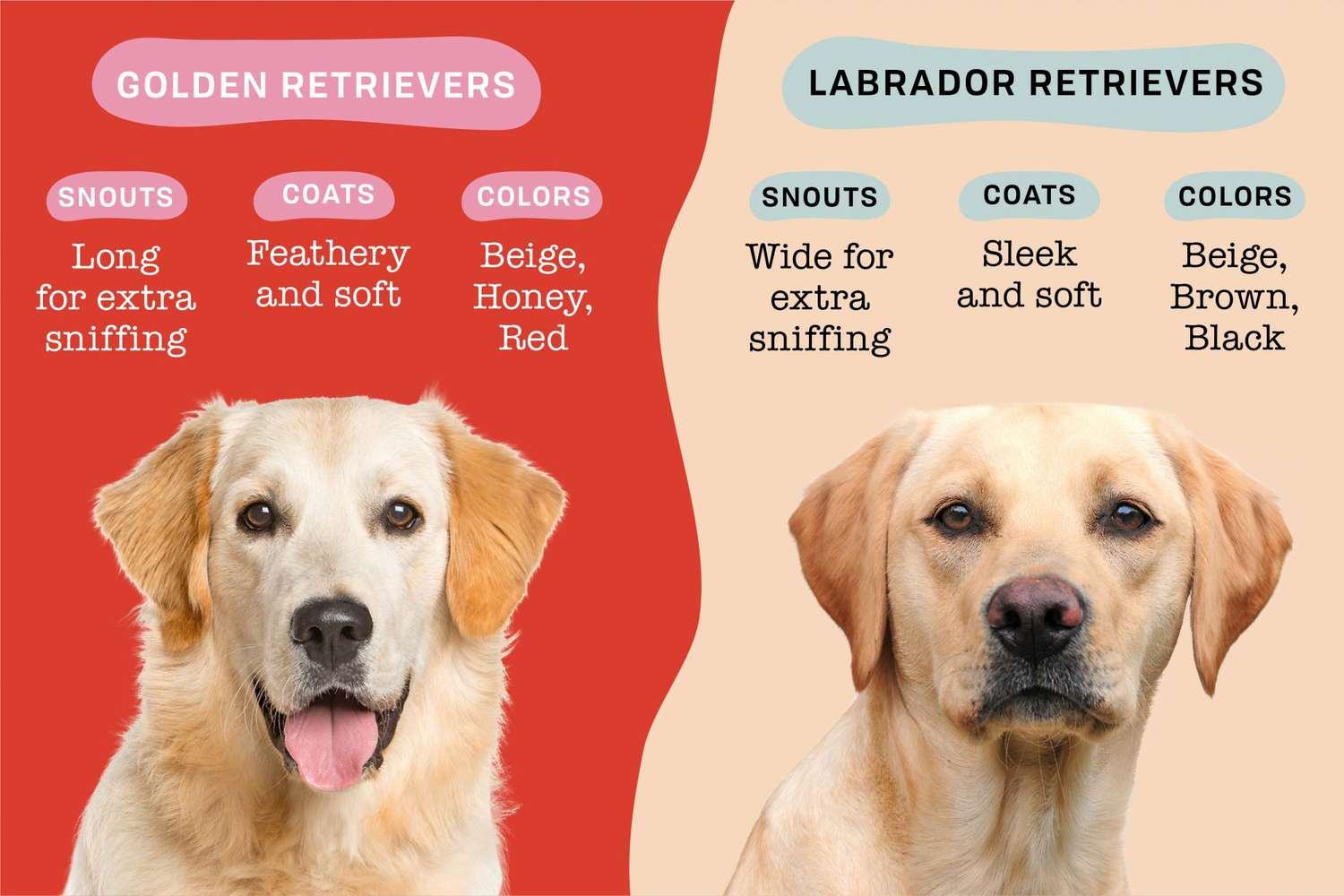
“Golden Retriever vs. Labrador Retriever” from www.dailypaws.com and used with no modifications.
Temperament and Behavioral Comparison
When it comes to temperament, both breeds are generally friendly and good with families. However, Golden Retrievers might be more suited to homes with young children or elderly family members due to their calmer demeanor. Labradors, with their higher energy levels, are often better suited to active families or individuals who enjoy outdoor activities.
Grooming and Maintenance Differences
The grooming needs of Golden Retrievers and Labradors differ significantly. Goldens require more frequent grooming to keep their coats free of tangles and mats, while Labradors benefit from regular brushing to manage their shedding.
Additionally, both breeds need regular ear cleaning to prevent infections, especially because they love water and can easily get their ears wet during play. For more information on their care, you can read about the Labrador’s temperament and history.
Suitability for Different Owner Types
Labrador Retrievers are incredibly versatile, making them suitable for a wide range of owner types. Whether you’re a single individual looking for a loyal companion, a family seeking a playful addition, or an active person who enjoys outdoor adventures, a Labrador can fit right in. Their adaptability is one of their greatest strengths, allowing them to thrive in various environments, provided their needs for exercise and companionship are met.
Conclusion
Choosing the right dog breed is a significant decision that impacts both your life and the life of your future pet. Labradors are a wonderful choice for those who can meet their exercise, training, and socialization needs. They offer a combination of loyalty, intelligence, and energy that can enrich any household. However, it’s crucial to be prepared for the responsibilities that come with their care, particularly in terms of grooming and exercise.
Final Thoughts on Choosing a Labrador
When considering a Labrador Retriever, think about how their characteristics align with your lifestyle. If you’re ready to embrace an active, social, and loving dog, a Labrador can be a fantastic addition to your family. Their unwavering loyalty and playful nature make them one of the most rewarding breeds to own, provided you’re equipped to handle their energetic and sometimes demanding needs.
Frequently Asked Questions (FAQ)
Do Labradors require a lot of grooming?
Yes, Labradors require regular grooming to manage their shedding and maintain a healthy coat. They shed heavily, especially during spring and autumn, so frequent brushing is necessary to minimize loose hair around the home. While their short coats are relatively low maintenance compared to long-haired breeds, regular baths and ear cleaning are also important to prevent skin and ear infections.

“Do Labradors Shed? | How to Reduce …” from mooseandmarylabs.com and used with no modifications.
Is there a difference in temperament between Labrador colors?
There is no scientific evidence to suggest that coat color affects a Labrador’s temperament. While some people believe that certain colors may be associated with specific behaviors, temperament is more influenced by genetics, upbringing, and training. Therefore, it’s best to focus on the individual dog’s personality and compatibility with your lifestyle rather than the color of its coat. For a deeper understanding of how genetics and upbringing can influence a dog’s behavior, you might explore the Briard adoption guide which covers various aspects of dog temperament.
Are Labradors good for families with young children?
Absolutely. Labradors are known for their gentle and patient nature, making them excellent companions for families with young children. They are typically tolerant and protective, forming strong bonds with family members. However, it’s important to teach children how to interact respectfully with dogs to ensure a harmonious relationship.
How do Labradors compare to Golden Retrievers in terms of activity levels?
- Labradors are generally more energetic and require more exercise than Golden Retrievers.
- Both breeds enjoy physical activities, but Labradors may need more vigorous exercise to stay content.
- Golden Retrievers are often seen as calmer, making them suitable for less active households.
When choosing between the two, consider your activity level and how much time you can dedicate to exercising your dog. Both breeds are excellent companions, but their energy needs can vary.
What should I consider before getting a Labrador as a first-time dog owner?
As a first-time dog owner, consider whether you can meet a Labrador’s exercise and training needs. They require regular physical activity and mental stimulation to stay healthy and happy. It’s also important to have the time and resources to invest in their grooming and healthcare needs.
Additionally, think about your living situation. While Labradors can adapt to apartment living, they thrive in homes with access to outdoor spaces where they can play and explore. If you’re ready to commit to their care and embrace an active lifestyle, a Labrador can be a wonderful addition to your life. For those considering other breeds, you might want to explore the Boxer adoption guide to see if it fits your lifestyle better.
Remember, owning a dog is a long-term commitment, and choosing the right breed is key to ensuring a happy and fulfilling relationship for both you and your new furry friend. If you’re considering a smaller breed, you might want to explore the Brussels Griffon for its unique personality and traits.