When it comes to choosing a pet bird, the Red-Factor Canary stands out for its vibrant color and charming personality. These beautiful birds, known for their striking red plumage, make excellent companions. However, owning one requires an understanding of their unique needs and characteristics. This guide will walk you through everything you need to know about adopting and caring for a Red-Factor Canary.
Key Takeaways
- Red-Factor Canaries are bred for their vibrant red plumage, a result of crossbreeding Yellow Canaries and Venezuelan Red Siskins.
- Only male canaries sing, and while Red-Factor Canaries are not the best singers, they produce a pleasant, cheerful song.
- Maintaining their color involves a diet rich in beta-carotene and other color-enhancing nutrients.
- These birds are relatively small, with a lifespan of up to 10 years, making them a long-term commitment.
- Red-Factor Canaries can live in cages or roam free in your home with proper safety precautions.
Understanding Red-Factor Canary as a Pet Companion
Red-Factor Canaries are more than just a pretty face. Their vibrant red color and friendly disposition make them a popular choice among bird enthusiasts. But what truly sets them apart is their fascinating history and the unique care they require.
Breed Identification and Gender Distinction
Identifying a Red-Factor Canary involves looking at its distinct red plumage. However, it’s important to note that not all canaries with red feathers are true Red-Factors. This breed results from a specific crossbreeding process between Yellow Canaries and Venezuelan Red Siskins. Therefore, it’s crucial to acquire your bird from a reputable breeder to ensure its authenticity.
When it comes to gender, only male canaries are known for their singing ability. If you’re looking for a singing companion, a male Red-Factor Canary would be your best bet. Female canaries are generally quieter, although they may occasionally chirp.
History and Origins of Red-Factor Canaries
The Red-Factor Canary’s history is as colorful as its feathers. This breed emerged from the desire to create a canary with a more vibrant plumage than the traditional yellow. The first successful breeding of Red-Factor Canaries happened in the 1930s in Britain. Breeders crossed the common Yellow Canary with the Venezuelan Red Siskin, a bird known for its bright red feathers.
Over time, these birds gained popularity due to their striking appearance and became a sensation across Europe and the Americas. Today, Red-Factor Canaries are cherished worldwide for their beauty and charm.
Significance and Rarity of the Red-Factor Canary
The Red-Factor Canary is significant not only for its beauty but also for its role in the avian world. Its creation marked a turning point in selective breeding, showcasing how crossbreeding can enhance specific traits in birds. This canary’s rarity lies in its unique genetic makeup, combining the genes of two different species to produce a bird with an entirely new color palette, similar to the Khao Manee cat’s rarity.
Because of their specific breeding requirements, Red-Factor Canaries are not as common as other canary breeds. This rarity adds to their allure, making them a prized possession for bird enthusiasts.
The Unique Traits of Red-Factor Canaries
Red-Factor Canaries are renowned for their distinct features, from their vibrant plumage to their melodic songs. Understanding these traits will help you appreciate your feathered friend even more. For insights on how to care for other vibrant birds, check out our guide on Gouldian Finch care and breeding.
Besides their color, these canaries are known for their pleasant songs, although they may not be as complex as those of other canary breeds. Their size is another appealing trait; being small birds, they fit well in most home environments.
- Red-Factor Canaries have a lifespan of up to 10 years, making them a long-term commitment.
- They are somewhat social and can coexist with other birds if introduced properly.
- These birds are generally healthy but require a specific diet to maintain their vibrant color.
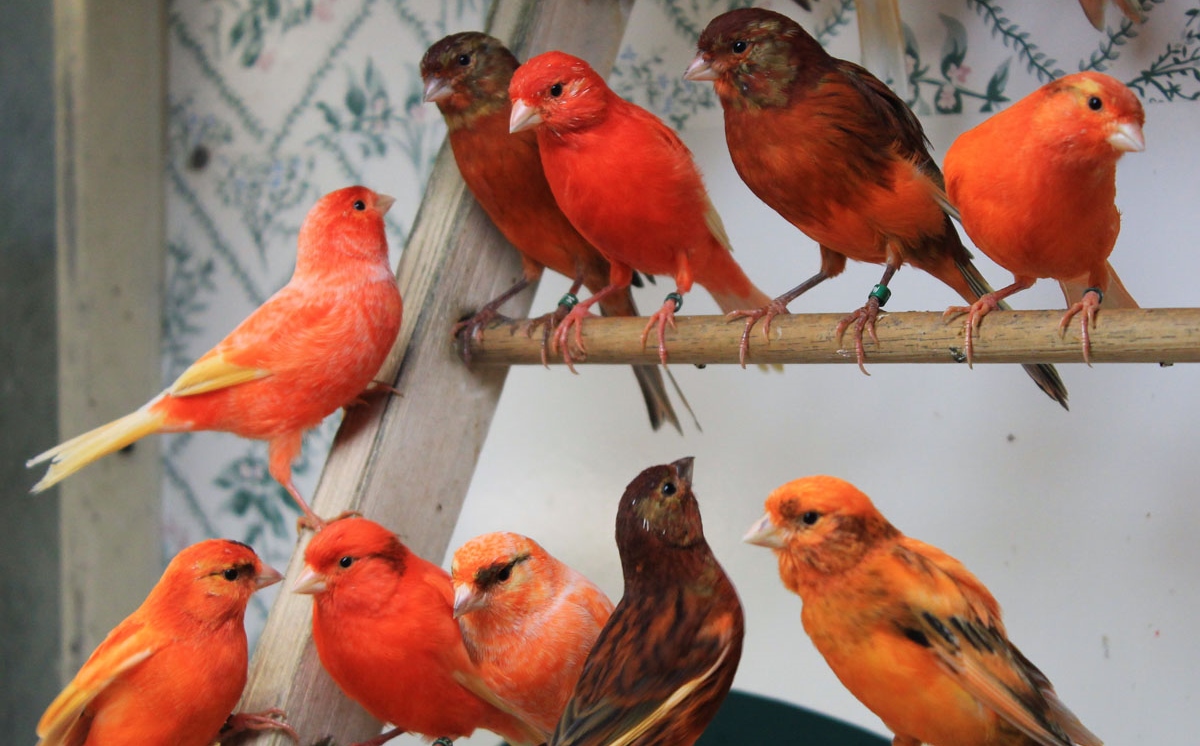
“Red Factor Canaries – Aviculture Hub” from www.aviculturehub.com.au and used with no modifications.
Color Varieties: Intensives vs. Non-Red Factors
The Red-Factor Canary comes in two main color varieties: Intensives and Non-Red Factors. Intensives have a deeper, more uniform red color, while Non-Red Factors may have a mix of red and other hues, such as orange or peach. The color intensity can vary based on diet and genetics.
Most importantly, maintaining the vibrant color of your Red-Factor Canary requires a specific diet. Foods rich in beta-carotene, such as carrots and sweet potatoes, can enhance their red plumage. Some owners also use special color-feeding products to achieve a deeper hue.
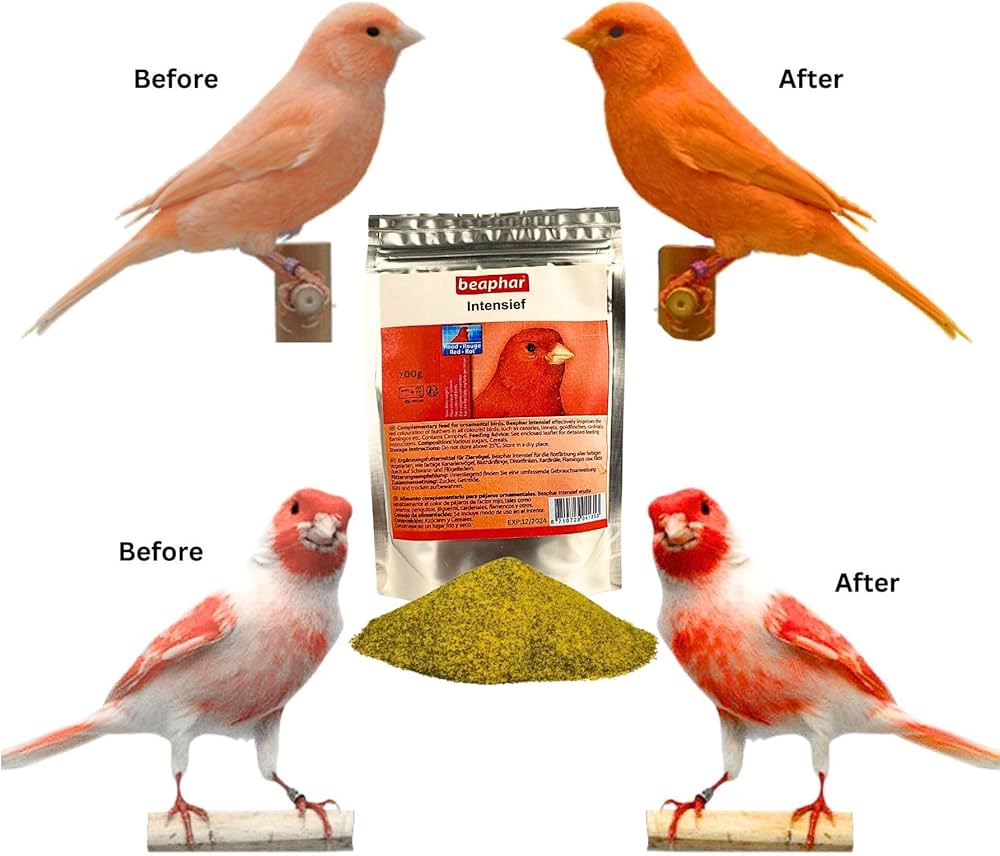
“Canary Food for Vibrant red Plumage …” from www.amazon.com and used with no modifications.
Understanding Fading and Changing Colors
One fascinating aspect of Red-Factor Canaries is their ability to change color. This change is often linked to their diet. A lack of color-enhancing nutrients can lead to a faded or dull appearance. Therefore, it’s crucial to provide a balanced diet to maintain their vibrant color.
Regularly monitoring your canary’s diet and adjusting it as needed will help keep their plumage bright and healthy. Besides that, ensuring they have a stress-free environment can also contribute to maintaining their color. For more insights on bird care, you can explore the care and breeding of Gouldian finches.
Singing Abilities: What to Expect
While Red-Factor Canaries are not bred specifically for their singing ability, they can still produce a delightful song. Only male canaries sing, and their songs are usually cheerful and pleasant. Although they may not have the complex melodies of other canary breeds, their singing can still bring joy to any home.
If you’re interested in a singing companion, be sure to choose a male Red-Factor Canary. With proper care and a stimulating environment, your canary’s song can brighten up your day.
Caring for Your Red-Factor Canary
When you bring a Red-Factor Canary into your home, you’re committing to providing it with a nurturing environment where it can thrive. These vibrant birds require specific care to maintain their health and beautiful appearance. Understanding their needs will ensure your canary remains a happy and lively companion.
Recognizing Early Signs of Illness
Being vigilant about your canary’s health is crucial. Early detection of illness can make a significant difference in treatment outcomes. Look for signs such as changes in singing, appetite, or feather condition. A canary that suddenly becomes less active or has difficulty breathing may be unwell.
Regularly observe your bird’s behavior and consult a veterinarian if you notice any concerning symptoms. Keeping a close eye on their droppings can also provide insights into their health; any drastic changes in color or consistency might indicate a problem.
Dietary Needs and Nutritional Balance
The diet of a Red-Factor Canary plays a pivotal role in maintaining its vibrant color and overall health. A balanced diet should include high-quality canary seed mix, fresh fruits, and vegetables. Foods rich in beta-carotene, such as carrots and sweet potatoes, are particularly beneficial for enhancing their red plumage.
Besides the basics, occasional treats like boiled eggs or specialized color-feeding products can be included to provide extra nutrients. Always ensure that fresh water is available and that food dishes are cleaned regularly to prevent contamination.
Cage Environment vs. Roaming Free at Home
Deciding whether your Red-Factor Canary should stay in a cage or have free roam of the house depends on your living situation and the safety of your environment. A spacious cage with horizontal bars is ideal for climbing and exercise. Include perches, toys, and a birdbath to keep your canary engaged.
If you opt to let your canary roam free, make sure the area is bird-proofed. This means windows should be closed or covered, and potential hazards like ceiling fans and toxic plants should be removed. Supervision is essential to ensure your bird’s safety when outside its cage.
Comparative Analysis: Red-Factor Canaries vs. Doves
Choosing between a Red-Factor Canary and a dove can be challenging, as both have unique qualities that make them desirable pets. Understanding the differences can help you make an informed decision.
Red-Factor Canaries are known for their vibrant colors and cheerful songs, making them excellent visual and auditory companions. Doves, on the other hand, are larger and often more interactive, with a calm demeanor that can be soothing.
Behavioral Differences
Red-Factor Canaries are generally more independent and less interactive than doves. They enjoy singing and observing their surroundings but may not seek out human interaction as much as doves do. Doves are often more social and can form strong bonds with their owners, enjoying gentle handling and affection.
If you’re looking for a pet that will engage more directly with you, a dove might be a better choice. However, if you prefer a pet that requires less direct interaction, a canary could be the perfect fit.
Care Requirements
Both canaries and doves have specific care needs, but there are differences in their requirements. Canaries need a diet rich in seeds and color-enhancing foods, while doves can thrive on a simpler diet of seeds and grains.
The cage size for doves should be larger due to their bigger size, and they require more space to fly and exercise. Canaries, being smaller, can be comfortable in a smaller cage, although they also benefit from the opportunity to fly. For more information on bird care, you might find this article on Golden Mantled Rosella care helpful.
Sociability and Interaction
When it comes to sociability, doves often win the day. They are generally more interactive and enjoy spending time with their human companions. Canaries are more solitary, preferring to entertain themselves with singing and exploring their environment. For those interested in learning about other bird species, the Gouldian Finch is another fascinating option to consider.
Both birds can coexist with other species if introduced properly, but it’s essential to monitor their interactions to prevent any potential conflicts. Understanding these differences will help you choose the right bird for your lifestyle and preferences.
Conclusion and Recommendations
In conclusion, the Red-Factor Canary is a stunning and delightful pet that brings color and song into any home. These birds require specific care to maintain their vibrant appearance and health, but the rewards are well worth the effort. By understanding their unique needs and characteristics, you can ensure your canary thrives and remains a joyful companion.
Whether you’re drawn to their striking red plumage or their cheerful songs, Red-Factor Canaries make excellent pets for those willing to invest time and care into their well-being. Their relatively small size and manageable care requirements make them suitable for a variety of living situations.
Key Considerations for Prospective Owners
Before bringing a Red-Factor Canary into your home, consider the following: understanding the care and personality traits of similar birds like the Golden-Mantled Rosella can provide valuable insights into what to expect.
- Ensure you can provide a balanced diet rich in beta-carotene and other nutrients to maintain their color.
- Be prepared for a long-term commitment, as these birds can live up to 10 years.
- Decide whether a cage or free-roaming environment is best for your home and lifestyle.
- Regularly monitor their health and consult a veterinarian if any issues arise.
- Consider the level of interaction you desire from your pet, as canaries are less social than some other bird species.
By taking these factors into account, you can make an informed decision about whether a Red-Factor Canary is the right pet for you.
Frequently Asked Questions (FAQ)
To further assist you in your journey with Red-Factor Canaries, here are answers to some common questions:
What are the breeding challenges of Red-Factor Canaries?
Breeding Red-Factor Canaries can be challenging due to their specific genetic requirements. Ensuring the right pairing is crucial for maintaining their vibrant color. Breeders must carefully select parent birds to achieve the desired plumage and health traits.
How can I maintain the bird’s vibrant color?
Maintaining the vibrant color of a Red-Factor Canary involves providing a diet rich in beta-carotene and other color-enhancing nutrients. Foods like carrots, sweet potatoes, and specialized color-feeding products can help achieve this. Consistent dietary management is key to preserving their striking appearance.
Can Red-Factor Canaries coexist with other birds?
Yes, Red-Factor Canaries can coexist with other birds if introduced properly. However, it’s essential to monitor their interactions to ensure compatibility and prevent any potential conflicts. Some birds may have different social needs, so understanding each species’ behavior is important.
What are common health issues for Red-Factor Canaries?
Common health issues for Red-Factor Canaries include respiratory problems, feather loss, and digestive issues. Regular veterinary check-ups and a balanced diet can help prevent these problems. Observing your canary’s behavior and appearance will also aid in early detection of any health concerns.
Is a Red-Factor Canary suitable for a first-time bird owner?
Red-Factor Canaries can be suitable for first-time bird owners who are willing to learn about their specific care requirements. Their manageable size and relatively straightforward care needs make them a good choice for beginners. However, new owners should be prepared to invest time in understanding their dietary and environmental needs.
In summary, Red-Factor Canaries offer a unique blend of beauty and song, making them a delightful addition to any home. By providing the right care and attention, you can enjoy the company of these vibrant birds for many years to come.