Brittany Breed Rescue & Adoption FAQ Answered
Interview with Susan Spaid, President NBRAN
In addition to articles that describe a dog breed based on research, in this case Brittany (formerly Brittany Spaniel), I wanted to share insider and breed expert knowledge with you. I hope that this interview will help answer your every question about what life with a Brittany would be like so that you can decide if this dog breed would be a match for you and your lifestyle. The following is a summary of our conversation about the breed and breed rescue for Brittanys; it is a combination of direct quotes and my best attempt to paraphrase based on my interpretation of sentiment.
If after reading this and our informative article about the breed, you would like to learn more and possibly adopt a Griff from rescue, then I encourage you to contact National Brittany Rescue & Adoption Network (NBRAN) directly.
Brittanys Are Pointers Not Spaniels
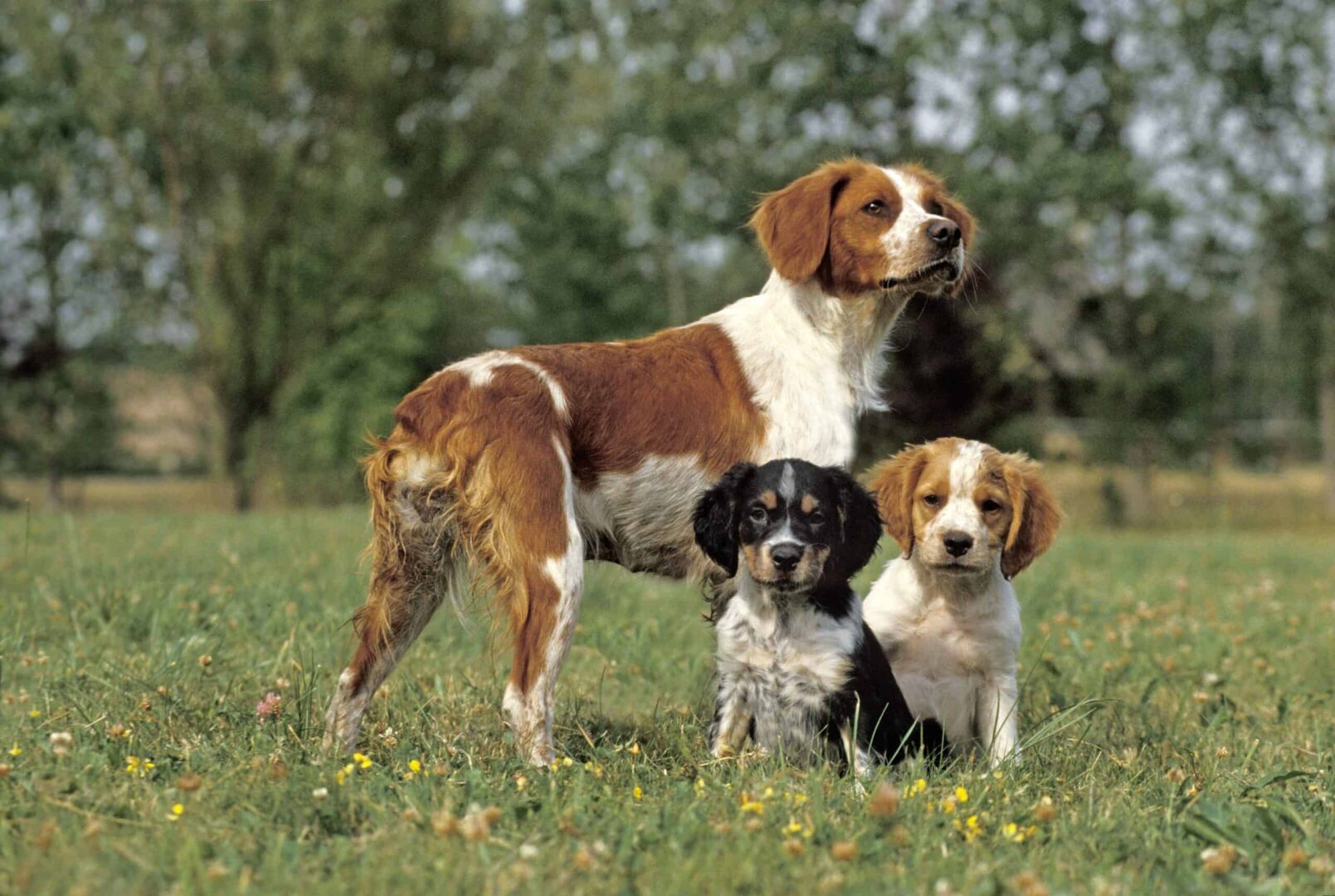
Susan educated me to the misnomer of the Breed. Brittanys are actually pointers not spaniels. Brits point and do not flush like say a Springer Spaniel. They got their name because they originated from Brittany, France. They can be black, liver, or party (multi). The French line was bred to have shorter legs to get them closer to the prey they hunted. Whereas the American version was mixed with setters to get longer legs to hunt in taller glass.

Brittanys Need A Lot Of Exercise.
Although they were bred for hunting, Brittanys don’t need to hunt but very athletic with “energy out the back door” and as puppies the “brit pup is crazy- off the rail” with energy. They “like a lot of activity” and Susan described one example that was often out from 530AM-7:30PM chasing chipmunks etc.
So a good match for this breed is someone who is “committed to exercise and physical stimulation” to keep the dog happy. A Brittany without enough exercise and physical stimulation could become destructive and bored.
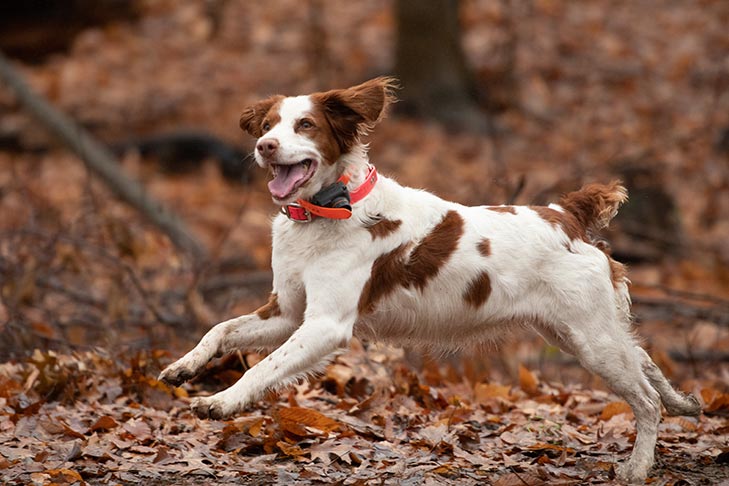
Susan describes the Brittany breed as very “biddable” compared to a pointers. Brittanys as a breed that can be trained and need to be train since again they are very energetic and athletic so although they enjoy walks like every other dog, but they can be pullers especially if you do not take the time to train them how to walk in an orderly fashion.
They will enjoy the freedom afforded to them in a fenced yard so that they can run fully and freely. Susan has an invisible fence.
Repetition Is Key To Successfully Training Brits.
When training a Brittany, Susan suggests “just repeat, repeat…. back and forth” with toys, etc. This is a breed that does well in obedience classes and “loves the praise, the pet, the treats” and other goodies that entice dogs to be obedient.
Any one who has gone to a training class with his/her dog knows that obedience and tricks are only one part of the course, the social interactions is equally important. And Susan asserted that it Brits love other dogs and are very rarely dog aggressive (which is saying something since some rescues can develop fear aggression). She went on to describe how there are “very few Brit owners with just one” since this is a breed that “enjoys canine and human buddies” and this is apparently true even for Brits in foster care because they “need interaction”.
Socializing Brits
Summary: Slow & Steady Wins The Race and Safety First
As with any dog, it is very important to socialize Brits as puppies. Make sure that they were adequately socialized as a puppy, if you adopt one as a puppy. If you adopt an adult, Susan provides sage advice: spend a lot of time with the dog and do slow introductions with adult individuals and then gradually incorporate introductions to young children, not right away. She suggests to “go slow… make an effort to provide interactions but take it slow and keep it safe”.
Brits Are Great With Kids But A “?” With Other Pets.
Susan said that Brits tend to be “great with kids” but how they are with other smaller pets can really very due to their prey drive. Since her breed rescue group is all foster based (no brick and mortar), they do try to test their dogs with foster households with cats since the fosters are very savvy to the breed and can tell if the dog in question has a strong prey drive right away. If there are other pets in the foster’s household, the new dog may be isolated at first and gradually introduced to other pets, even other dogs.
How Many Brits End Up Surrendered to Rescue orgs.
Summary: Aging Owners & Breed Mismatches
Many reputable breeders ask and may even require people to give the dog back to them so that they can be placed with a household that knows the breed and will be an appropriate match. Susan said that a common scenario for recent surrender is older folks going to an assisted living facility or they pass. This was how my family came to add our senior Afghan hound to our family.
Another common scenario for returns and surrenders is from people who did not do their due diligence and thoroughly research the activity level and exercise needs of the breed- thus the need for articles like this one.
The third common reason is when an owner relocates especially with a senior dog that many not be able to survive the move. Susan shared a scenario of a military family with a 14 year old Brit that got orders to move to Germany. Fortunately, someone in the breed network volunteered to keep the dog locally and allow the dog to “live with me until [they] cross the bridge.” (The “bridge” refers to the rainbow bridge for when pets pass).
Susan also shared a sad tale of a hoarder in Louisiana who got in trouble with the law twice: once for having twenty dogs and the other time in 2013 was 110 dogs. A consortium of Brittany rescue orgs came together to save and place all the dogs. People do not realize what unsung heroes so many rescue volunteers are- yet another reason for an article like this one. I wish animal welfare laws were stricter. Perhaps a registry that had more of a social stigma like the sex offender registry could act as a deterrent for some.
Travelling With Brits
Summary: Safety First For A Breed That Can Go Far Fast
Keep in mind that they are energetic and fast. I have seen other pointer breeds run non stop at top speeds for an hour non-stop. How far do you think they could run in a hour? What’s more, how far do you think you could run in an hour? Could you catch them? Probably not. For this reason, Susan recommends the obvious but still worth mentioning: “security first”; she recommends travelling with a slip and harness, a few leashes, their favorite toys and treats. She says that for the most part, the breed tends to “ride and travel well” but she cautions to “be very careful with [them] if they decide to jerk and run”.
Adopting From A Reputable Breed Rescue Org
Summary: Support During & After The Adoption
When you adopt from NBRAN you are “gonna get a dog that is assessed by a foster who knows the breed”. A breed knowledgeable foster will identify the quirks the dog has and won’t lie to a potential adoptee because they care able the breed and creating a successful match. The fosters in the network have adult fosters in their care for at least three to four weeks so that they can fully assess the dog. They “don’t dump the dog and run” or leave someone who adopts from them high and dry. Not only does this organization give all those who adopt a lot of information at the time of adoption, they also check in every few weeks at first, then every few months, then make themselves available for calls from those who adopt from them as needed.
This org has compassion for the dog and the people who adopt it. Susan accounts that it’s “not just one and done adoption. You are supported and they are always available”. Even if it doesn’t work out, though rare, they will “take it back no judgement”. They are able to “move a dog up to 1400 miles” since they have a strong “transportation system that works very well.”
The Perks Of The Breed
Summary: Obedient, People-Oriented & Low Maintenance Grooming
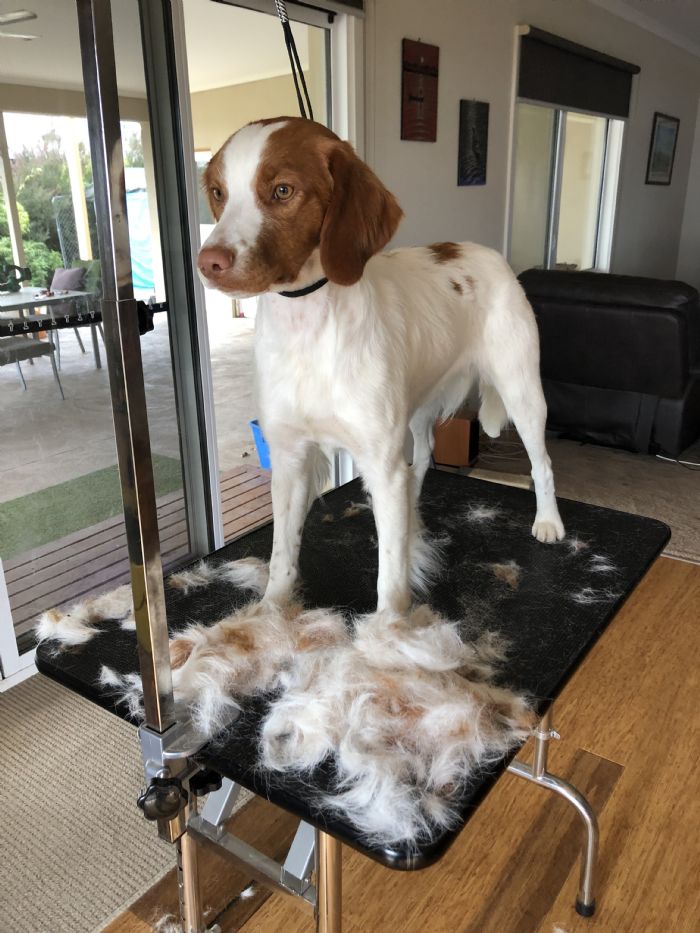
“Great dogs, biddable, love people and other dogs” they are “comical, fun breed to have” without “a lot of grooming requirements”. You can brush them a couple times a week; bathe and cut their hair every quarter. Although they do shed a lot, they “do not require high maintenance grooming”. As someone who had an Afghan hound, I brushed Reggie’s hair several times a day, twice a weeks is beyond belief to me, but he did not shed. Smile, even Lovie, our little mixed breed, got brushed by me at least two to three times a day, but that was because he loved it and it did reduce shedding too.
Common Misconceptions
(From Written Response)
“Brittanys are good looking dogs, and gorgeous puppies. They need a lot of exercise and stimulation. They are not good apartment dogs unless the owner is committed to getting them the required exercise.”
“People think rescue [groups and the adoption process] are too difficult to deal with, but what they have to realize is we have to make sure we place our dogs in the right homes.” Keep in mind that breed rescue volunteers are experts and passionate about the breed and the welfare of each of the dogs that come into their care. They just want a happy match for the human adopters and the canine adoptees.
Susan’s One Wish
(From Written Response)
That we’d have an abundance of foster homes and every dog we take in can have a foster.