Miniature Pinscher Breed Rescue & Adoption FAQ Answered
Interview with Sandy Chang, Regional Coordinator, IMPS
In addition to articles that describe a dog breed based on research, in this case Miniature Pinscher aka “Min Pin”, I wanted to share insider and breed expert knowledge with you. I hope that this interview will help answer your every question about what life with a Miniature Pinscher would be like so that you can make an educated decision about whether this breed would be a match for you and your lifestyle. The following is a summary of our conversation about the breed and breed rescue for Min Pins; it is a combination of direct quotes and my best attempt to paraphrase based on my interpretation of sentiment.
If after reading this and our informative article about the breed, you would like to learn more and possibly adopt a Min Pin from rescue, then I encourage you to contact Internet Miniature Pinscher Service (IMPS) directly.
Miniature Pinscher Breed Traits
Sandy recounted that Min Pins “have a tendency to perform, and they just like entertaining their people, and I mean I, host play dates in my house sometimes for the Min Pin Rescue and the Italian Greyhound rescue. And we’re laughing nonstop for hours and hours, because they’re just so comical. Both breeds.”
Key Advice for Min Pin Owners
Summary: Commit to obedience training and teaching your dog boundaries with regularity.
Sandy stresses the importance of following through with training, obedience, and teaching the dog boundaries for a successful adoption and to prevent the breed’s strong-willed nature to rebel into behavioral issues like excessive barking or nipping, which can lead to surrenders. She advises potential adopters to approach the process with “eyes wide open,” understanding the specific energy and temperament of the dog. Min Pins are highly active—sometimes to an extreme degree like Spinal Tap’s “eleven”, Min Pins can be a “twenty”, according to Sandy—and require owners who are prepared for their intensity. She notes that while some barking can be managed, it’s part of the breed’s instinct, especially their protective and vocal tendencies. So if you enjoy quiet living situations, a firm commitment to proper training will be key.
- Educated Decision: Adopters should make an educated decision, understanding the specific dog’s needs and temperament.
- High Energy: Min Pins are very energetic and need owners who can match their activity level.2
- Training and Socialization: Training and socialization are crucial. Without guidance, direction, and structure, their strong-willed nature can lead to unruly behavior like nipping or excessive barking.
- Vocal Nature: Min Pins are naturally very vocal. While some barking can be managed with training, it’s an inherent trait. Sandy notes that potential adopters living in apartments or needing a quiet dog might need to seek out a less vocal individual Min Pin or commit to extensive training.
- Boundaries and Discipline: It’s essential to establish boundaries and provide discipline to prevent common issues that lead to Min Pins being surrendered to shelters. Consistent exercise can also help manage their energy and vocal tendencies, as seen with Lovie, a dog with Min Pin-like traits who barked to defend his territory.
Training and Socializing A Miniature Pinscher
Summary: Use positive reinforcement firmly and consistently.
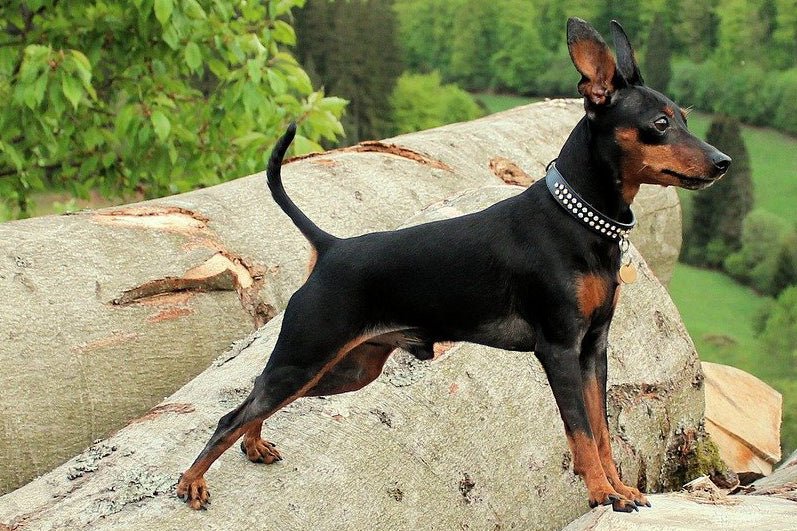
Training and socializing a Miniature Pinscher (Min Pin) requires a realistic understanding of the breed’s unique temperament and energy levels. According to Sandy, a breed expert and rescuer, one of the most common issues she sees is people adopting Min Pins based on appearance alone, saying things like, “Oh, look! This is the perfect pocket puppy for me!” These adopters, often influenced by media or celebrity trends, fail to realize that Min Pins are not just fashion accessories. They are, in Sandy’s words, a “very challenging breed” that are “feisty,” “spirited,” and “fearless.” Without proper training and structure, these traits can quickly become overwhelming.
Sandy cautions that while Min Pins are intelligent and can learn commands, they are notoriously stubborn. Many people believe a little training will solve everything, thinking “they’ll be perfectly fine,” but Sandy notes that even a trained Min Pin is “very selective of when they decide to listen.” Their independence means that obedience isn’t guaranteed unless the handler is experienced, consistent, and firm. These dogs thrive on boundaries and leadership—without it, their watchdog instincts and high prey drive can lead to problematic behaviors such as excessive barking or chasing animals.
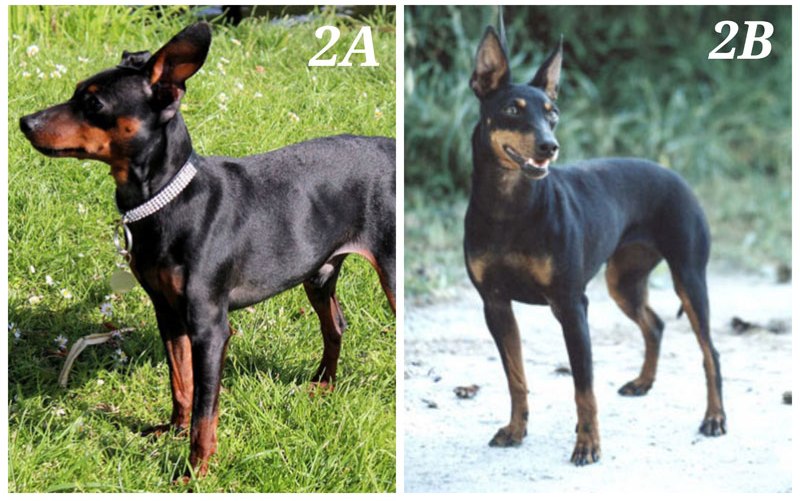
Although Min Pins can be loyal and protective family dogs, Sandy stresses that they aren’t suited for every household. For example, families with newborns or toddlers may not be a good fit, as the breed’s strong personality and high needs can overwhelm already-busy parents. “Min Pins are a lot of work,” she explains, emphasizing that their stubbornness is not due to a lack of intelligence, but rather because “they know how to push the envelope.” Their small size often leads people to underestimate them, but keep in mind that fun size is also called bite size—Min Pins will nip if they feel disrespected or unsafe.
For homes with children under seven, Sandy doesn’t automatically reject the idea of adoption, but she encourages serious reflection. “Do you have respectful children?” she asks, warning that rough play like ear-pulling or trying to ride the dog could trigger defensive reactions. Ultimately, Sandy and her rescue organization, IMPS, aim to match Min Pins with adopters who truly understand the breed’s needs. As she puts it, when someone says “I didn’t know that,” and decides to reconsider, “yeah, I think that’s a good idea.” Her goal is to create happy, lasting placements that lead to confident, well-adjusted dogs and satisfied, educated adopters.
Cost Of Adopting A Min Pin From Rescue
The adoption fees for IMPS ranges from $0 to $550 on average and the cost varies because the cost to get the dog ready for adoption varies: A purebred puppy will cost more than a special needs senior. They also “take into consideration how much money the rescue has put into vetting this dog”. To clear up any perception that this IMPS is running a racket, making hand over fist bank, that is not the case at all for IMPS or for most if not all rescue groups. Sandy elaborates “And what people don’t understand is, for instance, if we have a dog that cost us $250 to vet the dog’s adoption. Fee is $400. That $150 surplus doesn’t go into a pot like. ‘Oh, hey! We all get bonuses at the end of the year.’ [Quite the contrary] it rolls into another dog that’s going to have special needs like the dog that we just pulled from San Mateo. I have never seen a dog that has had teeth this bad. You can. You can’t even see the teeth. They’re just covered in brown Tartar, and so her dental is going to be almost $500.” And she also shared vet bills totally over $6,000.
I found it very touching to hear their policy on senior adoptions, since “senior dogs hold a very, very special place in our heart, as much as you know. We all love the fun young, you know, spirited ones. They all age over time, and we’ve all had to, you know. Take care of, you know these convalescing dogs and so we try and encourage people if they’re going to adopt a senior. I believe it’s 10 years and older… We waive the adoption fee, and then routine care of the cost like yearly exam, vaccinations, things like that”.
How cool is that? I really want people to absorb the deal that IMPS offers. Like Sandy, I have a special place in my heart for senior rescues so because my family had a senior Afghan rescue, Reggie (the inspiration for Diggie) and we cherished the time we had with him. He was still very spry until about twelve. And Afghan hounds are considerably bigger than Miniature Pinschers, and as such, statistically age and pass faster. So a ten year old Min Pin will likely have another six years on them and I would venture to guess at least four of those will be very spirited and delightful years.
Lovie, our mixed breed rescue from ARF whom we had since he was a puppy, lived to be one month shy of sixteen and he had joie de vie until the very end. We were at the dog beach at Crissy Field just two weeks before he passed from lymphoma. Up until then, he was a little miracle dog who survived severe pancreatitis, liver levels off the charts and having his gall bladder removed. I will strongly suggest that people get pet insurance because in spite of IMPS generous senior package, vet bills can add up way beyond routine exams and vaccinations.
Ideal Lifestyle and Owner Match
Summary: Wanted- Active & Patient Adopters
Min Pins are a notorious high energy dog, so they would be best suited for someone who has an active lifestyle that would provide the dog ample and regular exercise. The people I know who have had Min Pins describe them as fearless and the type of dog who would not hesitate to embark on active pursuit of cars and even 18-wheelers. Keep that in mind that a dog that likes to bolt and has a lot of energy, could take off and not come back quickly.

Sandy reminisced that “In the beginning. I can’t tell you how many times I was in tears like, what the hell did I do? But she she just didn’t have an off button she was. I mean, I joke that she was like practically hanging off of chandeliers, because they just have so much energy. I mean, you could do rounds and rounds with playing fetch with them in the backyard, and they can still be up for doing 2 more hours. I mean, they just they have so much energy. And so we want people to be mindful of that for the ideal adopter” is probably someone who commit to wearing out the dog. And if an applicant is someone with a more “sedentary lifestyle, it’s not impossible to get a Min Pin. But please don’t ask [IMPS] for a puppy” because Sandy’s little Min Pin didn’t settle down until about 2 1/2 (although I have heard that Labs stay puppy-ish until they are four. I loved that Lovie was young at heart and stayed very playful until the end, engaging regularly. He did have more chill time starting at about one and stopped wanting to wrestle all the time at around two.
Challenges Min Pin Rescue Volunteers Face
Summary: Too many dogs in need, not enough well-informed adopters.
Volunteering in Miniature Pinscher (Min Pin) dog breed rescue comes with a unique set of challenges, many of which are rooted in public misconceptions and logistical hurdles. As Sandy, a dedicated volunteer coordinator, explained, one of the biggest frustrations is when people adopt dogs based on appearance alone. “People fall in love with the idea of what they look like and have no concept of what’s involved in caring for them,” she said, referencing the crowded shelters filled with trendy but misunderstood designer breeds and mixes. Education is crucial to helping adopters make informed decisions and avoid disappointment. It would also be very helpful to volunteers and ultimately adopters to trust the rescue volunteers as they know the breed and the specific dogs available for adoption.
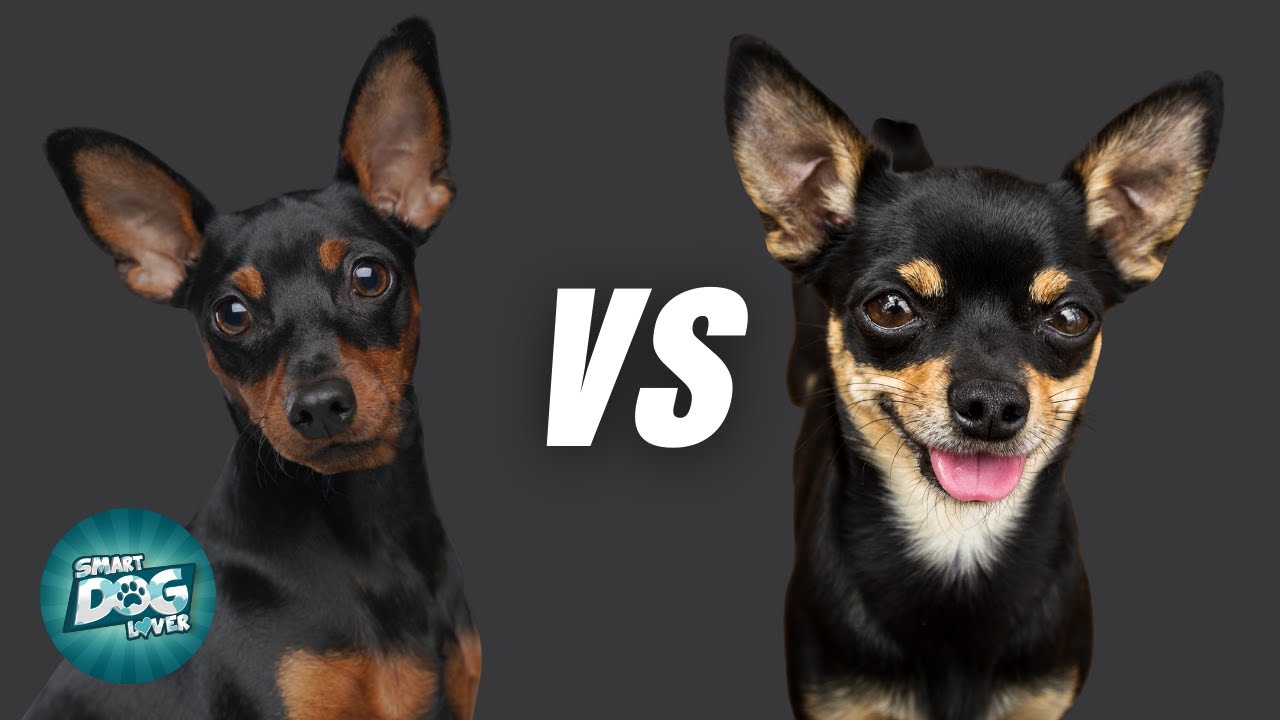
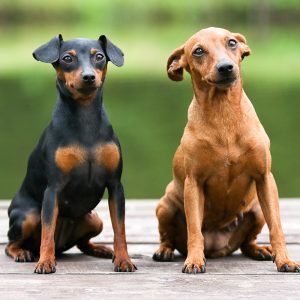
Another major challenge involves the breed identification process itself. IMPS also takes in mixes, not just the classic black-and-rust dogs with cropped ears and docked tails, which surprises some adopters seeking a “boutique dog.” Sandy emphasized, “If you want a dog that boutique, then rescue is not the avenue you want.” To compound matters, sometimes shelters staff, although they are doing their best, will misidentify breeds and post photos that do not accurately show their size or traits, leading volunteers to travel long distances just to assess a dog in person. In one case, a dog labeled as a Chihuahua-Italian Greyhound mix turned out to be a blue Min Pin with alopecia.
Sandy also expressed the emotional burden of deciding which dogs to take in, a task that requires balancing compassion with the mission of a breed-specific rescue. Early on, she admitted, she was tempted to save every dog that had even “1% Min Pin.” But over time, she learned that taking in too many non-Min Pins ultimately limits the ability to help those that clearly fit the breed criteria and IMP’s mission. “Sometimes I need to… say, ‘Okay, got to stay in your lane. We’re working on Min Pins.’” This discipline is essential to ensure that true Min Pins don’t get overlooked due to capacity issues.
Perhaps the most heartbreaking part of Sandy’s work is the sheer volume of surrender requests her group receives. “There’s not enough rescues to go around. There’s not enough fosters to go around,” she said, describing how shelters and private owners contact them multiple times a week. The group’s ability to help depends entirely on their limited network of volunteers and foster homes. Often, it comes down to pleading with foster families to take on “just one more dog,” knowing full well that for every one they can’t help, another Min Pin risks being left behind.
Scrutiny During The Adoption Process
Summary: Volunteers Are Trying to Create A Perfect Match
The scrutiny involved in the dog adoption process, especially through breed-specific rescues like those for Min Pins, often draws criticism from potential adopters who find the requirements and questions daunting. However, as Sandy explains, this level of care is not meant to discourage applications but to ensure that each dog is matched with a home that truly fits their needs. The process typically includes an application, landlord checks for renters, placement surveys, and candid questions about the adopter’s lifestyle and willingness to commit to the dog. For example, Sandy notes that while many people claim they would never surrender a dog, “after a week, they’re ready to surrender the dog because they’re like ‘this dog has more energy than we had originally anticipated.’” This highlights the importance of honest communication, as successful placements depend on accurate information from both sides.
The rescue’s goal is to act as a “matchmaker,” using their deep knowledge of the breed and the individual dogs’ personalities—gained through fostering—to place each dog in the most suitable home. Sandy takes pride in the high success rate of these matches, estimating that about 97% are positive, with mismatches often resulting from adopters not giving the dog enough time to adjust, underestimating the dog’s energy needs, or lacking empathy for behavioral quirks stemming from past trauma. The ideal adopter, therefore, is someone active, patient, and open to working through any challenges that may arise, rather than someone seeking a perfect, ready-made pet.
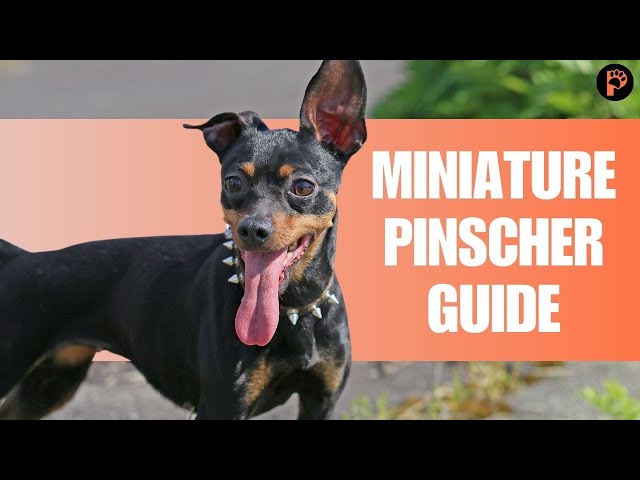
Another key reason for the thorough adoption process is the expertise that breed-specific rescues bring to the table. Volunteers are knowledgeable about what is standard for the breed, which enables them to identify potential health or behavioral issues that might not be obvious to the average adopter. A representative from a breed rescue group will know what is standard for a breed and what is not. And what that means to potential adopters is that someone knowledgeable about the breed will likely be able to spot bad breeding that can result in health issues. For instance, Sandy shared an example of a blue Min Pin—a nonstandard color—who had significant dental and possible age-related health issues that the rescue was able to identify and address before adoption. This level of scrutiny helps ensure that adopters are fully informed about the dog’s needs, potential challenges and have a plan in place, reducing the risk of future surrenders and promoting long-term success.
Ultimately, the scrutiny in the adoption process is rooted in a desire to protect both the dogs and the adopters. By carefully vetting applicants and leveraging their knowledge of the breed, rescue volunteers aim to create lasting, positive matches. Sandy wished more people would trust the rescue volunteers to act as a “matchmaker” between the dogs that become available and the adoption applicants and takes pride in the fact that “I would say we’re probably about maybe maybe about 97% that, you know they’re good matches”. She elaborated “Every dog is unique. We have some Min Pins that are absolute couch potatoes, not sure what happened in the genetics, but you know it happens on rare occasion.” While the process may feel rigorous, it is designed to ensure that each dog finds a home where they will be understood, cared for, and cherished for life.
Here For You Post-Adoption
A number of the breed rescue groups like to keep tabs on the dogs that they adopt out and most good rescue groups will offer post adoption support, so I like to ask rescue representatives like Sandy what their group’s philosophy is about post adoption interactions. For IMPS it appeared to be pretty flexible and as needed. She explained that they offer “lifetime support! And some people, some people. Once they adopt their dog, they’re done, and and we we respect that. We don’t want to be intrusive and harassing them ‘Hey! Just want to check in on our dog and see how the dog is doing’. We are foster volunteers. That is the most rewarding part is when the families keep in touch. And there’s several families that keep in touch with us, and I mean we’ve been in touch with them, for, like upwards of 10 years on, on the updates, on their dogs. And you know they send us holiday cards. They, you know, send pictures of the dogs, you know, playing with their siblings and things like that. So anytime we tell people: ‘If you have any questions, any concerns, regardless of what it is. If you need, you know, training tips. If you want to just show us pictures of the latest cute thing that your dog is doing, or the new outfit that you got for your dog. We want to be involved because you get really, really invested in these dogs, and you want to know that it was the right placement.’ And like, I said, you know, 97% of the time, it’s the right placement.”
And they offer lifetime support because they care about the breed and the dogs that they place. They are “committed to caring for the dogs for the rest of their life. So whether we take them in and their original Foster home ends up, you know, adopting them, or they become, you know, permanent Fosters, or we rehome the dog. If we find out that, hey? You know, this dog is still, you know, adoptable has, you know, a lot that they can offer to a family, and you know we rehome them. It just really depends on the circumstance. But no, absolutely, you know, lifetime support of the dog. And even after the dogs have passed we’ve had people reach out to us. Say, ‘Hey, you know I’m I’m thinking about getting another dog, but I’m not sure it’s the right time’, and and you know we we have conversations with them of you know. Are you sure the Minpin is still the right breed for you? Now you’re a little bit aging, you mobility issues, maybe, you know, may not be the best choice for you at this time, or maybe we look for you know, an older dog that isn’t as as sprightly. So yes, we absolutely continue contact” if the adopter wants to pursue communication. However, they do not pursue the adopters post placement like some breed rescues do.
Common Misconceptions
Summary: Dogs have a psychology and their own individual personalities.
Although it was love at first site for me with Lovie, Spike, and Sniffer, I will say that Reggie, our senior rescue was very depressed when we got him. Actually, my heart broke for him and that is why I wanted to give him a second chance at life. And Lovie was shy. I guess my point is that point is in alignment with Sandy’s: give the dogs a chance to get settled in and have a little compassion for the history they endured to end up in a rescue situation. When I gave her a chance to address a common misconception about Min Pins or the rescue process, Sandy wanted to dispell the myth about love at first site.
One of the most common misconceptions about Miniature Pinschers (Min Pins), according to Sandy, is the unrealistic expectation that adopters will feel an instant connection during a meet-and-greet. Many people assume they’ll experience “love at first sight” or that the dog will immediately be affectionate and ready to cuddle. However, Sandy explains that these meetings are often brief and take place in overstimulating environments, making it difficult for a dog—especially a rescue—to show their true personality. “You’re a complete stranger that she met 10 minutes ago,” Sandy reminds potential adopters, emphasizing that affection and trust take time, especially for dogs with unknown or traumatic pasts.
Another major misunderstanding is the assumption that a dog’s initial behavior, particularly in a stressful shelter environment, reflects their long-term temperament. Some people are deterred by reports of minor bite history or signs of stress, but Sandy notes that this behavior is often situational. Many Min Pins come in as strays or from difficult circumstances and are “already on high alert” when they arrive at a shelter. A fearful or defensive reaction—like a bite—is not necessarily a red flag but a response to extreme stress. Sandy encourages adopters to follow the “3-3-3 rule”: three days to decompress, three weeks to adjust to a routine, and three months to truly feel at home. With patience and empathy, most Min Pins will come out of their shells and reveal their loyal, spirited personalities.
Sandy’s One Wish
Summary: More Fosters
When asked what she would wish for if she could wave a magic wand to address IMPS’s biggest need, what would she wish for, Sandy responded “No hesitation, and I’m sure you’re going to consistently hear this with all the rescues that you interview, is wishing that people were more open to fostering because, I mean and there’s a common theme, people will tell you, ‘Oh, you know I can’t bear the thought of having a dog loving and nurturing, and then having to give them up. No, I’m not really equipped to do that.’ And I’ll be honest. I was one of those people as well.
Sandy went on to expand on how she became what some people jokingly call “foster fails” with a mix pack comprised of both Min Pins and Italian Greyhounds. She decribes her motley crew as “a lot of fun, they really are. I love them to death. They’re just. I can’t imagine life without the dogs.”
In response to people who ask how she manages, she explained that “the hardest introduction was the second dog. After the second, they learn their their place, and everyone gets along. I mean, yes, some of them are better friends than others. But they’re not, you know, fighting or bickering, or things like that. But no, it’s fantastic. And yeah, I don’t foster, partly for that reason, because I you know, [adding a new dog into a pack that size] kind of changes the dynamic.
There’s a reason why so many rescues need fosters, and that reason may be because so many of the fosters become adopters. Sandy admitted that she “only successfully adopted out one foster dog.” The rest joined the pack. She laughed about being teasd by some of the other volunteers about how she was better suited to “stick to administrative and transport, because [she] gets so attached to the dogs.”
And even with transport she admitted that “one of our Italian greyhounds I was supposed to transport her to a foster home, and midway. I’m like ‘I can’t bear the thought. This dog has gone through so much already. I’m just going to take her home and let her decompress a little bit, and you know we’ll take it from there.’ And I think we adopted her the next day, and she definitely by no means was a perfect dog and took a lot of work. But she’s fantastic, and wouldn’t, change anything for the world.”
“But yeah, I just wish more people would be open to fostering, because I think what people don’t understand is: if we don’t have that network of volunteers, we can’t pull the dogs from the shelter. And we’re on social media, and you know we love that people are so engaged and want to let us know of ‘Hey, this shelter has this Min Pin and this shelter has this, Min Pin’; and ‘can you pull this dog and keep pulling a dog?’ And I keep telling people ‘if you could put that effort into trying to help us get volunteers and fosters. I’ll pull dogs all day long. There is no shortage of Min Pins in the shelters” and Min Pin mixes, since her rescue group take mixed breed dogs too, if they are identifiably Min Pin.
But as with many of the breed rescues and rescue groups in general, not just dogs pedigree or mixed breed, they are often only as strong as their foster network. Sandy went on to add that “there’s just there’s no shortage. And so if we could have people more open to fostering…”
Her rescue group also offers foster to adopt, which is a great way for people to get to see a dog when it’s more settled in and get to know the breed in general. She explains to interested adopters or potential fosters that “If you have a dog that you want to, you know, possibly adopt for your family, but you’re not quite sure they’re the right fit Foster to adopt is the perfect opportunity to have that dog in your home for a little bit longer. See how they acclimate to your family, check out the dynamics, and then, once you find out it’s a good fit, then adopt the dog.”
“The one thing is, I just wish more people were open to fostering, because there’s there’s so many fantastic dogs at the shelters and people. Sometimes people think well, ‘they’re in the shelter because there’s got to be something wrong with them’- and it’s not true. I mean, some of these dogs, like Min Pins, are bolters. They have a high prey drive, and they go chasing for things, and they go missing because they’re chasing a squirrel or chasing a bird. And these are perfectly healthy dogs that just, unfortunately, you know, decide to go on unsupervised adventures, and then their owners couldn’t find it again.”
I shared with Sandy that Lovie had a little Min Pin buddy at one of the parks we frequented when he was a puppy named Joey. And Joey’s owner said he would disappear for weeks at at time. She was surprisingly unphased. Would it surprise you to know that Joey was not neutered? It shouldn’t because the ability to smell heat from a mile way is a big motivator for a little doggie adventure- out and about in search of action, a little tail.
With all that said about the need for fosters, it is worth elaborating a bit about the need for fosters who may have a basic understanding of the breed or patience with potential quirks. Sandy went on to explain that she is sometimes “very reluctant about placing dogs in the home, because if they’ve never fostered before, they’re not familiar with the breed. We’ve had volunteers before that had said, ‘Yes, I absolutely want to foster!’ And they’ve had the dog for 2 days [and] they’re like, ‘Nope, this isn’t cut out for me.’ And so we need a plan B, and we need to have another home that we can, you know, release that dog to” just in case as a backup nearby so that they are not left scrambling to find a place for the dog.