Brussels Griffon Breed Rescue & Adoption FAQ Answered
Interview with Connie Lawrence, President of NBGR
In addition to articles that describe a dog breed based on research, in this case Brussels Griffon aka “Griffs”, I wanted to share insider and breed expert knowledge with you. I hope that this interview will help answer your every question about what life with a Brussels Griffon AKA “Griffs” would be like so that you can make an educated decision about whether this breed would be a match for you and your lifestyle. The following is a summary of our conversation about the breed and breed rescue for Brussels Griffons; it is a combination of direct quotes and my best attempt to paraphrase based on my interpretation of sentiment.
If after reading this and our informative article about the breed, you would like to learn more and possibly adopt a Griff from rescue, then I encourage you to contact National Brussels Griffon Rescue (NBGR) directly.
History of Brussels Griffon aka “Griffs”
Summary: From Rodent Hunter To Cutie Companion
According to Connie, the Brussels Griffon breed was bred to be a ratter in a barn, then their humanlike face, won over the hearts of enough owners to earn them a place in the house. She describes them as “Velcro dogs” with a tendency to be clingy and really love their person. They “do not like to be isolated. They want to be involved in your life”. I have noticed that a lot of small dogs tend to truly enjoy being a constant companion with their person, with continuous sightline and physical contact; I thought it was because a lot of small dogs were bred to be lap dogs and living heaters. Bottomline: if you are the kind of person who is gone a lot or someone who thinks letting your dog free roam “loose in the car on your shoulder” is being cool, you may not be a good match for this breed and are likely to raise red flags for the NBGR vols when they conduct their interviews. That does not mean that you are a bad person, just not a good match

I also learned from Connie that there are two kinds of Griffs: the more popular and common “ruffs” (as seen in “As Good As It Gets”) and the lesser known and uncommon smooth (like Petite Penny Brabacon) that has gained popularity in small dog havens like Southern California. They are increasing in popularity with many enthusiastic owners that rival trendsetting chihuahua owners like Elle in “Legally Blonde” or Paris Hilton. Connie described that she has been seeing them more in commercial campaigns like [ASK BRAND/CHAIN], and that there has been an explosion of meetup groups in the Los Angeles area hosting events like “Griffy Prom”, “Griffy Con” (like Comic Con), derby parties in the NYC area, Grumpy Griffons featuring one of their foster success stories, Puck (Instagram).
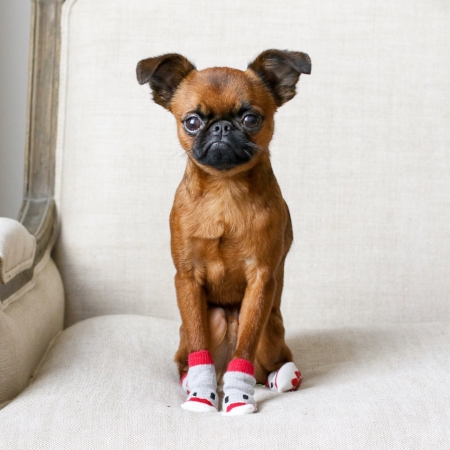
Griffs come in red, black, black & tan, and Belge (a sheen tri color). The ones I have seen in person at dog parks mainly, tend to have a puppy cut that makes them kind of look like an Affenpinscher to me, perhaps because they are both kind of “monkey-faced”. Many of the breeds I see have puppy cuts in the Greater Bay Area parks probably because it is easier to maintain for dogs living active lifestyles often with owners that are not showing the breed. But Connie described that Griffs can have long hair but that some people “hand their beards, making them look more shitshu-like”. Although I though the Ewoks in Star Wars was based on an amalgamation of African tribes, Connie asserted that the stockier “cobby” version of Brussels Griffons. Some Griffs can be “leggy” like my dog Lovie when they are spayed or neutered under six months of age.
How Brussels Griffon End Up in Dog Breed Rescue
Summary: Mounting Vet Bills & Aging Owners
Veterinary bills, especially dental, are the bulk of the expenses for an all volunteer group like Connie’s that rescued 77 dogs in 2024 that included breeder surrenders especially chocolates since they are undesirable by breed standards, older dogs after they were bred, surrenders from seniors transitioning to assisted living and skilled nursing facilities and some mixes from shelters (although some shelters are just guessing). Her group also takes some of the older dogs back that are too old or have a lot of medical issues, making them harder to place. One success story of their Paws in Winter program, a fundraiser for rescues who are senior and/or special needs. was Gus who was estimated to have only one year left to live but lived another six years with a volunteer foster.
Her org is national with volunteer fosters spread over multiple states and strong transportation network that allows dogs to move between fosters or for medical care and then ultimately to proximity to an interested party for adoption. Again, veterinary bills is the biggest expense for this all volunteer group. Although they may get some discounts on occasion, they pay the bulk of the bills which totaled $140k in 2024. I have experienced firsthand how expensive veterinary bills are so it did not surprise me when Connie described how a single patella surgery on both knees was $6k, it probably would have been twice that in California. As a result, they had to increase their adoption fees to $800 for puppies and $300 for older dogs. Their adoption fee varies for senior dogs. If the rescue griff is quite a bit older or if they suspect that the dog may have some health issues in the future, they lower the fee.
In addition to the financial investment, all of the vols are also very emotionally invested in the dogs they get ready for adoption and for this reason they take personal references, interviews, and home visits seriously. Connie lamented that some “people don’t understand what we do and how much effort goes into each dog”. The home visits, especially post pandemic, can be somewhat off-putting and I can understand how someone could feel reluctant to have a stranger scrutinize your home; but Connie explains that they are just doing their “due diligence” so that the dog can be placed for the rest of its life. This commitment to a positive and appropriate match is why they have a lot of repeat adopters because when you adopt from a breed rescue group like NBGR, you are working with “somebody [who] knows something about the dog and somebody [who] has been living with that dog”. At a minimum, before you adopt any breed rescue, make sure that you research your breed and that is true for any breed. Connie jokes that for “a family that fits the breed”, Brussels Griffons can be “like potato chips”, since most Griff owners rarely have just one.

I completely understand the reasoning behind it: they want a good match so that the adopter and the dog have a wonderful life together. A dog that is mismatched will likely act out to express its discontent and then neither the person or canine will be happy. It makes sense to me to scrutinize a match in advance rather than have a dog be bounced around from household to household and back and forth to fosters who work tirelessly to rehab the dog emotionally and possibly physically. Personally, I think it is good that the volunteers care enough to be thorough. Keep in mind that they are all volunteers who make time because they care about the breed and the dogs in the care. I think that this passion and commitment is commendable and encourage others who may feel frustrated along the way during the adoption process, to take pause and consider how a good match benefits them too, probably more so than even the dog, and definitely more than the volunteer rescue workers, many of whom have had to endure painful experiences like an onslaught of abused dogs from puppy mills. Connie wishes that some people would “lighten up on rescue” workers and orgs because many of them are stressed and emotionally drained.
Tips for Training and Socializing Your Brussels Griffon Rescue
Summary: Don’t Be A Sucker- Train Your Dog
Many cute little dogs are well aware of how cute they are but Connie cautions against “allowing the dog to own you”, for example negative behavior like lap guarding need to “nip in the butt” right away. And as with many small dogs, the need to socialize them with other dogs, especially larger dogs is key so that they don’t get little dog syndrome and become too bold for their own good.
Ideal Owner and Lifestyle Match for Brussels Griffon Rescues
Summary: Someone Who Enjoys A Shadow
According to Connie, the ideal owner match is someone who can spend time with their Griff since they do not like to be alone. They would thrive in a household with people who either work-from-home or can take them with them to work. They would not be happy if they were left at home all day.
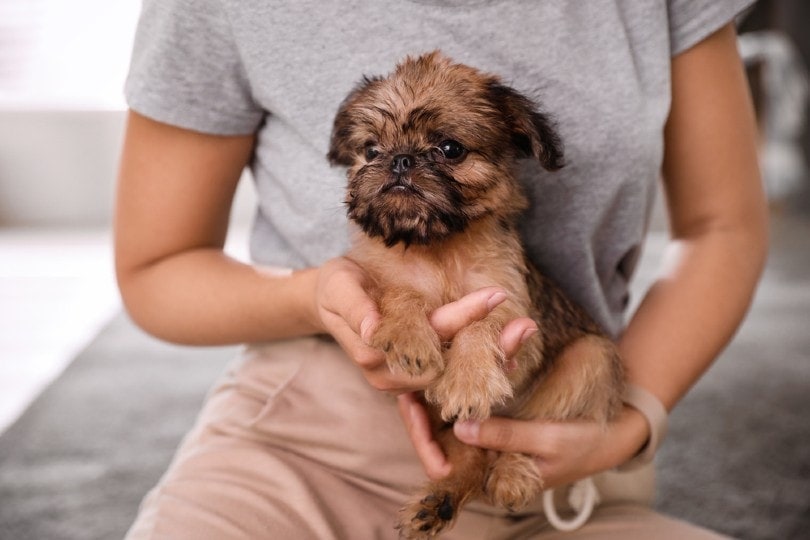
If you think you and your lifestyle could be a match, “get ready to have your heart stolen” because they are “such clowns with great personalities” and prepare to have “something attached to your side” that will “bring so much joy” to you and the other people in your household or life. One way for you and your little Griff to enjoy life together is to prepare your home for them and that can include creating an ideal dog-friendly garden for the breed. We created an article with plant and tree recommendations a pet-safe yard especially for Brussels Griffons on our sister site PetsCanGo.com.
Common Misconceptions About Brussels Griffon Breed Rescue
Summary: All Heart & Dedicated To The Dogs
(Quote from Written Response)
For every dog that finds their perfect forever home through rescue, there is a coordinator behind the scenes who has poured their heart into making that match. What many people don’t see is the sheer amount of effort, time, and emotional energy that goes into each and every placement.
We don’t just look at an application and hand over a dog. We study, we listen, we ask hard questions, and sometimes we lose sleep over making the right decision. We think about whether a shy dog will shut down in a loud household… whether a high-energy dog will thrive with someone sedentary… whether a dog who has survived trauma will feel safe and loved for the rest of their life. These decisions are not made lightly. They are not made based on preference or popularity, but on what the dog needs to be safe, secure, and truly home.
What many also may not realize is the personal sacrifice that comes with this role. Coordinators are volunteers—many with families, jobs, and their own pets—who still spend hours on phone calls, transport coordination, vet appointments, home checks, follow-ups, and sleepless nights worrying over the ones in our care. Our families adjust their lives to accommodate foster dogs. Our hearts break when a dog is returned because the placement didn’t work out, but we always welcome that dog back.
And to those who don’t understand or support our placement choices—we hear you, but we also ask for understanding. Wanting a certain type of home for a dog isn’t about judgment, favoritism, or control. It’s about what that specific dog needs to thrive. Some dogs can’t adapt to just any home. And while it may seem harsh or unfair that your home wasn’t selected, it is never personal. We are trying to prevent heartbreak—for the dog, and for you. Because more often than not, the very people who are upset they weren’t chosen would be the ones who complain and return the dog when things got hard.
Every rule we make, every request we include, every time we say “no”—it’s because we said “yes” to doing right by that dog. We don’t expect everyone to agree with our decisions, but we do hope people can respect the care and love that go into each one. This work is hard, it’s emotional, and it’s deeply personal. But it’s worth it—every time a dog finds the place where they truly belong.
Connie’s One Wish
I like to give all of the rescue volunteers that I interview the opportunity to share their one wish with readers; when asked, Connie responded:
“That every dog (domestic animal) had a loving home and was a valued member of their family.“