Why allowing pets isn’t enough—and how participation-driven programs create real engagement, community outreach, and retention
Summary:
Most senior living communities think they’re pet-friendly, but simply allowing pets isn’t enough to keep residents engaged long-term. Discover why permission-based policies fall short—and how participation-driven programs create stronger retention, community outreach, and trust.
Key Takeaways
- Basic pet policies fail to drive retention because they are permission-based rather than participation-driven
- Allowing pets is expected, but activating them as part of the community creates real engagement
- Ongoing programming and partnerships drive stronger retention, outreach, and visibility
- Foster-friendly approaches and community integration unlock new participation opportunities
- Participation-driven models create differentiation that competitors cannot easily replicate
Most pet-friendly policies in senior living don’t improve retention on their own. While allowing pets meets a basic expectation, it rarely creates meaningful engagement. Retention improves when pets are actively integrated into daily life and community experience.
Allowing pets is a policy. Participation is what drives retention. Policies are passive—retention comes from interaction, routine, and connection.
Why Pet-Friendly Policies Alone Don’t Drive Retention
Pet-friendly policies have become table stakes. Communities that simply allow pets meet a minimum requirement, but often fail to create meaningful engagement around them.
Passive pet ownership keeps pets present—but not necessarily integrated.
Participation-driven communities use pets to:
- create shared experiences
- encourage interaction
- build connections among residents
This distinction separates communities that retain residents from those that simply accommodate them.
Why Pet-Friendly Policies Often Fall Short
Many communities allow pets but don’t actively use them to build engagement, outreach, or visibility.
Without structured programming or integration, pets remain an individual benefit rather than a community asset.
This creates a missed opportunity to:
- strengthen resident connections
- increase social interaction
- expand awareness beyond current residents
Where Standard Policies Limit Participation
Most policies are designed around permanent pet ownership, not participation.
Common structures such as:
- pet fees
- deposits
- restrictions
can unintentionally limit broader involvement—especially for residents who might otherwise participate in fostering or short-term care.
These policies often solve for risk, but not for engagement.
What Participation-Driven Pet Programming Looks Like
Participation-driven communities move beyond permission and into integration.
This includes:
- ongoing pet-centered activities
- shared experiences built around pets
- programming that encourages interaction and involvement
The goal is not just to allow pets—but to make them part of how the community connects.
Seniors for Seniors: A High-Impact Model
One of the most effective and underutilized approaches is a “seniors for seniors” model.
In this model:
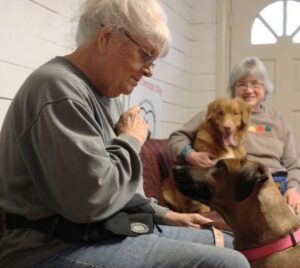
- residents foster older or calm animals
- pets and people benefit from companionship and routine
- participation is accessible and low-barrier
This creates:
- increased engagement
- a sense of purpose
- meaningful daily interaction
At the same time, it supports rescue organizations by expanding participation in fostering—especially from a population that is often overlooked.
Ongoing Participation vs One-Time Programming
Many communities rely on occasional pet visits or one-time events.
While positive, these are limited in impact.
Ongoing participation—through regular programming and structured involvement—drives:
- stronger connections
- consistent engagement
- broader community visibility
Consistency is what creates measurable outcomes.
The Role of Ongoing Rescue Partnerships
Ongoing partnerships with local rescue organizations create a structure for participation.
Rather than one-time interactions, these partnerships support:
- recurring involvement
- shared programming opportunities
- expanded community engagement
These relationships allow communities to:
- create meaningful resident experiences
- support local organizations
- strengthen their presence within the broader community
How Pet-Centered Events Expand Participation
Events such as mixers and informal gatherings create natural entry points for engagement.
They:
- bring residents together
- invite families, friends, and local networks
- create low-pressure opportunities to experience the community
This expands outreach and builds familiarity in a way that traditional marketing cannot.
Community and Business Impact
Participation-driven pet programs create measurable outcomes:
- stronger social connections
- increased resident satisfaction
- improved retention
They also support:
- community outreach
- trust-building
- visibility beyond current residents
Communities that integrate pets into their culture—not just their policies—create environments where residents feel more connected and more likely to stay.
Transforming Pet Policies Into Community Strategy
The opportunity for senior living communities is not just to be pet-friendly—but to become participation-driven.
By shifting from:
- policies → programs
- permission → participation
communities can create:
- stronger engagement
- deeper connections
- more sustainable retention
Pets are already part of residents’ lives. The communities that thrive are the ones that make them part of the community itself.
Learn More
Learn how participation-driven programs and partnerships can strengthen engagement, outreach, and retention:
https://rescuesrsuper.com/stories/