Key Takeaways
- Staffordshire Bull Terriers are compact yet muscular dogs with a strong bond to their families, making them excellent companions despite their fighting dog ancestry.
- Staffies require consistent training and early socialization to manage their strong prey drive and potential dog aggression tendencies.
- These dogs differ significantly from American Pit Bull Terriers and Bull Terriers in size, temperament, and appearance, though they’re often confused with these breeds.
- With proper training, Staffies can be wonderful family pets known for their patience with children, earning them the nickname “nanny dogs.”
- Potential owners should understand breed-specific legislation that may affect Staffordshire Bull Terriers in certain areas before bringing one home.
Staffordshire Bull Terriers – affectionately known as Staffies – are often misunderstood. Despite their tough appearance, these dogs are remarkably loving companions with an unwavering loyalty to their families. Originating from the United Kingdom, they’ve transitioned from their fighting past to become beloved family pets worldwide. Proper understanding of this breed is essential for responsible ownership and helping combat unfair stereotypes that often plague these wonderful dogs.
Comprehending the Staffordshire Bull Terrier Breed
The Staffordshire Bull Terrier is a compact, muscular breed with an unmistakable presence. These medium-sized dogs typically stand 14-16 inches tall at the shoulder and weigh between 24-38 pounds, with males generally being larger than females. Their strength is remarkable for their size, packed into a frame that exudes power and agility. Staffies are known for their broad heads, strong jaws, and expressive eyes that often reflect their playful and attentive nature.
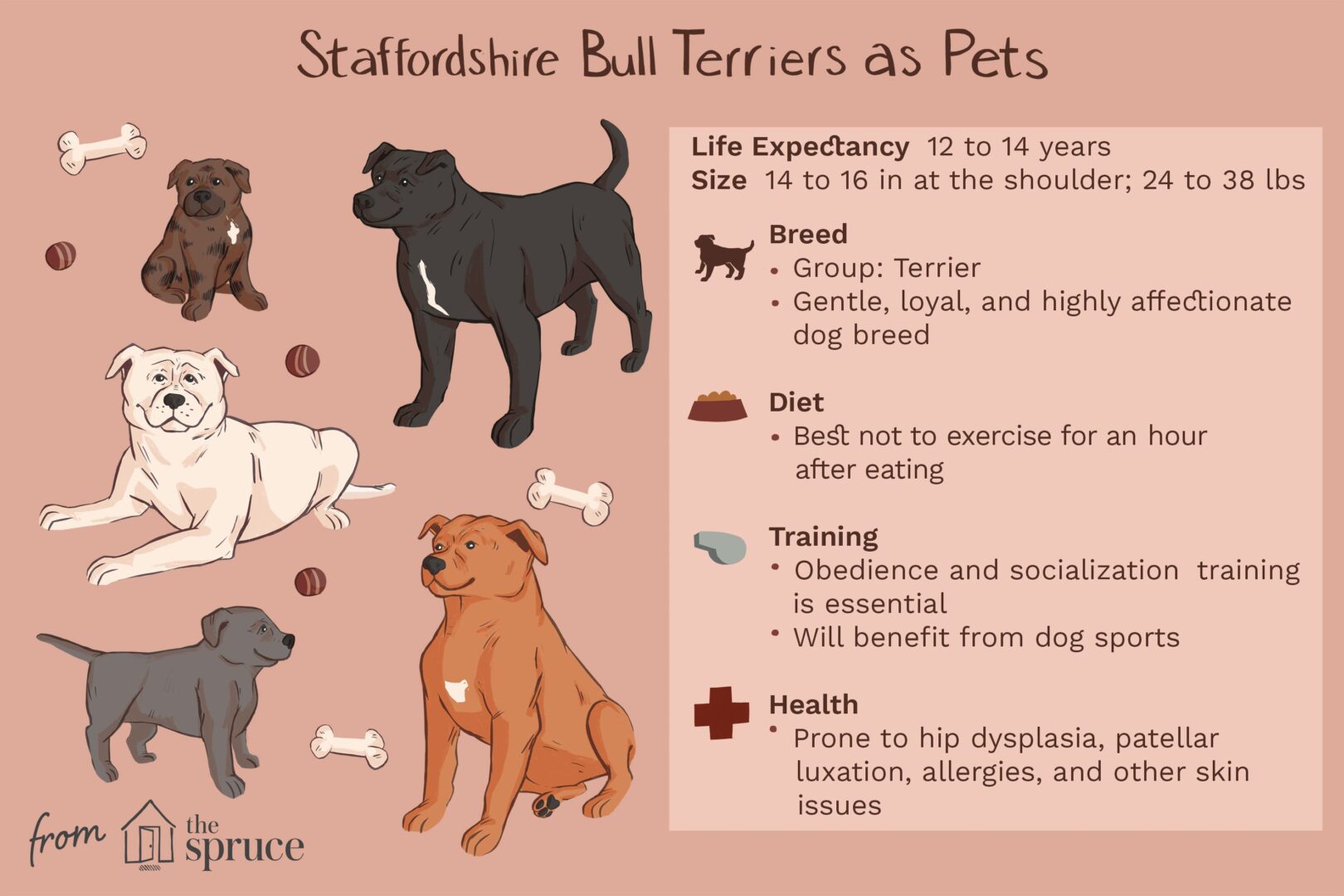
“Staffordshire Bull Terrier …” from www.thesprucepets.com and used with no modifications.
Appearance and Unique Traits
Staffies boast a short, smooth coat that comes in various colors including red, fawn, white, black, blue, or brindle, often with white markings. Their coat requires minimal grooming, typically needing just a weekly brushing to remove loose hair. These dogs have a distinctly muscular build with a broad chest and strong shoulders, giving them a powerful stance despite their relatively small stature.
One of the most endearing physical characteristics of the Staffordshire Bull Terrier is their facial expression. Their eyes – typically dark but occasionally lighter depending on coat color – convey intelligence and emotion that owners quickly learn to read. Their ears are typically half-pricked (rose ears) when alert, and they have a natural, undocked tail that’s carried relatively low. When a Staffy is happy, their whole body seems to wiggle with joy, not just their tail.
“The Staffordshire Bull Terrier’s affection for its friends—children in particular—its off-duty quietness, and its trustworthy stability, makes it a foremost all-purpose dog.” – American Kennel Club
Distinguishing Staffordshire Bull Terriers from Other Breeds
Many people confuse Staffordshire Bull Terriers with other similar-looking breeds, most commonly American Staffordshire Terriers and American Pit Bull Terriers. While they share ancestry, they are distinct breeds with notable differences. Staffies are the smallest of these three breeds, with a more compact build and shorter legs. Their head shape is also distinctive – broader and shorter in proportion to their body compared to their American cousins.
Unlike American Pit Bull Terriers, Staffordshire Bull Terriers are universally recognized by major kennel clubs worldwide, including the American Kennel Club (AKC) which formally recognized them in 1975. Staffies typically have a more rounded skull and less pronounced stop (the transition from muzzle to forehead) than American Staffordshire Terriers. Learning these subtle differences helps both in identification and in understanding the unique needs and traits of each breed.
Recognized Breed Standards
The Staffordshire Bull Terrier has been recognized by the American Kennel Club since 1975 and belongs to the Terrier Group. According to breed standards, these dogs should be “smooth-coated, well-balanced, of great strength for their size.” The ideal Staffy should convey the impression of power, agility, and symmetry without any exaggerated features.
The Kennel Club (UK) and other international organizations have similar standards, emphasizing the breed’s muscular build, broad head, and distinctive expression. These standards also highlight the importance of temperament – a well-bred Staffy should be bold, fearless, and intensely loyal, but also good-natured, particularly with children. While physical conformation is important, responsible breeders place equal emphasis on temperament to ensure that these dogs maintain their reputation as loving family companions.
- Height: 14-16 inches at shoulder for both males and females
- Weight: Males 28-38 pounds, females 24-34 pounds
- Coat: Short, smooth, and close-lying
- Colors: Red, fawn, white, black, blue, or brindle (with or without white markings)
- Lifespan: 12-16 years
Staffordshire Bull Terrier Creation & Mixes
The Staffordshire Bull Terrier we know today emerged from a fascinating history of selective breeding in 19th century England. These dogs were created by crossing Bulldogs with various terrier breeds, particularly the now-extinct Old English Terrier. The goal was to develop a smaller, more agile fighting dog that maintained the courage of the Bulldog but added the tenacity and athletic ability of terriers. This breeding took place primarily in the county of Staffordshire, hence the breed’s name.
History & Purpose: Breeds Mixed to Create Staffies
When bull-baiting was outlawed in England in 1835, dog fighting unfortunately became a popular underground activity. Breeders sought to create dogs that were not only physically capable but also possessed remarkable courage and an unusually high pain threshold. The Black Country region of Staffordshire became known for producing these brave, compact fighting dogs that could also serve as companions and ratters when not in the pit. For more detailed information on the Staffordshire Bull Terrier, you can explore its characteristics and history.
Despite their fighting origins, these dogs were also kept as family companions, particularly among working-class families. The breeders prioritized temperament alongside physical capabilities – dogs that showed aggression toward humans were typically culled from breeding programs, as handlers needed to be able to separate fighting dogs without being bitten. This selective breeding for human friendliness helps explain why modern Staffies are typically so affectionate with people despite their fighting ancestry.
By the early 20th century, interest in dog fighting waned, and these dogs began to be appreciated for their companion qualities. The Staffordshire Bull Terrier Club was formed in England in 1935, and the breed was officially recognized by the Kennel Club in 1939. This marked the transition of the breed from its fighting past to its new role as a recognized show dog and beloved family pet.

“STAFFORSHIRE BULL TERRIER …” from www.youtube.com and used with no modifications.
Popular Mixes and Their Characteristics
Today, Staffordshire Bull Terriers are often mixed with other breeds, creating dogs with unique combinations of traits. The Staffy Lab (Staffordshire Bull Terrier and Labrador Retriever mix) typically inherits the Labrador’s friendly nature and the Staffy’s loyalty, creating an energetic family dog that excels in active households. These mixes often have the muscular build of a Staffy with the longer muzzle and larger size of a Labrador.
Another popular cross is the Staffy Bull Pit (Staffordshire Bull Terrier and American Pit Bull Terrier mix), which tends to be slightly larger than a purebred Staffy but maintains the characteristic broad head and muscular build. These dogs often exhibit the tenacity of both parent breeds and require experienced handling. The Border Staffy (Border Collie and Staffordshire Bull Terrier cross) combines the Staffy’s strength with the Border Collie’s intelligence and work ethic, resulting in a highly trainable, energetic companion.
Mixed breeds can inherit any combination of traits from their parent breeds, both physical and behavioral. When considering a Staffy mix, research both parent breeds thoroughly to understand potential characteristics and needs.
How Mixes Affect Personality and Health
Crossbreeding can have significant effects on both temperament and health. In many cases, mixed breeding introduces genetic diversity that can reduce the risk of certain inherited conditions common in purebred Staffies, such as L-2-hydroxyglutaric aciduria and hereditary cataracts. This genetic diversity can potentially lead to what’s known as “hybrid vigor” – improved health and resilience in the offspring compared to either parent breed.
However, it’s important to note that mixed breeding doesn’t guarantee better health, as dogs can still inherit predispositions to health issues from either parent. Personality traits in mixed breeds can be less predictable than in purebreds. While purebred Staffies have been selectively bred for specific temperament traits over generations, mixes may display any combination of behavioral characteristics from their ancestry. This unpredictability means that early and consistent training is especially important for Staffy mixes to help shape their developing personalities.
Pros and Cons of Staffordshire Bull Terriers
Before bringing a Staffordshire Bull Terrier into your home, it’s essential to understand both the rewards and challenges that come with this distinctive breed. Like any dog, Staffies have specific traits that make them ideal for some households but potentially challenging for others. An honest assessment of these factors can help ensure a successful match between dog and owner. For those considering adopting a pet, understanding the realistic expectations post-adoption is crucial to a smooth transition.
Benefits of Owning a Staffordshire
|
Trait |
Description |
|---|---|
|
Affection |
Extremely loving and devoted to their families |
|
Size |
Compact enough for apartment living yet sturdy |
|
Child-friendly |
Historically known as “nanny dogs” for their patience with children |
|
Grooming |
Low-maintenance coat requiring minimal grooming |
|
Longevity |
Relatively long lifespan of 12-16 years |
One of the most remarkable aspects of the Staffordshire Bull Terrier is their unwavering loyalty and affection toward their human family. These dogs form incredibly strong bonds with their owners, often becoming “velcro dogs” that want to be by your side at all times. Their natural enthusiasm for life is infectious – Staffies approach everything with gusto, whether it’s playtime, training sessions, or simply greeting you when you come home.
Despite their muscular build, Staffies are surprisingly adaptable to different living situations. They don’t require vast amounts of space and can thrive in apartments as long as they receive adequate exercise. Their short coat means minimal grooming requirements – a quick weekly brush is typically sufficient. They’re generally healthy dogs with a good lifespan, giving families many years of companionship.
Perhaps most famously, Staffies are known for their remarkable patience and gentleness with children. This trait earned them the nickname “nanny dogs” in England, where they were often trusted to watch over children. Their playful nature makes them excellent playmates, while their sturdy build means they can withstand the occasional rough handling that may come from younger children (although all interactions between dogs and children should always be supervised). For more insights on dog breeds, you might find this expert interview on Australian Shepherds interesting.
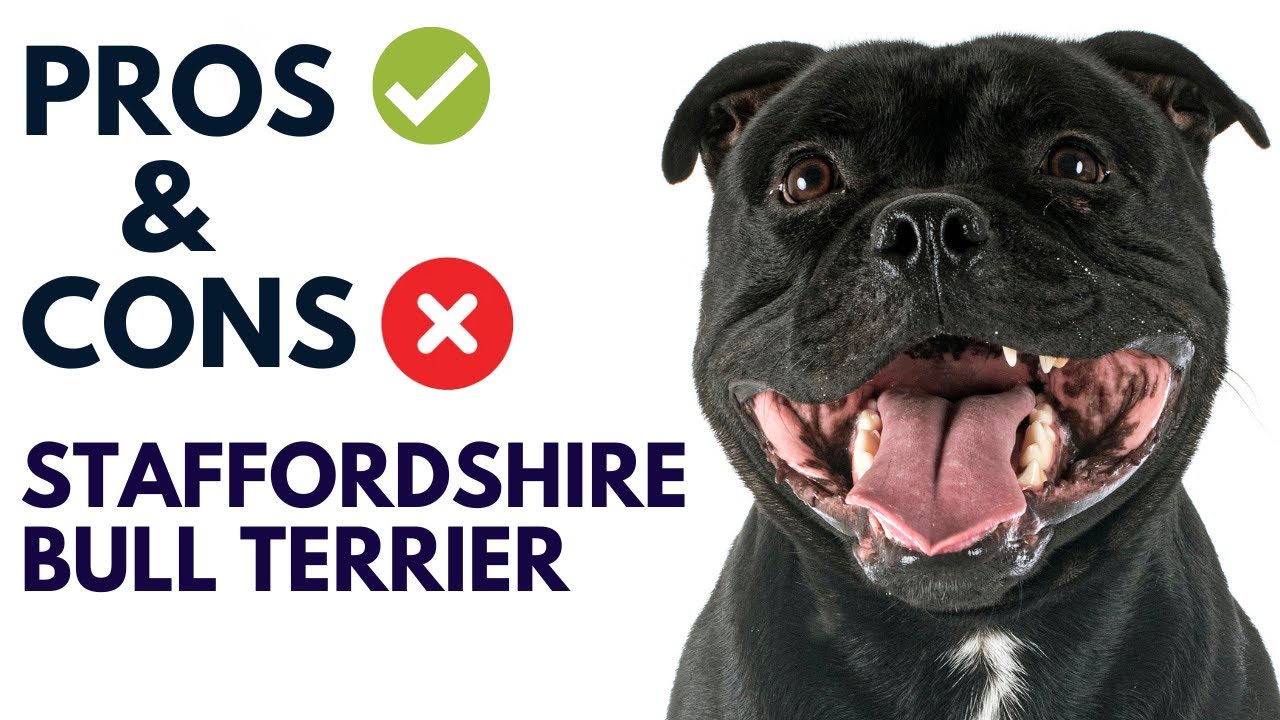
“Staffordshire Bull Terrier Breed Pros …” from www.youtube.com and used with no modifications.
Challenges and Considerations
Despite their many positive qualities, Staffordshire Bull Terriers present certain challenges that prospective owners should carefully consider. Their strong prey drive can make them difficult to manage around small animals unless extensively socialized from puppyhood. Many Staffies have some level of dog-reactivity or dog-aggression, particularly with dogs of the same sex, requiring careful management in multi-dog households and public settings. While these tendencies can be minimized through proper socialization and training, they’re partly rooted in the breed’s history and may never completely disappear.
Breed-specific legislation presents another significant challenge for Staffy owners. In many regions worldwide, these dogs are subject to restrictions or outright bans based on their physical appearance and perceived danger. These laws often group Staffies with other “bully breeds” regardless of individual temperament. Potential owners should research local regulations before committing to a Staffy, as these laws can affect everything from housing options to insurance rates and even travel possibilities. Additionally, the public perception of the breed can lead to unfair judgment and discrimination, requiring owners to be prepared to serve as ambassadors for the breed.
Training and Behavioral Insights
Training a Staffordshire Bull Terrier requires understanding their unique blend of intelligence, strength, and sensitivity. While these dogs are eager to please and generally trainable, they also possess a stubborn streak and considerable physical power that demands consistent leadership. Successful training balances firm boundaries with positive reinforcement, avoiding harsh methods that can damage the trusting relationship between Staffy and owner. The good news is that with appropriate training, Staffies can excel in various dog sports and activities, from agility to therapy work.
Effective Training Techniques
Positive reinforcement training works exceptionally well with Staffordshire Bull Terriers, who respond enthusiastically to rewards like treats, toys, and praise. These dogs are particularly food-motivated, making treats an effective training tool, though it’s important to account for these extras in their overall diet to prevent weight gain. Short, engaging training sessions yield better results than lengthy ones, as Staffies can become bored with repetitive exercises. Incorporating play into training sessions keeps these naturally playful dogs engaged and makes learning feel like fun rather than work. For more insights on dog breeds, you might find this expert interview on Australian Shepherds interesting.
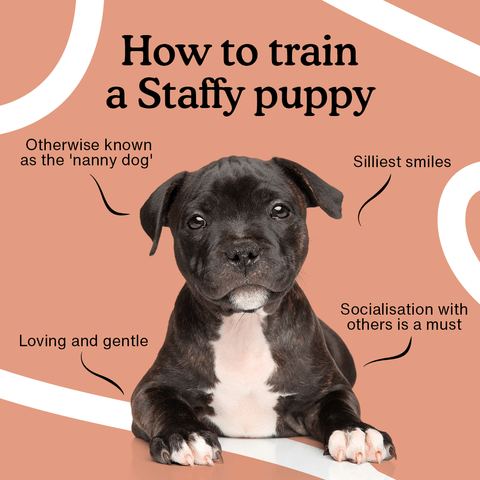
“How to Train a Staffy Puppy | Complete …” from zigzag.dog and used with no modifications.
Addressing Common Behavioral Issues
Like many terriers, Staffies can develop problematic behaviors if their considerable energy and intelligence aren’t properly channeled. Destructive chewing, excessive barking, and digging are common issues that typically stem from boredom or insufficient exercise. The solution usually involves increasing physical activity, providing appropriate chew toys, and ensuring mental stimulation through training, puzzle toys, or scent work. Separation anxiety can also be an issue with this deeply attached breed, requiring gradual desensitization to alone time and possibly the help of a professional trainer or behaviorist in severe cases.
Life with a Staffordshire Bull Terrier
“Living with a Staffordshire Bull Terrier means never having a moment’s peace, never having personal space, and never having a cold spot in your bed – and loving every minute of it.” – Common saying among Staffy owners
Compatibility with Families with Children Under 12 and Other Pets Including Cats
Staffordshire Bull Terriers have earned their reputation as “nanny dogs” through their remarkable patience and gentleness with children. They typically form strong bonds with kids in their family, showing a level of tolerance that’s impressive even when faced with the occasional ear-pulling or clumsy handling. Many Staffy owners report that their dogs seem to instinctively understand the need to be gentler around children, often becoming protective guardians of the youngest family members. For more insights on pet compatibility, consider reading about the Australian Terrier’s kid-friendly nature.
When it comes to other pets, especially cats and small animals, the situation becomes more nuanced. While many Staffies can be successfully integrated into multi-pet households, this requires careful introduction and management. Early socialization is crucial – Staffies raised with cats from puppyhood typically learn to accept them as part of the family. However, their terrier heritage and prey drive can never be completely eliminated, meaning that supervision is always recommended. Some Staffies may never be reliable around small pets, particularly those with strong hunting instincts. For those considering other pets, understanding the benefits of house rabbits might be useful.
Considerations for First-Time Dog Owners
The Staffordshire Bull Terrier can be a suitable choice for first-time dog owners, but only those willing to invest time in training, socialization, and exercise. These dogs require owners who can provide firm, consistent leadership without resorting to harsh methods. First-time owners should be prepared to seek professional guidance for training and socialization, particularly during the critical puppy development stages. The strength and determination of a Staffy means that allowing bad habits to form can create significant challenges down the road.
For novice owners considering a Staffy, adult dogs from reputable rescues can sometimes be an excellent option. These dogs have often had their temperaments assessed by rescue staff and may have already received basic training. Many rescue organizations also provide post-adoption support, which can be invaluable for first-time owners learning to navigate life with a Staffordshire Bull Terrier.
Staffordshire Bull Terrier vs. Similar Breeds
Understanding Differences with Bull Terriers
Though they share part of their name, Staffordshire Bull Terriers and Bull Terriers are distinctly different breeds with unique characteristics. The most obvious difference is in head shape – while Staffies have a broad, relatively short head, Bull Terriers possess their famous “egg-shaped” head with a downward-curving profile and small, triangular eyes. Bull Terriers are also typically larger, standing taller and weighing more than their Staffordshire cousins. In terms of temperament, Bull Terriers tend to be more independent and sometimes stubborn, whereas Staffies are generally more people-oriented and eager to please.
Both breeds share a playful nature and need for physical activity, but Bull Terriers often display more eccentric behavior, sometimes engaging in “spinning” or “zoomies” when excited. While Staffies are known for their affinity with children, Bull Terriers can sometimes be less patient, though this varies greatly between individuals. For potential owners choosing between these breeds, the Staffordshire Bull Terrier typically requires less experienced handling, while the Bull Terrier’s independent streak may challenge novice dog owners.
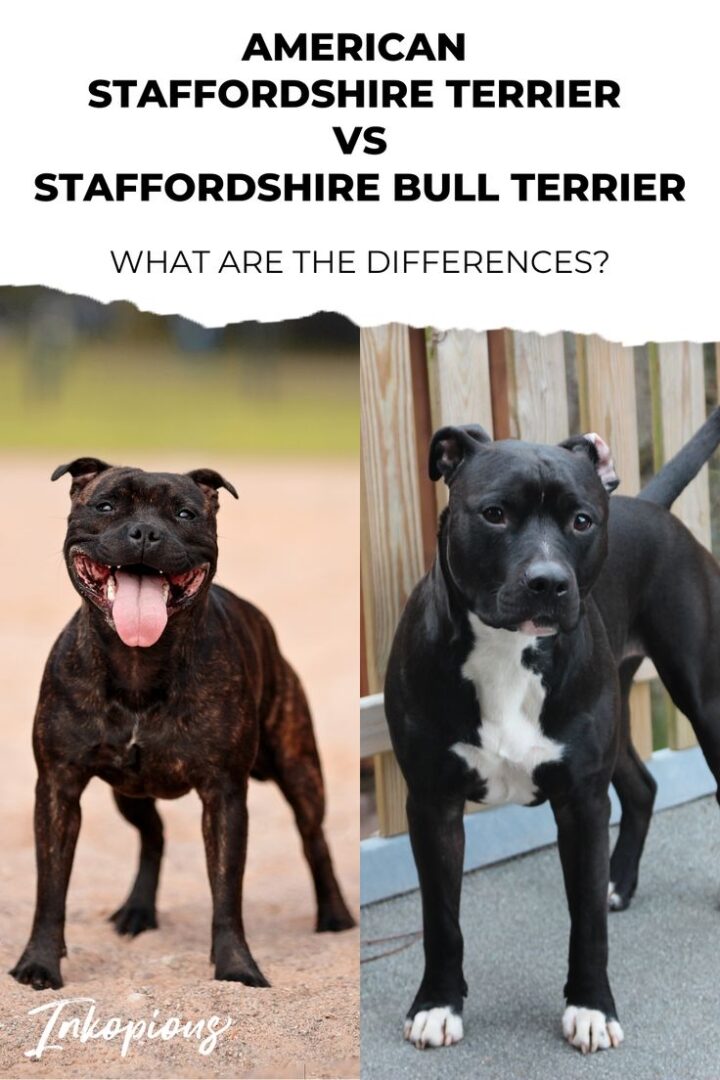
“Staffordshire Bull Terrier vs American …” from www.pinterest.com and used with no modifications.
Comparisons with American Pit Bulls
The Staffordshire Bull Terrier is frequently confused with the American Pit Bull Terrier, leading to misconceptions about both breeds. Size represents one of the most noticeable differences – American Pit Bull Terriers are significantly larger, typically weighing between 30-65 pounds and standing 17-21 inches at the shoulder, compared to the Staffy’s more compact 24-38 pounds and 14-16 inches. Pit Bulls also tend to have a leaner, more athletic build with longer legs relative to their body size, while Staffies are more muscular and stocky with shorter legs. For a deeper understanding of breed comparisons, check out this Aussie breed comparison.
Beyond physical differences, there are subtle temperament variations as well. While both breeds can be loving family companions, Staffordshire Bull Terriers tend to be more naturally people-oriented and slightly easier to train for the average owner. American Pit Bull Terriers often display higher energy levels and may require more experienced handling to manage their strength and enthusiasm. It’s worth noting that the American Kennel Club recognizes the Staffordshire Bull Terrier as a distinct breed, while the American Pit Bull Terrier is not recognized by the AKC but is recognized by the United Kennel Club and American Dog Breeders Association.
Ideal Lifestyle for a Staffordshire Bull Terrier
Staffordshire Bull Terriers thrive in environments where they can be fully integrated into family life. These social creatures suffer when left alone for extended periods, preferring homes where someone is present most of the time or where they can accompany their owners on daily activities. The ideal Staffy lifestyle includes regular exercise – typically 1-2 hours daily through walks, play sessions, and training – balanced with plenty of cuddle time on the couch. Despite their energetic nature, adult Staffies are generally calm indoors after sufficient exercise, making them more adaptable than many assume.
Mental stimulation is just as important as physical exercise for this intelligent breed. Puzzle toys, scent work, obedience training, and dog sports like agility or flyball provide valuable mental challenges that prevent boredom and the destructive behaviors that can result. Many Staffies excel in therapy work, where their affectionate nature and people-oriented focus make them natural healers. The most successful Staffy owners understand that these dogs need a balanced lifestyle that addresses both their physical strength and their emotional sensitivity.
Suitable Living Conditions
Contrary to what some might expect from such a muscular, energetic breed, Staffordshire Bull Terriers can adapt well to various living situations, including apartments, provided they receive sufficient exercise and mental stimulation. Their relatively small size makes them more manageable in limited spaces than larger bully breeds. However, they do best in homes with at least some outdoor space where they can play and explore. Staffies are not well-suited to outdoor living – their short coats offer minimal protection from extreme weather, and their strong attachment to their humans means they thrive when allowed to be part of indoor family life.
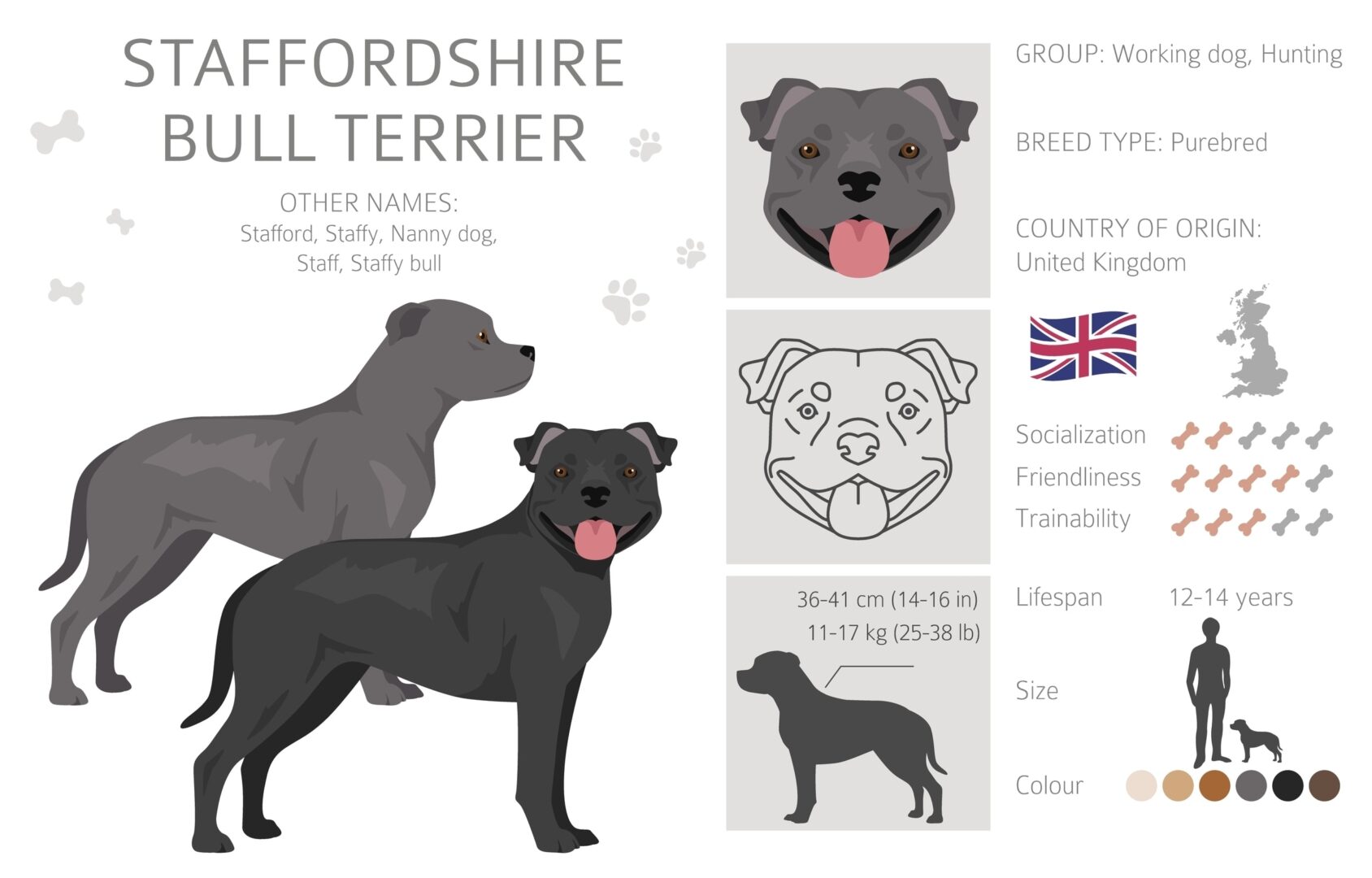
“Staffordshire Bull Terrier – FurLyfe!” from furlyfe.com and used with no modifications.
Characteristics of an Ideal Owner
The ideal Staffordshire Bull Terrier owner is active, consistent, and committed to positive training methods. They understand the importance of early socialization and ongoing training, and they’re willing to serve as advocates for the breed in the face of misconceptions and prejudice. Successful Staffy owners appreciate the breed’s sensitivity and respond with patience rather than harsh discipline, building relationships based on mutual respect and clear boundaries. They recognize that ownership comes with responsibilities not just to the dog but to the community – including proper containment, leash control in public, and thoughtful management of the breed’s potential for dog-reactivity.
Frequently Asked Questions
Prospective and current Staffordshire Bull Terrier owners often have questions about various aspects of the breed’s care, health, and behavior. Addressing these common concerns can help create successful partnerships between Staffies and their humans, ensuring these wonderful dogs receive the appropriate care and management they need to thrive. For those considering the benefits and risks of spaying or neutering their Staffy, it’s important to understand the impact of these procedures on their health and behavior.
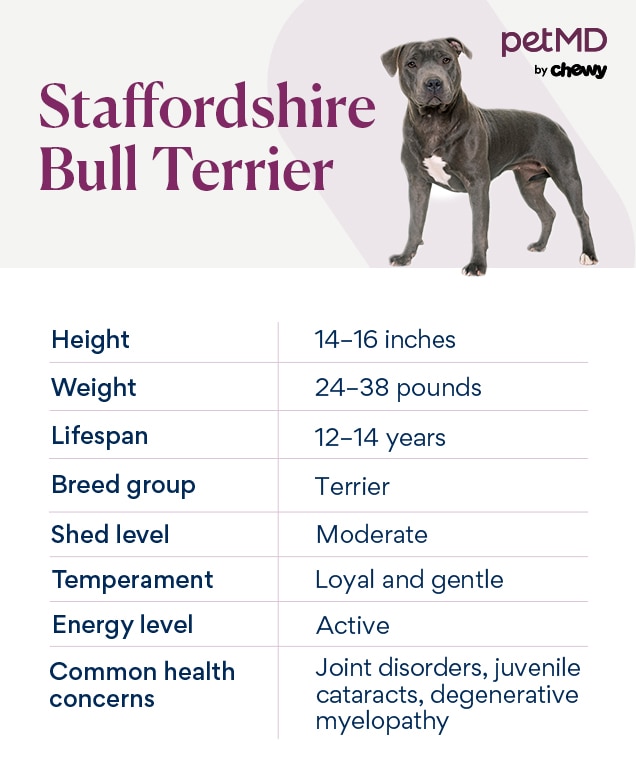
“Staffordshire Bull Terrier Dog Breed …” from www.petmd.com and used with no modifications.
What are the common health issues in Staffordshire Bull Terriers?
While generally healthy, Staffordshire Bull Terriers can be prone to certain genetic conditions including L-2-hydroxyglutaric aciduria (L2HGA), a metabolic condition affecting the nervous system; hereditary cataracts; and various skin conditions including allergies and demodectic mange. They may also experience hip dysplasia, patellar luxation, and certain heart conditions like pulmonary stenosis. Responsible breeders screen for these conditions and avoid breeding affected dogs. Regular veterinary check-ups, maintaining a healthy weight, and appropriate exercise can help prevent or manage many health issues throughout a Staffy’s life. For more information on the importance of responsible breeding, you might find this article on fostering animals insightful.
How much exercise does a Staffordshire Bull Terrier require?
Staffordshire Bull Terriers typically need 1-2 hours of exercise daily, divided between walks and interactive play sessions. As a muscular, energetic breed, they benefit from a variety of activities that challenge them both physically and mentally. Young Staffies generally require more exercise than older dogs, but even seniors need regular activity to maintain muscle tone and mental well-being.
Quality of exercise matters as much as quantity – activities that engage their minds, such as training games, scent work, or agility, are particularly beneficial. Many Staffies enjoy swimming, tug-of-war (with appropriate rules), and fetch, though individual preferences vary. Sufficient exercise is crucial for preventing destructive behaviors that can develop when these intelligent, energetic dogs become bored.
Are Staffordshire Bull Terriers good with other smaller dogs?
Staffordshire Bull Terriers can be good with smaller dogs, but this depends heavily on individual temperament, socialization, and training. Early, positive exposure to dogs of different sizes improves the chances of harmonious relationships. However, even well-socialized Staffies may retain some level of dog-selectivity, particularly toward dogs of the same sex, which is partly rooted in their genetic heritage.
When introducing a Staffy to smaller dogs, supervised, controlled interactions are essential. Look for relaxed body language and respect appropriate boundaries. Many Staffies do better with smaller dogs when they’re raised together from puppyhood. For adult Staffies with unknown histories, professional support from a dog behaviorist can help determine if they can safely interact with smaller dogs and develop strategies for successful integration.
What is the average lifespan of a Staffordshire Bull Terrier?
The average Staffordshire Bull Terrier enjoys a relatively long lifespan of 12-16 years, making them one of the longer-lived medium-sized breeds. This longevity is attributed to their generally robust health and limited extreme physical features that might cause health complications. Factors that can influence a Staffy’s lifespan include genetics, diet, exercise, preventative healthcare, and environmental factors.
How can I find a reputable Staffordshire Bull Terrier breed rescue?
To find a reputable Staffordshire Bull Terrier rescue, start by researching breed-specific rescue organizations like Stafford Rescue or contacting the Staffordshire Bull Terrier Club of America, which often maintains rescue contacts. Look for rescues that thoroughly evaluate dogs’ temperaments, provide medical care, and offer post-adoption support. Legitimate rescues typically have formal adoption processes including applications, interviews, and home checks to ensure good matches between dogs and adopters.
General bull breed rescues and municipal shelters also frequently have Staffies or Staffy mixes available for adoption. When evaluating any rescue organization, check their reputation through reviews, ask about their policies regarding returns if a placement doesn’t work out, and observe how knowledgeable they are about the breed’s specific needs and characteristics. Reputable rescues prioritize finding the right match rather than simply completing adoptions.
Adopting a Staffordshire Bull Terrier from rescue can be especially rewarding, as many of these dogs have been surrendered due to housing restrictions or owner circumstances rather than behavioral issues. Adult rescue Staffies often transition seamlessly into new homes, bringing their characteristic loyalty and affection to families willing to give them a second chance.
Understanding the unique characteristics, needs, and rewards of Staffordshire Bull Terrier ownership is essential for providing these remarkable dogs with the care and environment they deserve. While they may not be the right choice for every household, those who welcome a well-bred, properly trained Staffy into their lives often find themselves with a devoted companion whose loyalty and affection know no bounds.
If you’re considering adding a Staffordshire Bull Terrier to your family, take time to meet the breed in person, talk to experienced owners, and research both the joys and challenges these dogs bring. The right match between owner and dog creates a partnership that enriches both lives immeasurably.